First District, Junrinan — Rukongai
Western Rukongai
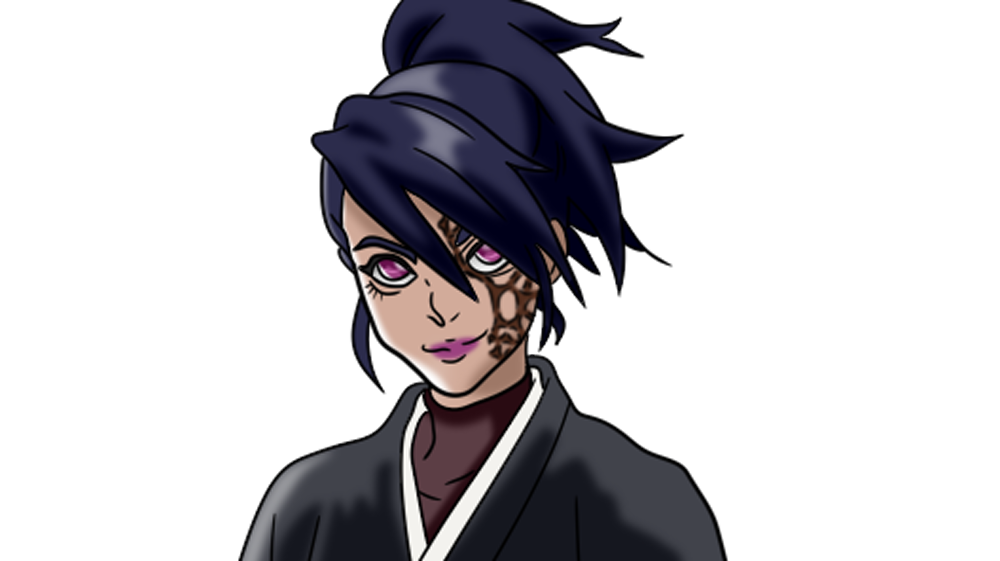
For several seconds Osamu said nothing. Kuwashii's claim that the matter was already closed had reached him before Hyoroshi's warning, and between them the two officers had managed to turn an inquiry about possible casualties into an affront to their dignity. The heat coming off the ruined ground was enough to sting his face. He watched the woman begin down the road with her severed arm in hand, then the man follow, dragging a foot that could scarcely bear him.
He had been angry when he arrived. That had been anger at the destruction, at the possibility of finding someone beneath a fallen roof, at not knowing whether the fight was even over. What settled in him now was colder and considerably less charitable. Both officers had been willing to offer assurances, but neither seemed to understand why assurances made by the people responsible could not be the end of the matter.
“Hakunetsu-san. Iwamura-san.” Osamu did not raise his voice, although he pitched it clearly enough to carry after them. “You have told me the area was empty. I have heard you, and I will include that in my report. I will also verify it. Those are not contradictory actions.” His hand rested against the white lacquer of Kyōmon's saya, steadying the mirror charm where it had begun to tap against the fittings. He made no move to draw the blade.
He looked toward the structures beyond the trees. From this distance he could not establish whether they had been deserted before the fire or merely looked deserted now, and he had no intention of converting that uncertainty into an accusation. Yet the earth had been scorched, timber had fallen, and two officers had brought themselves close to death in a district where other Souls had a right to live without being made collateral to a lesson.
“Training is not an exemption from responsibility,” he continued. “Nor does the presence of a Ninth Division officer close an inquiry before anyone has examined the damage. If the ground was cleared and the exercise authorized, there should be no difficulty establishing that. If it wasn't, calling it training does not make the consequences disappear.” He kept his eyes on the road rather than demand they turn to face him. Neither of them needed to stand there bleeding for his satisfaction.
His gaze returned to the ruined buildings, and for a moment he thought of the people he had met during Third Division's work throughout Rukongai. People who had spent years repairing what Seireitei had neglected, often with little assistance and even less confidence that anyone in uniform would care. The resentment he felt was not simply on behalf of an institution whose officers had behaved irresponsibly. It was for the people who would have to live with whatever those officers left behind.
“And something else, since you both seem to consider my concern an insult.” His voice remained controlled, but the courtesy in it had grown distinctly harder. “The people of Rukongai did not volunteer to have their district ruined so that two seated officers could turn a training exercise into a spectacle. People live here. They travel these roads, work in these buildings, and depend upon the land around them. You do not get to disregard all of that simply because you possess Bankai and wish to see how far you can push it.” He paused, looking once more at the blackened trees. “Even if no one was injured, that does not mean no harm was done.”
Hyoroshi's parting instruction still rankled. Osamu knew what it was to resent being questioned by someone who had not witnessed the work itself; he had felt that resentment often enough as a student, and occasionally as an instructor. But the Third Seat's rank and Bankai did not relieve him of the obligation to explain how a patch of Junrinan had come to look like this. If anything, the power involved made the question harder to dismiss.
“And Iwamura-san, I have not called either of you a fool.” The words were level, almost painstakingly so. “If you are as certain of your judgment as you say, I expect you will have no trouble explaining it to the officers empowered to review this. You may find that they ask many of the same questions I have.” His jaw tightened briefly before he let it relax. “That is not an imposition. It is accountability.”
He could have said more. Kuwashii's contempt had been unmistakable, and Hyoroshi's dismissal had come from a man who could barely walk; the temptation to answer both with something sharper was substantial. Osamu resisted it because he was not interested in winning an argument against two people who needed a healer. The fact that he could keep his voice controlled did not make his anger any less real.
“There will be a record of what happened here, and I will see that it reaches the appropriate command and investigative authorities,” he said. “If the facts warrant consequences, I will press for them. Neither your seats nor your intentions will excuse damage to Rukongai simply because you found the exercise useful.” He let the words stand without pursuing them down the road. “Go to Fourth Division. Both of you.”
Osamu did not wait for another dismissal. He turned back toward the nearest damaged building and took out his field journal, marking the position of the road, the burned trees, and the structures he could see, leaving room for what an actual inspection might establish. The Fourth Division request had already gone out; his next message through Third Division would need to distinguish the officers' account from what he had observed himself. He would not report civilians harmed without evidence, and he would not report a safe training ground merely because the people who burned it had said so.
The nearest support beam had split along its length, and heat still breathed through the gap beneath the eaves. Osamu approached from the side, testing the ground before putting his weight on it, then paused to listen for movement inside. Behind him, the road remained open for the two officers to continue toward treatment. Ahead lay the less satisfying work of finding out what was true, and he was angry enough to do it carefully.
He remained at the building for several minutes, examining what could safely be reached without disturbing the damaged supports. He listened at the openings and searched the accessible portions for signs of anyone trapped within, but found nothing that would allow him to establish whether the structure had been occupied before the fighting. The distinction mattered. An empty building was not necessarily an abandoned one, and a ruined home did not become inconsequential simply because its occupants had escaped the destruction. He recorded the condition of the entrances, the direction in which the timber had fallen, and the extent of the visible scorching before withdrawing from the unstable section.
His inspection continued along the edge of the affected ground. He noted the distribution of the burned vegetation, the deeper scars where the earth itself appeared to have suffered, and the positions of the structures relative to the apparent center of the engagement. Where he could not distinguish one officer's destruction from the other's, he made no attempt to assign responsibility. He had arrived too late to witness their Bankai in operation, and it would have been both dishonest and professionally embarrassing to pretend otherwise. What he could establish was the condition in which they had left the area, and that alone warranted a more serious examination than either officer seemed prepared to entertain.
Eventually, he stepped onto a stretch of road that had escaped the worst of the heat and opened his journal across his forearm. The preliminary account took shape beneath his brush in compact, disciplined strokes. He identified the location as First District, Junrinan, recorded the two officers by name, division, and seat, and described the injuries he had personally observed. He documented their acknowledgment that the engagement had been a training exercise involving Bankai, Kuwashii's assertion that the surrounding area had been vacant, and her contention that Ninth Division's presence rendered further investigation unnecessary. Hyoroshi's confirmation of the training's purpose and his objection to Osamu's involvement were included without embellishment.
The physical observations followed separately. Extensive scorching, damaged vegetation, compromised structures, and evidence of considerable spiritual force were entered as observations rather than conclusions about culpability. He made particular note that no civilian casualties had been confirmed during his limited inspection, but that the absence of confirmed casualties did not establish the absence of civilian exposure or property loss. The authorization for the exercise, the status of the affected buildings, and the necessity of employing Bankai in that location remained unresolved. He underlined those matters once, then reviewed the entire account for language that might betray his temper.
There was plenty of it he would have liked to write. He could still hear the contempt in Kuwashii's voice and the dismissive certainty with which Hyoroshi had told him not to impose. Instead, he confined himself to their actual statements and the evidence available. A report intended to survive scrutiny could not afford to read like a personal grievance, however justified that grievance might be. He closed the journal only after adding a recommendation that the appropriate authorities assess the damage, establish whether the site had been authorized for an exercise of that magnitude, and determine whether restitution or disciplinary action was warranted.
He transmitted a concise preliminary notice through Third Division, identifying the officers involved and requesting that the incident be referred through the appropriate command channels for review. The full written account would follow, together with any additional findings that could be established through a proper inspection. Osamu made no claim to possess investigative authority beyond his station, nor did he presume to dictate what punishment should follow. His intention was simpler and, to his mind, considerably harder to dismiss: the incident would be documented accurately, placed before people empowered to examine it, and not quietly forgotten because its participants happened to wear the uniform of the Gotei Thirteen.
Only then did he turn his attention toward Fourth Division. The two officers had departed in that direction, and although he had no intention of interfering with their treatment, their condition remained a concern in its own right. Hyoroshi's injuries had been severe enough to compromise his ability to walk, while Kuwashii had been carrying an entirely severed arm. Whatever Osamu thought of their judgment, neither injury was something to be treated casually. He wanted confirmation that both had reached medical care, and there were questions that could be pursued later, when the officers were no longer struggling simply to remain upright.
He secured the journal within his clothing and adjusted Kyōmon at his hip, ensuring the white saya sat comfortably before leaving the ruined ground behind. His anger had not diminished during the inspection. If anything, the deliberate work of recording the damage had given it greater substance, replacing his first outrage with an increasingly precise understanding of what would need to be answered. He spared the scorched buildings one final look, memorizing their position against the road so that he could direct an inspection party back to them if necessary.
With that, Osamu set off toward Seireitei and the Fourth Division's facilities, employing Shunpo once he had reached a clear stretch of road. He had no interest in chasing two wounded officers merely to prolong an argument, and still less in allowing his own indignation to become another unnecessary disturbance in Junrinan. The scene was documented, the preliminary notice had been sent, and the next part of the matter would be conducted through the proper channels. Whether Kuwashii and Hyoroshi welcomed that prospect was no longer his concern.
EXITING TO FOURTH DIVISION