First District, Junrinan — Rukongai
South East Seireitei → Rukongai
Osamu smelled the smoke before he reached the clearing. He slowed on the last stretch of roofline, taking in what he could through the trees, then dropped onto the road below. The earth was still hot in places. A few stubborn patches of white and blue flame burned among the exposed roots, and farther ahead, through the haze, he could make out the remains of damaged structures.
He stood there for a moment, trying to reconcile the scene with what he had sensed from Shin’ō Academy. The pressure had been extraordinary, enough to interrupt his lesson and send him west after securing the students, but that had told him nothing about what was actually happening. He had considered the possibility of an attack. Now, looking at the scorched woodland and the damage beyond it, he was no closer to knowing whether there had been one.
His first concern was whether anyone else had been caught in it. Osamu moved along the edge of the road, avoiding the hotter patches of earth while he searched the damaged structures for movement. He listened for voices, for footsteps, for anything that might suggest someone was trapped or trying to get clear. The lingering fires made it difficult to hear much beyond their occasional crackling.
The absence of any obvious victims offered little comfort. People lived in Junrinan, and even where the buildings thinned, these roads and woods were part of their district. Someone would have to repair what could be repaired, clear what could not, and find some way to replace whatever had been lost. Osamu had seen enough of the Academy's reconstruction to know how easily that work could consume years.
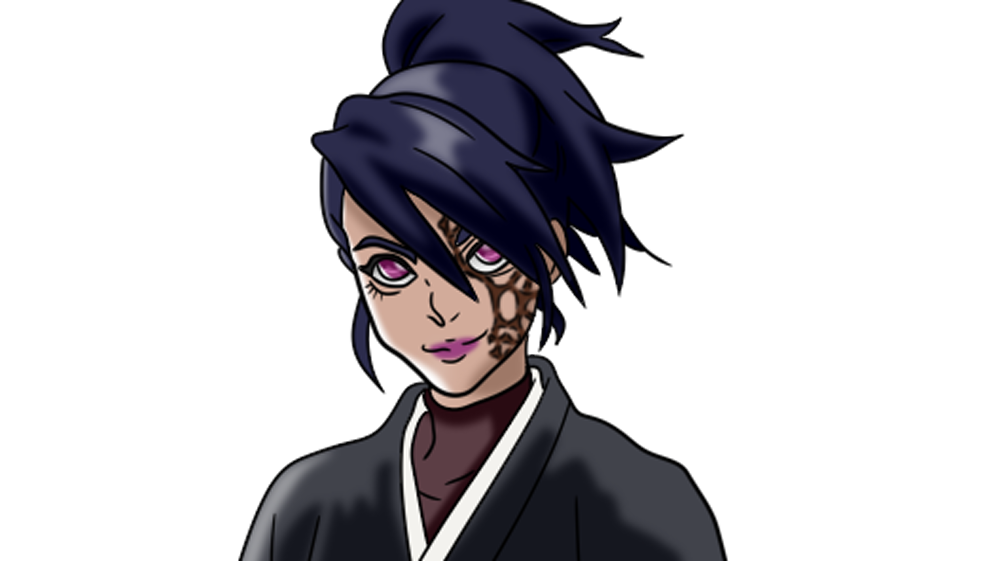
He continued forward, keeping Kyōmon sheathed at his left hip. Her small mirror charm knocked against the white saya as he stepped over a fallen branch, and he steadied it absently with one hand. That was when he made out the two figures farther ahead.
Both were Shinigami. One, a man, had been burned so severely that Osamu could scarcely distinguish what remained of his clothing from the injuries beneath it. He was moving, but not well. The woman beside him had lost her left arm and bore wounds of her own. Osamu's expression changed as he looked between them and the clearing, though he made no immediate attempt to draw a conclusion.
He approached at a walking pace, stopping where they could hear him without having to raise his voice. Neither appeared capable of sustaining much more punishment, and he had no intention of making their condition worse for the sake of an introduction. Still, he could not quite keep his eyes from returning to the destruction behind them.
“Osamu Shimazu, Fourth Seat, Third Division,” he said. “I came from Shin’ō Academy. Whatever happened here, we felt it from there.” His gaze moved toward the damaged buildings. “Have you seen anyone else? Civilians, other officers, anyone who might still be in there?”
He waited long enough to give them a chance to respond, then reached for his communicator. There was little point standing in the road discussing responsibility while the fires were still burning and the wounded remained untreated. He contacted the Third Division duty channel, gave his location in First District Junrinan, and reported what he could establish: considerable fire damage, two severely injured Shinigami, and the possibility that nearby structures had been affected. He requested Fourth Division assistance and personnel to search the area and deal with the remaining fires. When asked for the circumstances of the incident, he could offer only that he had arrived after the apparent engagement; anything more would have been speculation.
Once he had finished, Osamu put the communicator away and looked at the pair again. The man's condition was particularly concerning, and the woman's missing arm hardly made her situation less urgent. Whatever questions he had, there was no sense in allowing either of them to deteriorate while he asked them.
“I've requested medical assistance,” he told them. “If you can make it to Fourth Division safely, go. If you can't, I'd rather you tell me now than collapse halfway there.” He glanced between them, assessing what little he could from their injuries. “Before you leave, though, I need your names and divisions. I can take a proper account later.”
He looked past them again. Some of the timber had been burned nearly through, while other pieces had fallen across the ground in awkward heaps. He could not tell from here which damage had come first or how much of it might still be dangerous. He would need to inspect the area more closely once he knew whether anyone was missing.
There was something profoundly irritating about standing amid this much destruction without knowing why it had happened. Osamu was accustomed to instructors who demanded an explanation for a poorly executed technique, and he had never understood why officers should be held to a lesser standard when the consequences were so much greater. He could accept that extraordinary circumstances sometimes demanded extraordinary force. What he could not accept was the possibility that nobody had considered what lay beyond the immediate fight.
“I hope there was a good reason for this,” he said at last. His voice was quieter than before, though there was nothing particularly gentle about it. “I wasn't here, so I'm not going to pretend I know what happened. But look around you.” He gestured toward the scorched woodland and damaged structures. “If people were living or working near this, they'll be dealing with the consequences long after you've both been treated.”
His thoughts went briefly to the Academy, to the years of repairs after the invasion and the piles of salvaged instructional records that had once seemed to occupy every available room. That destruction had come from an enemy. The distinction mattered, and he was not yet prepared to say whether the same could be said of what had happened here. Nevertheless, the damage itself was real, and somebody would have to answer for it.
He had grown up hearing arguments about the Gotei's obligations to Rukongai, usually from people who could afford to discuss them at considerable distance. The Civil War had made those arguments rather harder to dismiss. Osamu had little patience for the notion that a uniform or an old family name entitled its wearer to unquestioning gratitude, particularly when the people expected to provide it were the ones left repairing the damage.
“I'll be submitting a report through Third Division,” he continued, looking back at the wounded officers. “The other divisions can provide their accounts, and whoever has jurisdiction can decide what needs to follow.” He paused, his eyes narrowing slightly. “But I intend to make sure the damage to Junrinan is included. If there was a threat here, that should be documented. If there wasn't, I'd be very interested to hear why this much force was necessary.”
It was perhaps fortunate that neither officer was in any condition for an argument. Osamu could feel his temper rising beneath the effort of keeping his questions orderly, and he knew enough about himself to recognize when irritation was beginning to outrun the evidence. He had come to investigate a disturbance, not conduct a disciplinary hearing in the middle of a burned road. There would be time for that, if the facts warranted one.
“Get yourselves treated,” he said, stepping aside to leave their path clear. “I'll need to speak with you again, but it can wait until you're both in a better state to answer.” His attention shifted toward the nearest damaged structure. “Right now, I'd rather know whether there's anyone in there who hasn't had the chance to walk away.”
Osamu turned toward the building, taking care to avoid a stretch of ground where the heat still shimmered visibly. He studied the surviving supports before approaching any closer, unwilling to turn a search for casualties into another accident. Behind him, the road remained open for the two officers, and the request for assistance had already gone out. He still wanted an explanation, badly enough that he could feel himself rehearsing the questions, but the ruins could wait for blame more readily than a trapped person could wait for help.