The Meeting Where Shadows Took Note
“He must have been proud of avoiding the battlefield. Proud of doing nothing. He had to be proud of surviving by stepping aside while others bled.” Kagi inner thoughts about Itaku
“I will remember this.”
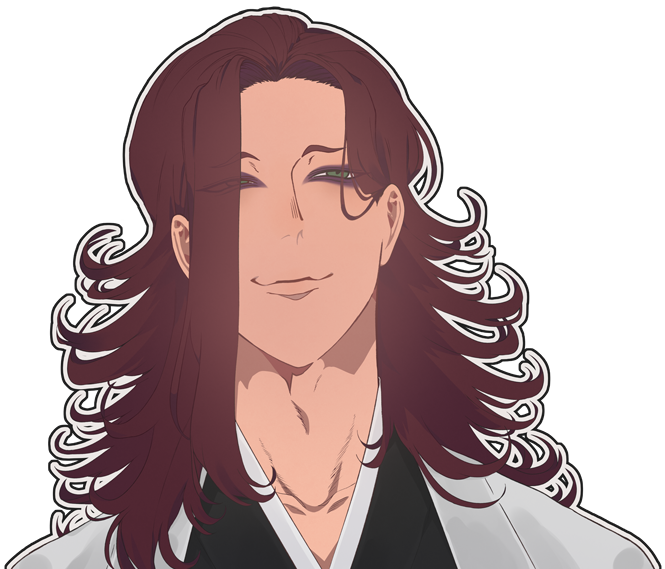
The captain stated those last words more quietly in his subconscious, Kagi stands perfectly still, his posture straight and composed, the kind of stillness that feels deliberate rather than rigid. His hands remain loosely at his sides, fingers relaxed, never curling or tightening. His breathing stays slow and even, the rise and fall of his chest almost imperceptible. When Itaku interrupts him, Kagi does not turn his head or shift his stance, but there is a subtle change in the air around him, the kind of quiet tension that feels like a room cooling by a few degrees. His eyes remain forward, but there is a moment where they narrow by the smallest fraction, a gesture so slight that only someone watching him closely would notice. He listens without blinking, without sighing, without giving any outward sign of irritation. The only visible reaction comes when Itaku finishes speaking. Kagi lifts his chin a little, not in arrogance but in acknowledgment, as if silently marking the man in his mind. Then the stillness returns, calm and unreadable, like a room where every sound has been carefully locked away. It is the kind of silence that does not simply fall over a person but rises from within them, shaped by long hours spent behind closed doors where even the faintest breath felt too loud. For a moment, the atmosphere around him carries the same muted weight that once filled his barracks during the months he refused to leave it, a quiet so complete it seemed to swallow the world outside. The memory of that confinement lingers in the way his presence settles now, not as a retreat but as a controlled withdrawal, a deliberate sealing of whatever stirs beneath the surface. It is the silence of a man who learned to fold his thoughts inward until they no longer echoed, the silence of someone who once lived in a space where nothing moved unless he allowed it to. The room seems to absorb that quiet, as if the walls themselves recognize the shape of it, and for a brief moment the air feels as though it has been pressed flat, leaving no trace of the tension that flickered through him only seconds before.
Kagi did not move when Yūgure stepped forward, yet something within him shifted in a way that never touched his expression, a quiet internal tightening that settled beneath the surface of his composure. The silence he carried remained sealed around him, held with the same deliberate care as a room that had been closed for years, a space where every sound had been tucked away until nothing remained but the weight of stillness itself. It was the same kind of quiet he had lived in during the long months he had confined himself to his barracks, when the world outside had felt distant and unreal and every breath seemed too loud for the narrow space he inhabited. That memory lingered now, not as a wound but as a reminder of how easily he could fold inward when the moment demanded it, how naturally he could retreat into a silence that belonged only to him. As Yūgure began to speak, he allowed his gaze to settle on her without turning his head, the movement so subtle it barely disturbed the air around him, yet beneath that stillness something older and colder stirred, a reflexive tension shaped not by her words but by the bloodline she carried. The Shihōin name had carved too many fractures into the Gotei for him to ever hear it without feeling the faint pressure of old distrust pressing against the edges of his thoughts, and her ascension to captaincy had only sharpened that instinct. He did not doubt her discipline, nor did he question her capability, but the knowledge of her lineage placed a thin, invisible distance between them, a quiet barrier he had no intention of lowering. Even so, as her voice carried through the chamber with a steadiness shaped by years in the shadows of the Second, he felt a faint echo of recognition, a reminder that she had once moved under his command with the same silent precision she carried now. It was not nostalgia that stirred in him but acknowledgment, a quiet understanding that she had learned to survive the same muted spaces he had once shaped with his presence, yet the distrust remained, coiled deep and unmoving, a reminder that the Shihōin legacy had cost him too much to ever be taken lightly again.
He listened to her report with the same calm he had held during his own, yet beneath that calm something tightened, not with irritation or judgment but with a more intricate feeling that settled deep in his chest. Itaku’s interruption still hovered at the edges of his thoughts, not because it had bruised his pride but because it had reminded him how easily the authority he once carried could be brushed aside with a careless voice and a bright smile. Hearing Yūgure speak now, measured and composed despite the nerves she hid so carefully, stirred a faint sense of contrast within him, a reminder that some captains still respected the structure they served, still understood the weight of the moment, still carried themselves with the quiet discipline that once defined the Gotei he remembered. His eyes lowered slightly, not in disapproval but in contemplation, as if he were weighing the shifting currents of the room and the captains who stood within it. Yūgure’s presence steadied him in a way he had not anticipated, her restraint and her deliberate control reminding him of the order he had once upheld with unwavering precision. It was a quiet reassurance that not everything had changed in his absence, that some threads of the old world still remained intact.
He felt it in the way the room breathed around him, in the way Yūgure’s gaze had paused on him earlier, in the way Itaku had spoken over him without hesitation, and he accepted it without resistance. He allowed the silence inside him to settle deeper, smoothing over every flicker of emotion until nothing remained but the calm he had mastered long ago. His posture did not shift and his expression did not change, yet the air around him grew steadier, as if he had anchored himself more firmly to the floor beneath him, grounding his presence with the same quiet certainty that had once defined him. He listened as Yūgure concluded her report, and when she stepped back into place he let his gaze rest on her for a heartbeat longer than necessary, not enough for anyone else to notice, just long enough for him to acknowledge privately that she had carried herself with the discipline he remembered, even if the name she bore would always keep a measured distance between them. Then he returned to stillness, the kind that held its own gravity, the kind that made it impossible to tell whether he was reflecting, observing, or simply waiting for the next moment to unfold, a presence so controlled that it felt as though the silence around him had settled into its final shape.
As Izanagi spoke with his usual irreverent ease, sipping tea and tossing comments into the chamber as though the Captain‑Commander’s hall were nothing more than a casual gathering, part of him recognized the man who had once stepped between him and death without hesitation, the captain whose intervention had saved the lives of his officers when Kagi himself could no longer stand. That memory carried weight, a silent acknowledgment that could never be erased. Yet another part of him observed the theatrics with a restrained detachment, noting the casual disregard for protocol, the playful jabs, the mask materializing in open defiance, and felt a familiar tension settle beneath his ribs. Jushirō’s levity was not something Kagi despised, but it was something he could never fully understand, a temperament so different from his own that it felt like watching a flame dance in a room built for shadows.
He did not judge him for it, but he measured it, the way he measured everything. He watched the grin, the wink toward Yūgure, the exaggerated complaint about masks, and he felt the faintest echo of something like exasperated acceptance, a quiet understanding that Izanagi would always move through the world with a looseness Kagi could never emulate. Yet beneath that acceptance lay a deeper thought, one that remained unspoken but settled firmly in his mind. Jushirō had earned the right to speak as he pleased, but the Gotei was not the same as it had been ten years ago, and Kagi could not help but wonder how long such behavior would be tolerated in a world still trying to rebuild its structure. Even so, he listened to the report itself with care, noting the stability in Naruki City, the readiness of the Tenth, the diligence behind the humor, and he felt a quiet reassurance that beneath the theatrics, Izanagi had not abandoned his responsibilities. It was enough for Kagi to let the moment pass without reaction, holding his silence with the same controlled calm he had carried since the meeting began, a calm that neither Jushirō’s antics nor the shifting dynamics of the room could disturb.
Kagi would not move, not even by a fraction, but the moment Taro turned his attention toward the Captain‑Commander and spat the Shihōin name with that venomous edge, something inside Kagi would tighten with a slow, deliberate pressure that never reached his face. He would remain exactly as he was, posture straight, gaze forward, hands resting loosely at his sides, yet the silence around him would deepen in a way that felt almost physical, as if the air itself had thickened in response to the hostility filling the chamber. He would not look at Taro, nor at Yūichirō, nor at Yūgure, because he did not need to; the weight of the words was enough to stir a quiet, measured awareness behind his eyes, a recognition that the room had shifted into a far more dangerous register.
Inside, however, his thoughts would move with a slow, controlled precision. Taro’s aggression did not surprise him. The Date clan had always carried their own brand of ruthlessness, and Taro’s willingness to bare his teeth in front of the Commander was simply another reminder that the Gotei was still a fractured organism pretending at unity. What caught Kagi’s attention was not the insult itself but the way it echoed something he had long kept buried, a truth he had lived with far longer than Taro had been bold enough to speak aloud. The Shihōin name had earned its share of resentment, and Kagi felt no urge to defend it, yet hearing it weaponized so openly stirred a faint, cold ripple of calculation within him. Taro was not wrong, but he was reckless, and recklessness in a room like this had a way of dragging everyone into its orbit.
He let that thought settle without judgment, observing the tension with the same quiet detachment he used to study an enemy’s stance before a strike. Taro’s words were sharp, but they were also revealing, exposing the fault lines beneath the surface of the captains assembled here. Kagi understood those fractures intimately. He had lived through the consequences of clan arrogance, political maneuvering, and the kind of pride that tore the Gotei apart from within. Watching Taro throw those accusations into the open did not unsettle him, but it did sharpen his awareness, reminding him that the room was full of captains who carried their own grudges, their own loyalties, their own thresholds for disrespect.
He remained silent, letting the moment unfold without offering even the smallest reaction, because he knew that anything he revealed now would only feed the tension already coiling through the chamber. His stillness became a kind of anchor, a quiet refusal to be pulled into the storm Taro was stirring. Yet beneath that stillness, a single thought moved through him with the calm certainty of a blade sliding into place. The Gotei was changing, and the captains within it were beginning to show their true shapes. Taro’s outburst was not the beginning of conflict, nor was it the end. It was simply another reminder that the past had not finished with any of them, and Kagi, more than anyone, understood that silence was often the only shield worth raising in a room where every word could become a weapon.
He would not react outwardly when the Commander approached him, nor when he acknowledged the diligence of the Second, but the recognition would settle inside him with a quiet weight, not pride, not satisfaction, simply a confirmation that his division’s discipline had not gone unnoticed. It was a small thing, but it mattered, because Kagi had rebuilt the Second from silence and shadows, and hearing it affirmed without embellishment aligned with the way he believed respect should be given: plainly, without theatrics.
As Yūichirō continued down the aisle, addressing each captain with a precision that cut through the lingering tension Taro had stirred, Kagi would observe the room without shifting his gaze, letting the Commander’s tone reveal more than the words themselves. He would note the firmness behind the reprimand to Itaku, the quiet correction offered to Yūgure, the pointed lesson delivered to Izanagi, and the decisive removal of Taro from the academy. None of it surprised him. Yūichirō had always carried a certain severity beneath his noble composure, a willingness to impose order even when it meant stepping on the pride of those around him. Kagi did not admire it, nor did he resent it. He simply recognized it as the kind of leadership the Gotei needed in a time when the captains were fractured by history, ego, and the ghosts of a war that had never fully ended.
When the Commander spoke of the arrancars, the Soul King’s fragments, and the dwindling Hollow activity, Kagi’s attention sharpened in a way that did not show on his face. He had long suspected that the quiet of the last decade was not peace but a pause, a breath held by forces they did not yet understand. Hearing Yūichirō confirm that suspicion stirred a faint, cold awareness inside him, a reminder that the world beyond their walls was shifting in ways that would eventually demand blood and resolve. He did not fear that future. He had lived through worse. But he understood that the Gotei was not ready, not truly, and the Commander’s words only reinforced what he had already known: the captains would need to be stronger than their grudges, their clans, their histories, and their pride. And beneath that realization, another thought moved with a quieter, sharper edge, one he kept buried beneath the calm of his expression. Yūichirō was a Shihōin, bound to a legacy that had already fractured the Gotei once, and Kagi could not help but wonder whether this man was the leader they needed or simply another name destined to fall in his own halls, undone by the same arrogance that had consumed his predecessors. It was not a hope, nor a prediction, merely a possibility he refused to ignore, a reminder that trust was a luxury he had never afforded the Shihōin and would not begin offering now
As the Bankai Aptitude program was mentioned, Kagi remained silent, already knowing he would not offer a name lightly. Bankai was not a reward. It was a burden, a responsibility that could break a soul long before it strengthened it. He would choose carefully, and only when he was certain the candidate could withstand the weight of the Second’s expectations. The Commander’s reminder to avoid favoritism did not apply to him; Kagi had no favorites, only those who survived his standards. One name came into mind, but he would not speak it, not yet.
When the Captain‑Commander’s footsteps faded beyond the threshold and the heavy doors sealed the hall in a lingering hush, Kagi remained exactly where he stood, his posture straight, his expression unreadable, his presence as still as the air before a storm. He did not move toward the exit, nor did he join the subtle currents of motion around him. Instead, he waited, letting the others drift into their own thoughts, letting the noise of their minds fill the silence while he observed without appearing to observe.
Itaku was the first to stir with any real intention, his easy grin still lingering as if the tension of the hall had never touched him. Kagi’s eyes passed over him for the briefest moment, a glance so slight it could have been mistaken for nothing at all, yet the mark was made in the quiet space behind his gaze. Itaku’s unpredictability, his levity, his disregard for structure, all of it settled into Kagi’s awareness with the cold precision of a blade sliding into its sheath. He did not call attention to it. He did not shift his stance. But the decision was already made.
A shadow near the far column stirred, almost imperceptibly, with the reverence of someone who had been there longer than the moment suggested. Whether they had followed Kagi from the Second division or had been waiting in the shadows long before he arrived was impossible to tell. No footsteps. No breath. No trace of reiatsu. Only the quiet certainty that they were there because he allowed them to be. and Kagi gave the faintest tilt of his head, a gesture so small it could have been a trick of the light. The operative understood. They would follow Itaku when he left, not aggressively, not intrusively, but with the vigilance required for someone whose actions could ripple outward in ways the Gotei could not afford to ignore. The order was silent, but it was absolute, and the operative melted back into the dimness without a sound.
Kagi’s attention then drifted toward Yūgure, who stood among the captains with her hands folded behind her back, her posture composed, her expression calm, though he could sense the faint tension beneath it. She had not moved to leave yet, and he did not approach her immediately. Instead, he allowed the moment to stretch, letting the others begin their slow departure, letting the hall thin just enough that a conversation would not become a spectacle. He watched her with the same quiet precision he had used to study her report, noting the steadiness in her breathing, the way she held her shoulders, the way she kept her gaze forward as if refusing to betray even a flicker of uncertainty.
Only when the room had loosened, when the captains had begun to drift toward the doors in small clusters, did Kagi shift his weight by the smallest fraction, a movement so subtle it barely disturbed the air. He stepped just close enough that his presence would be unmistakable to her, yet not so close as to draw the attention of the others. He did not speak, not yet, but the intention was clear in the quiet gravity of his posture.
“Captain Shihōin, I require a moment of your time. Should you choose to forgo the party, meet me at Sōkyoku Hill.” Kagi words came off slightly colder yet so formal when addressing a private audience with Captain of the 9th.
Sōkyoku Hill was not chosen for sentiment, nor for comfort, but for the clarity it offered, a place where the wind carried no whispers and the stone held no loyalties. Kagi preferred it for conversations that required distance from the politics of the Seireitei, a place where the shadows of the divisions could not cling to the edges of a discussion. The hill’s vast openness stripped away the noise of rank and lineage, leaving only the truth of the person standing before him. It was a place where he could measure intent without interference, where the weight of the sky pressed evenly on both speaker and listener, and where the silence was honest enough to reveal what words tried to hide. For someone like Yūgure, whose bloodline carried both history and suspicion, Sōkyoku Hill offered a neutral ground, a space where he could observe her without the walls of the Second or the legacy of the Shihōin shaping the air between them. It was not a place of trust, but a place where trust could be tested, and that was all Kagi required.