
You are using an out of date browser. It may not display this or other websites correctly.
You should upgrade or use an alternative browser.
You should upgrade or use an alternative browser.
Central Seireitei
- Thread starter admins
- Start date

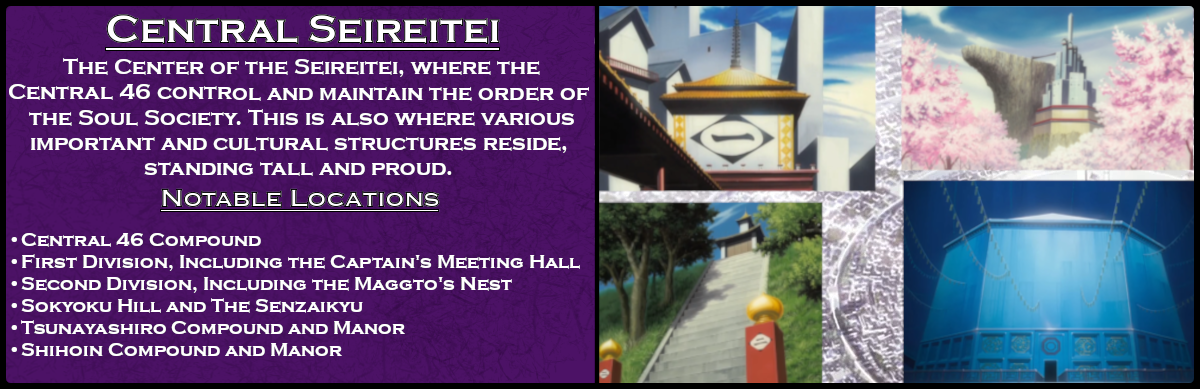




The architecture of the Seireitei is for the most part quite reserved in terms of height, usually expanding outwards rather than upwards. Even the estates of most royals tend to max out at about two floors, which is why within the Central Seireitei, one estate stands out. An imposing, but beautiful and opulent collection of structures stands out amidst the rest of the buildings. The least imposing of the structures, likely servants quarters, stands at two floors, however the rest of the structures reach higher into the sky, with the central mansion peaking at a whole five floors. This is the Tsunayashiro family estate, what was once the center of the most influential family of the Seireitei, it still stands in its luxury, but no longer does it carry such social influence, in spite of that, the tarnished royals still uphold their duties and grand life style.
Regardless of all that history, today was a day of revelry, and that would be taking place within of one of the more ‘modest’ buildings. Stood at the door of this particular building are two servants of the Tsunayashiro family, dressed in uniforms adorned with the Tsunayashiro crest, reflecting their ties. Throughout the morning, various people appeared at the estate, guided by other servants towards this building, one by one they would be either let in or turned away, seemingly however, only members of the Gotei 13, Onmitsukido and Kido Corps were allowed within the building, where they were met with a waiting room. The waiting room is well decorated, the walls lined with a number of plush seats and in the center of the room was a round, filigree covered table that was stacked with various books atop it. Within the waiting room, sit various figures of different standings and various backgrounds, but today they’re all gathered for a single and joyous purpose.
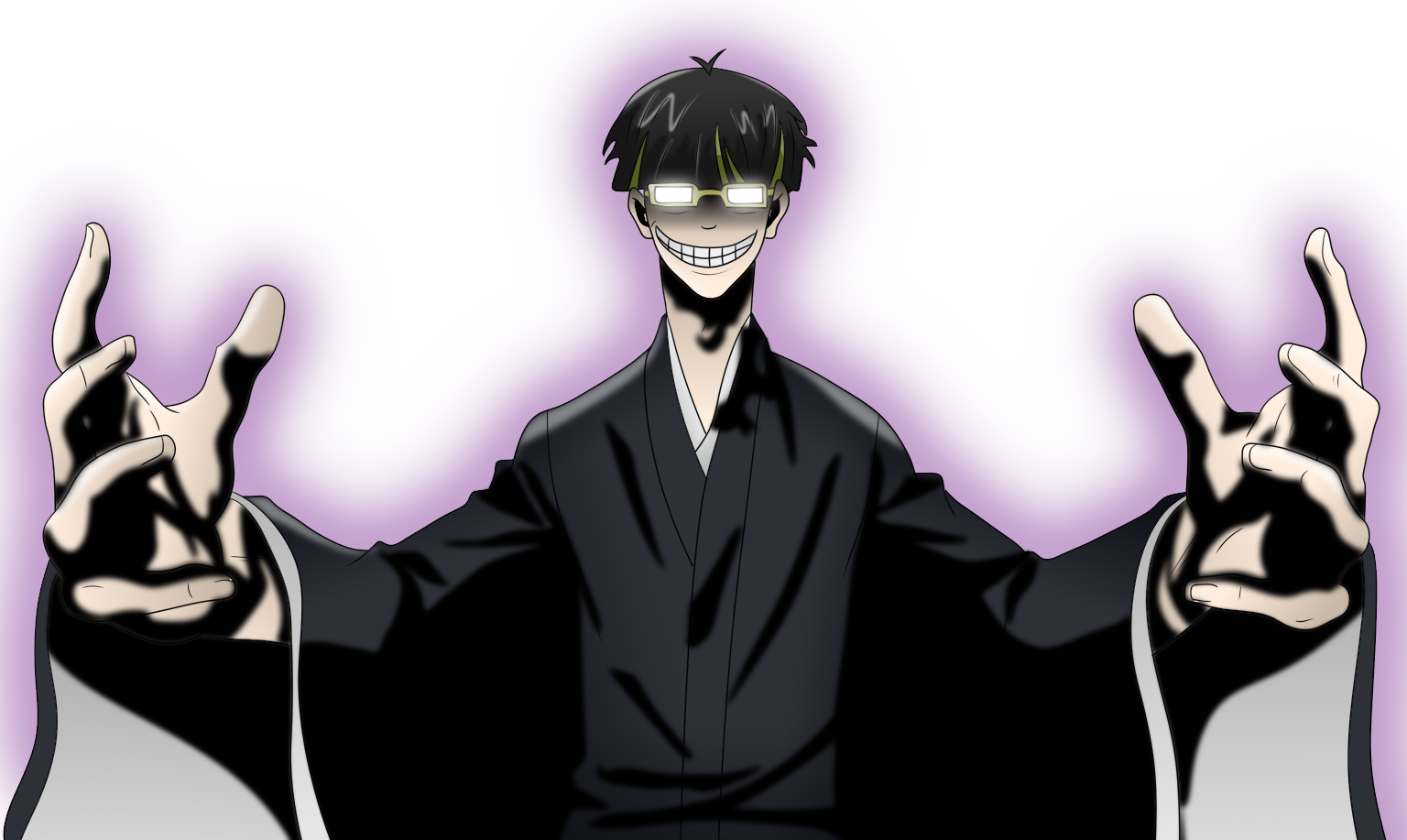
The single door that leads further into the building slides silently open and in that opening stands a man who seems far too tall for a physique of his kind. His proportions exaggerated in length, but there he stood, eerily smiling at the guests, still unnoticed by those awaiting him.
“Ok ok ok, let’s see what we’ve got here now, based on what I can feel, none of ‘em are all that impressive, but let’s get a better look shall we? Better safe than sorry, so I’ve heard.”
Under his breath and rapidly, words fire out seeming more like wild mutterings than actual speech. Then his voice boomed into the room, gleefully and eagerly
“Good morning my sweet guests~! I’m delighted to see you all found my invites and came to see what the deal was!”
As his voice echoed into the room, each guest's head was craned towards the lanky figure, Toru Tsunayashiro. With a strangely quickened pace, the man steps out from the doorway and into the room, swiftly approaching the closest guest, not a moment later he is standing before him, a little too close, feeling even his breath across the top of his head. The man dressed in a Shihakushō was taken aback as his hand was firmly clutched in Toru’s already, he hadn’t even reached out to take hold of it, but here he was, shaking hands already.
“It’s a pleasure to meet you, my friend..” Toru pauses briefly, staring down at the man intensely and once that moment had passed, he continues speaking as though he had never paused, cutting the man off as he went to speak, “..I’m so glad you came today, but unfortunately I gotta say, we don’t have space for you today, maybe next time!”
The man was dumbfounded by the interaction and it only gets more confusing for him as his hand is released, only for Toru to be stood behind him, hands to his shoulders, not just guiding the man outwards, but urging him outwards towards the door he had entered through. Finally, with an exaggerated wave he bid his farewell,
“Bye bye for now!”
One by one, Toru welcomes the other guests, only to have them leave in a similar fashion, not a single guest had gotten a word in during his greetings, they all simply stood there, stunned by what had just transpired and then urged out. Once the room was cleared, Toru slipped back past the sliding door, closing it behind him. The room he had entered is vastly different in design, a lengthy room that houses a chabudai that is almost as long as the room itself. The table itself is incredibly lavish in design, made of a lacquered black wood that seems to be inlaid with decorative kintsugi. Along the sides of the table are a number of identical crimson cushions, plush and clearly unused. Then there is a single one at the furthest edge of the table, not along the sides but at the top, there sits a small stool of a similar design to the table and topped with a similar cushion to the others. Toru steps beyond all of this and into another sliding door at the opposite end from where he entered.
The clattering of metal, wood and porcelain joins in harmony with the sounds of boiling and sizzling. Countless scents and aromas waft throughout the room in a confusingly divine collage of sweet, savoury and sour. As Toru steps into the room he is welcomed by two individuals if they can even be called that at the moment. Beyond having a humanoid body, they can barely be called people and their movements are clearly unrefined in any way. Clumsily these two things work at different tasks, one of them is working away at washing pots, pans and cutlery, the other with the same stuttered and unpractised nature dries and stows away each dried piece.
“You’re doin’ me real proud guys, but clearly still way off bein’ done huh? No worries, we’ll get you tuned up at some point.”
His words reach the creatures and they do not react, clearly unresponsive to pointless banter, but since they’re working, clearly receptive to commands. Echoey and with what seems like a background of static, another voice speaks up from the corner of this kitchen.
“You speak too much, Toru. Please keep it down if I’m going to be here.”
Toru’s eyes dart over towards the almost featureless and smooth figure, yet his head is unmoving, “You on the other hand could do with chattin’ some more. How am I supposed to get to know you without you talkin’ huh~?” As he speaks, he begins to move over towards a free sink and begins taking proper care to wash his own hands after having touched others.
With rolled sleeves, Toru stands surrounded by countless bowls of ingredients and food midway through preparation. Stove tops with various pots and pans, all actively in the midst of cooking something in some way. Ovens that contain even more food mid cooking. Of course, there’s one separate pot, a grand pot that is far too large for most meals, but within is a heavenly concoction of an unnamed and innumerable amount of ingredients, Toru’s prized creation. Shifting back and forth between the numerous stations, Toru works away, tending to what needs to be tended to. Pulling meat, vegetables and fruit from the heat, or introducing them. Slicing, dicing and tenderising ingredients as need be. Breading, frying and skewering ingredients. Toru was doing just about anything anyone could think of in terms of cooking.
“So, Sude, my sweet, please tell me what’s going on in your life nowadays?”
Once again Toru attempts to strike up a conversation with an unreceptive Sude, all whilst he waits for worthy guests.

Nohi
New member
Five Years Prior

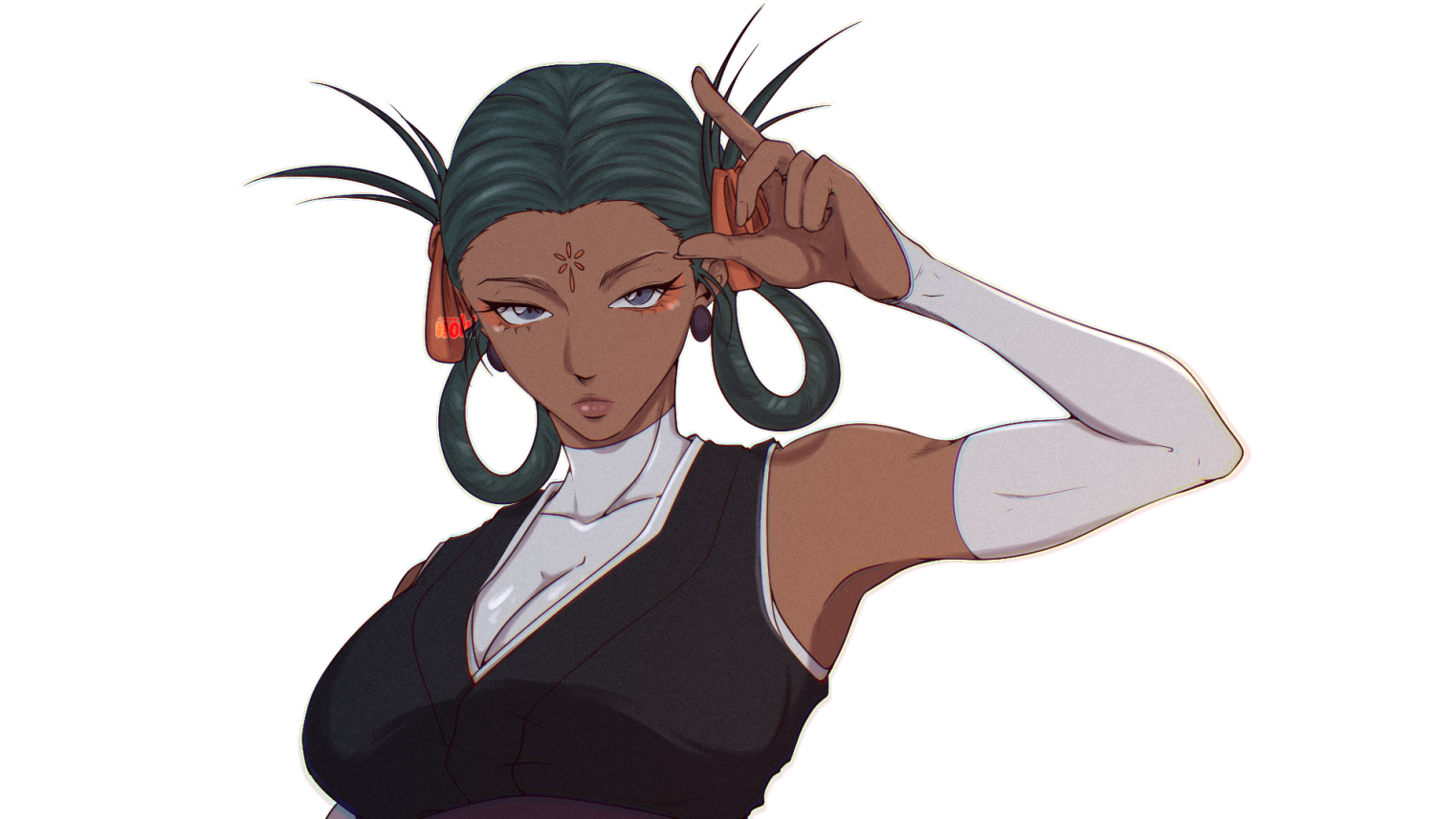
The sound of a body crashing against the creaking wooden floors echoes throughout the room, followed by its owner’s sharp gasp for air fills the empty space. Heavy pants and pained groans slipped past the victim’s lips as they stared up through squinted eyes at their instructor, Inpei Jaakuna, Shino’o Academy’s Class One hakuda instructor. She looks down, dropping down to a squat and flicks her middle finger against the student’s forehead with a resounding thunk.
"Waka-san. You’re too excited, bloodthirsty even." Jaakuna moves her hand over to point at the palms of her student’s hands, gesturing the the deep indentations of half-moons dug into their skin from just how hard they were clenching their fists trying to hit her. "You fight with all of the intention to put everything into every punch and that exhausts you in no time."
Jaakuna hoists Waka up and has him take a seat next to his peers who are all snickering and jutting, but the clearing of her throat as she garners their attention once more. She paces the floor, rubbing at the back of her neck and letting out an exasperated sigh. She looked upon this group of fifth-year students, still so green, but experienced enough to know of the travesties that happened just as they entered the Academy. By all means, there were still stragglers recovering from the events of chaos all those years ago.
"Tsugome-san. Please recite the Academy's Commandment."
A slender male student stands upright with his arms at his sides, chest puffed out and his voice, loud and firm fills the space.
"Inpei-Sensei! Do not seek beauty in battle! Do not seek virtue in death! Do not make the mistake of considering only your own life! If you wish to protect that which you must protect, slice the enemy you must defeat from behind!"
"You all must understand that your efforts mean nothing if you go into every fight with everything that you have all at once. You will crash, and you will burn. You are not fighting for your honor; you are fighting for the survival of yourself, your peers, and for the sake of humanity. The reason you fight is not a matter of pride-- it is a matter of necessity. You must be knowledgeable of your own limitations otherwise your hubris will be your downfall."
Silence deafens the crowd of students. They are forced back to the reality that which is the duty of what it truly means to be dedicated as a shinigami. No longer are they simple souls, but wardens for the balance between life and death, and that is what many forget, even after they get assigned to their allotted divisions.
Jaakuna speaks with a tone that seemed strained. There were many people lost that day, many of whom she knew, individuals whom she grew with, trained with, taught, and even as the years pass, the ache still exists within her heart. She makes it known of the potential consequences of this type of one-sided combat.
She kneels down before her students, her legs tucked right underneath rather snug and her back straight. The students mimic her pose, adorned in their blue and red uniforms and a sense of uneasiness stirs in the masses. Her periwinkle eyes scanned the crowds and she lets go of a breath she didn't know she was holding.
"I am hard on you all because I have to be. I have one more year left before you take your exit exams for your sixth year and then you will go to a division you are recruited by or where your skills fit best. I cannot be there to help you the way I am now. The moment that you step out of these Academy grounds, we will probably never cross paths again until years pass. The Soul Society needs its keepers to uphold the balance, or all three planes will collapse within itself. The Soul Society -- you -- cannot afford to make mistakes. Do you all understand me?"
A thunderous wave of agreement comes from her students and Jaakuna softens, dismissing them for the day. Some go back to their dorms, others to side classes. Jaakuna lingers, her training area quiet, still, and she moves to gather her things, including her zanpakuto that sit leaned against the wall, the gleaming gold guard enticing her to pick it up. She does so, begrudgingly, ignoring the nagging that ensued from Hakaimono. She ends her day in her office, falling asleep on the ground within the Instructor's Hall, more exhausted as the days go by, slipping into a dreamless sleep.
Present Day
"Waow~ So many people..."
Wonder beseeches her but she sees people being turned away left and right, and only few others made it past the doors. Jaakuna looks at her invitation and eyes the personal seal that belonged to Toru that sits at the bottom of the page. She walks up to the two servants standing at the gate and without even taking a look at the paper in her hand, the sense of familiarity washes over them and they allow her to pass with a gentle greeting.
"Welcome back, Inpei-san."
Even as she passes the initial threshold of the building that this feast was supposed to be held, Jaakuna was met with emptiness as all of the individuals that happened to make it through the initial checkpoint were turned away by Toru without even a second glance. She tucks the invitation away into a pocket, adjusting the blade that sits on her hip with a soft tug.
"Tsunayashiro-saaaaan." Jaakuna calls out to him. She looks around but other than the door she came in, there was only another entrance that she could assume Toru had slipped back through. With no one else around, she calls out to him again, more playfully, with a nickname that he never approved of, nor denied. "Tokkuuun.~"
She stands at the other door, allowing herself to step inside and close it back behind her. Although it was a space that many would consider private, the relationship between both Jaakuna and Toru was strange, but friendly all the same. Many have seen the two eating together, whether it was her visiting him when she had the time to crossing from the Academy back to Third Division's barracks, or it was Toru stopping by the Academy during the end of sixth year finals to entice candidates with his delicacies.
The sweet and tangible aromas fill her senses and Jaakuna can't help but be further drawn in, drooling at the sight of the arrangement and eyes lit with pure delight. She gives another onceover, looking both right and left before wiggling her nimble fingers as she zeroes in on her favorite: barbeque pork buns.
H
HankMoody
Guest
Chapter One: The Selection
10 Years Ago — 108 Hours After the Conflict…
The Seireitei—no, the Soul Society was still in a state of recovery after the onslaught that the arrancar brought with them. The city still breathed, though it was greatly wounded like a common dog in the Rukongai, just barely hanging on and clinging to the life that it barely has left. Stone and sekiseki lay broken where walls once stood. Everywhere in sight had at least two dozen bodies minimum, all moving with intent and purpose—hauling brick, timber, and reinforcing beams. They were hard at work rebuilding what was lost, salvaging what could be repaired, there was no talking and if there were any it was confirmation of a job being complete and never before. Not one person lingered or loitered, never holding to one position or space and disallowed from being told what to do, there was only one collective mission and they all understood the assignment: restore the Seireitei to its former glory.
Across the city, that very same mandate sang true with all divisions and its members, each having to care for their own barracks and divisions. Even Third Division, once the campus to the great Shinōreijutsuin (真央霊術院, Spiritual Arts Academy), was now in nothing but ruins and rubble, thus, entering the state of revival. One man stood still, not helping the masses of shinigami present—but supervising them. Arms crossed, posture firm and confident, and strangely adorned with his zanpakuto upon his left hip as if he were still a man at war. The rising sun’s gleam shimmered off of his polished skull, comical as it were, he took great pride in its conditioning and polishing as if he still had fibers of hair still attached to his head. He scrutinized every move made around him, tasked with overseeing the rebuilding effort, as he held great input over the new and improved version of the Academy grounds, and even donating his own personal funds to increase the quality of the blueprints as well as the new features and additions that remain to be seen in the coming years.
Rifling through his sleeves, he then removed what appeared to be a bamboo bottle, light-brown in color, well-widdled and cured. Ordinarily, someone like Yūichirō did not drink while on duty, and always reserved such behaviour to the confines of his own quarters at the Shihōin family manor. However, in light of the deadly circumstances that had befallen the Soul Society in the last hundred or so hours…one would be inclined to agree that the esteemed dean of the budding academy deserved nothing less than a drink.
“It has been a long time since this last touched my lips…I wonder what has changed…” he thought. He opened the lid of the flask, took a light whiff of the eroding aroma and gave an unusual smile he was most certainly not known for.
Peace may have just finally returned to the third seat of the third division. Pulling his head slightly back, and lifting his arm to slake his thirst…
“Shihōin-dono.” a voice behind him suddenly said. Low and respectful, but firm. A man dressed in the formal messenger garb of the Central Forty-Six.
“I suppose not even I deserve a drop of sake, am I correct in that assumption?" Yūichirō replied back sarcastically.
He continued on to then down a rather healthy gulp, which could be heard by anyone paying attention. It was clearly needed. Soon exhaling out of elation and relief. It had been a long time indeed.
The dean never turned his body, he acknowledged him, but nothing more. In his mind, it was clear as to why they had arrived, and at quite the time…the scars of the Seireitei just barely beginning to mend, captains frolicking in their own ideas of grandeur, and Central Forty-Six…like the cowards they were slinking in having their messenger dog to waste the time of the officers that laid their lives on the line to uphold their laws and continue to allow their pockets to be lined with gilded silk. There was no love lost for the chamber of forty wise men and six judges. A guild that has tried to recruit the very man they interrupt, time and time again. It was starting to become disgraceful and childish. Yūichirō had neither quarrel nor love for them.
“I am not taking a seat,” he said calmly, eyes still fixed on the half-raised structure ahead. “If that is why you’ve come, you may return to your masters and spare us both the trouble. I'm busy.” he said with finality.
A brief pause, the air shifted almost as though time itself were being churned and awakened. The silence was measured and the dean assumed that he had the final say.
“I was instructed to escort you,” the messenger replied. “Not to invite you, Shihōin-dono. They wish to speak with you.”
More silence hung in the air. Even still, the Shihōin’s gaze never wavered, and soon he filled his maw with more liquid courage, although it was just the thirst he required, not the latter that also came with it. The tools of construction were the only thing that could be heard after a few moments. He wasn’t sure what to think, what did they want to talk about? Sighing, he turned around and walked past the kneeling messenger, assumedly in the way he came before stopping short of taking several steps. Turning around he rolled his eyes and looked annoyed.
“Are you going to be the one escorting me, or shall I just walk over there myself?” he asked with cold sarcasm.
In a surprised scramble the messenger quickly set off in a rapid flash step, followed by the dean's own restrained movement so as to truly “allow” the messenger to do his job, after all, everyone had a part to play after the ordeal the shinigami bodice had endured. One that they’d be like to see again in their lifetime—a thought the Shihōin shuddered at.
It wouldn’t be long before the racing pair arrived at the temporary building that the judges and sages currently operated out of. Due to the destruction caused by the hollows—mostly Valiosa and Antonio, the central Seireitei still required more construction work to be done before they returned back to their basement dwelling quarters within that region. Rumor has it that the chambers and living spaces down there would be more massive upon completion than they were prior. Of course, their budget clearly did not have any link to the Gotei’s own, which was a problem all in itself. Even as a noble, Yūichirō was not blind to the disconnect and past image that the commoners had of their overlords. Even now, the fact was not lost on him. The aide began to enter the building first, and Yūichirō allowed him to feel in control.
“Right this way, Yūichirō-dono…” he said.
“Lead on, we don't have a moment to waste,” he replied.
The Echoes of Command
They began down a long flight of stairs, descending down to depths he was never aware was possible for this part of the Seireitei. However despite its length and ominous setting, the descent was much shorter than what he was originally used to. There were no endless walkways spiraling down into the darkness of the earth. No oppressive weight of the suffocating stone called sekiseki, allowing every step taken forth towards the chambers to be met unabashedly by the incorrigible dean. Instead, the path downwards was crude—only recently excavated and still awaiting to be properly mined thoroughly. Reinforced hastily with the familiar beams that the builders above were so familiar with, all carrying seals that bore the mark of urgency, rather than hold characters that represent reverence and tradition.
Dust clung to the very air itself, the walls unfinished and unpolished and even the former sources of candle light were once brighter in their previous headquarters. One thing was clear—even the Central Forty-Six, in some fashion it seemed, had been forced to compromise. “I suppose there is a first for everything…” the dean thought as he observed his surroundings down towards the center. After passing all the corridors and hallways…they finally arrived. Literal light shimmering at the end of the tunnel, signalling a journey's end. As they got closer, the messenger seemingly disappeared into the darkness leaving the chrome domed shinigami to venture into the chamber on his own. It wouldn't be long before he found himself in a familiar place that he had once appeared in front of—a place he never looked forward to returning to. However, every soul needed to make some concessions during times such as this.
The once great hexagonal chamber that still existed in tiers, while still a great assembly hall, it was smaller than their last. Without a doubt, it was still unquestionably the greatest seat of judicial power that had ruled over the Seireitei for longer than any few generations but countless eras. Regardless, their seat of power was greatly diminished, temporary yes, but a shadow of their former selves nonetheless. The polished curtain of mystique and authority had been pulled down to favor nothing more than a ratty silken rag to be replaced—and replaced it had been, only by raw function. The dark-skinned shinigami sauntered into the chamber without pomp and circumstance, offering them nothing—not even a bow. What he did was simply stand in the center of the hexagon, arms resting within the folds of his shihakusho, not to pull out his beverage but to stand contrary to whatever they had him summoned for.
“Excuse the lack of ceremony judges and sages—I was in the middle of rebuilding my home.” the dean began. “However, If I am to be standing before you all—once again—I trust that this isn’t a form of courtesy vote?” he followed.
Murmurs rippled like rain in a pond, though it was quiet, restrained and relatively hushed, they then quickly silenced as if a wave had washed over the room. Then one of them spoke from the everlasting darkness.
“You have refused this chamber four times, Yūichirō Shihōin.” they said.
“Five, if you include the occasion where I didn’t bother answering you. Or did we forget?” he responded curtly.
“We are aware.” they said, growing tired and clearly aging as they exchange quips.
There was clearly no love lost between the two individual parties. One entity above all else, valued order, judicial power, and of course tradition and control. While the other lone, but stalwart entity, represented evolution, cohesion, textbook mastery and consistency. The bald dark-skinned man stared into darkness and its adjoining silhouettes, the silhouettes within the dark stared back directly at him. The famous stalemate made live in the flesh, Yūichirō Shihōin—the shinigami who upheld and rebelled at the same time.
“You were not summoned because you desire power,” the voice continued. “Nor because you sought this position. You were summoned because the Soul Society cannot yet afford another vacuum within its command structure.” a voice resumed. “The Gotei Thirteen is fractured.” A separate, softer female voice continued. “Captains perished. Little battlefield information was organized. Authority failed and coordination was severely collapsed and crippled. What stands before our eyes today is nothing short of ignorance of will alone.” an older and distinct voice finished. “And we as a judicial body cannot allow that to stand.” the final voice finished.
Silence once again took the room. It was starting to get strange, they loved to hear themselves and each other talk, but this wasn’t that. The secret forty-seventh member to the judicial service, was their silence and indignation. Could it be that they were starting to admit wrong in their so called infallible system? Even still, the dean stood quiet and his expressions were largely unchanged. He didn’t speak either, curious now as to where this was truly going. It was almost as though they were struggling to get something out. Almost fearful that this would be yet another in a long laundry list of reckless mistakes and terrible decisions made while sitting at both the highest seat of power, and the highest seat of judicial strength. Rarity all around the dean. As even the Central Forty-Six now showed hesitation in their decision making.
“Before any of you say another word—if you intend to name me,” he interrupted calmly, “then we will do away with the rhetoric. I have things that I would like for you to consider. This is to ensure that there is transparency and more importantly—trust. Otherwise we’ll be right back where we’ve always been: nowhere.” he said flatly.
The murmuring was aroused again, this time louder, denser and more concerned. It would soon subside, as the chamber of the judicial arm began to sit back and resigned themselves to the terms that they would most certainly need to submit to. Whatever they may be.
“First, I will need unrestricted access to the dossiers of every current inmate within the Maggots Nest and the Central Great Underground Prison. All of them. Every seal, and mishap that you have sentenced to be forgotten, I want to know about it.” he began.
The murmurs would carry again, but quickly subsided without incident or push back. It would seem the slight stir was just general unease. But certainly not refusal.
“Second, the immediate implementation of a Bankai aptitude program across the Gotei Thirteen’s divisions. After this incident, it was clear that we were hilariously outgunned and ill prepared to be on the receiving end of such a threat and thus, received the necessary punishment for such unpreparedness and complacency. Participation will only be mandatory for those properly deemed capable and qualified. Approval of this by your body is a requirement—we need to spread the power around amongst those who can wield it. I will be handling the development and instruction of every individual bankai that is born from this program—I will not be requiring any overseers, regardless of suggestion.” The air was now growing heavier, and palpable.
This time there were no murmurs or side chatter, the fact of the matter was, he was right. Compliance was certainly awarded.
“Third, the time of dual lieutenants is over. There will be more efficiency in this decision and I would like for that to be the final word on the matter,” he said flatly.
It would have seemed to appear as though the atmosphere within the room was settling. The weight slowly shifted from unease and tension, to measured respect and building confidence. It was evident this was a man with a specific vision before them.
“Fourth, I ask that I remain in my role as the Dean of the Academy. I have a certain vision for the campus when it is restored to its improved state. I will be reviewing and amending all curriculums, grades and instructors who have come through that building over the course of the last five-hundred years. The next time I stand before you—I will have redefined what it means to be a Shinigami.” he said with confidence and finality.
“And lastly,” he said, voiced unraised, unyielding and unrelenting “I ask that you place your trust in me without reservation, partition or oversight. No partial cooperation, no political maneuvering behind my back. If you wish for me to command the shinigami, then you will not undermine that command, nor me. You will trust that you placed the right man for the job and you will not interfere with my vision—only help shape it.” he then paused, letting that last sentence hang in the air long enough to understand the seriousness of it all. “If you cannot agree to these terms, then you should probably ask someone else.” he finished.
The room was tense, chatter resumed and Yūichirō Shihōin did not care. Name him, don't name him—to him it was all the same. The choice in his mind was simple, and if he were in their shoes, as they have been on record for wanting, he knows the choice that he would make despite the terms presented to him. In his mind—the fact that he had terms and didn’t blindly accept the role, meant that this was someone who had already thought about the wider scale of the Soul Society, which is what the baseline of the job entails. The chatter would carry for what he perceived to be sixty seconds, and then. It stopped. Then at last, a verdict was given.
“Yūichirō Shihōin,” the sages and judges intoned, “by the authority, and confidence of the Central Forty-Six…you are hereby appointed the Captain of Squad One, and the position of Captain-Commander of the Gotei Thirteen.”
“Very well.” Yūichirō replied. “Now, if you’ll excuse me…” He then turned and walked out without another word as he made his ascent back towards the surface. Before he left the chambers, he stopped short of the exit and without turning he had a final word “I will prove to be equal to my station. Send word to Squad One and have the top five seated officers compile the necessary data I require. Please also send letters to all the Captains to meet within the meeting hall tomorrow. They are to arrive at midday sharp and attendance is not an optional request, but a mandatory obligation. Do not give them any information about my promotion. I have a specific way I’d like to inform them of what I expect.” and into the darkness, he left.
Returning back towards a Seireitei that was bound to change forever, soon to learn that a new era had just begun.
Chapter 2: For One to Set the Tone, They Must…
10 Years Ago — 13 Hours after the Selection
Not even a single day after the promotion, Yūichirō immediately after leaving the Central Forty-Six chambers, then took the rest of the day off and retired to his home within the Shihōin compound. By taking the rest of the day to relax and meditate, this would have been his final day for maybe a long time for such frivolous activities. He always had to remind himself that he wasn’t just a teacher, an instructor—but a shinigami, a proud one and a man who wasn’t infallible and one who was never above rest. However, upon the morrow, that would all change. He would become the paragon of all the Shinigami current and future. A man who will largely be without rest. That was something he did not intend to take lightly.
He had few stops to make before going to the central Seireitei. He expected to be late for his final engagement of the day, however, this was inconsequential to him as it would be they who should be waiting on him. He quickly found himself within the barracks of the Thirteenth Division, still dressed in his standard uniform, and his zanpakuto secured to his hip. By now, no word had been spread of his ascension to the role he held, he walked the hallways of Thirteenth with the officers he passed, completely ignorant of the fact that their commander was amongst them....and he wanted it this way. He wanted to know exactly how this division was being run, cared for by its superior officers and how they were dealing with the loss of their leader.
What he observed were a diligent bunch of Shinigami actively working and training hard despite the unfortunate occurrences that had befallen them this past week. Golden hues shifted from left to right as he passed the many corridors to the outdoor/indoor style that Thirteenth Division was known for. The winds blowing in the breeze as officers trained in groups with their zanpakuto honing their sword forms and styles, the others, peddling paperwork and bustling about with their busybodies seeking to make sure that the next task is complete. This was what he wished to see when he walked into every division—but he knew that this wouldn't be the case given the recent set of events.
He soon found himself pausing as he watched the shinigami practice. Many of them young, few older, imparting their knowledge, sharing all that they could with the next generation. For a moment, he lost himself in the scene, the sounds of improvement, evolution… “To keep the mind young…one must always be open to learning…one never truly stops ‘growing’. I think that's why they call it wisdom.” he pondered. Some moments passed as he watched the instructing shinigami lead the group through the exercise, then the commander suddenly ran into the exact person he had wanted to see.
“Yūichirō-sama…?” said a familiar voice from behind him.
The dark-skinned shinigami snapped back into focus and turned around to find the young lieutenant Gyōja Kuchiki standing behind him in rightful shock alongside his contemporary, Lieutenant Tomi Yumi.
“How can I help you? No one told me of your arrival. Is everything alright?” Kuchiki said, clear with confusion but no concern. The dark haired female shinigami was silent, observant and particularly cautious.
While Yūichirō didn’t know a lot about the Kuchiki or the Yume, they both seemed dependable and reliable, especially answering the call during the darkest hour in the Seireitei’s history. Although he had been home, he wasn’t completely lounging. He used his family connections to get a list of all thirteen rosters across all divisions and went through each by name. He looked into Gyōja’s records: top student within the academy, former adjudicator within the Sixth Division and now the Lieutenant of Thirteenth—Co-Liuetenant. Alongside Tomi Yume, a tenured member of the Thirteenth Division, a skilled shinigami in her own right and a possessor of a bankai. Currently, these two made up the pinnacle of the thirteenth’s strength and leadership, he did however, wonder why this division required two lieutenants. Who created this hierarchy of authority? He intended to have these questions answered. Immediately. He kept a mental list of the things she wished to accomplish today, and his trip to Thirteenth was on official business.
“It doesn’t matter lieutenants, I actually came to speak with the both of you. If you don't mind, could we go somewhere private? Where is the Captain's office?” the undercover commander asked.
Gyōja had expressed surprise, looking to Tomi out of approval as this wasn’t just his decision to make. She shrugged and opened her posture to allow Gyōja to lead the three without haste, who then motioned to Yūichirō to follow them both down the hallway. The two lieutenants walked close together but not next to each other as Yūichirō trailed behind them still marveling at the environment he inhabited. It was clear that both Kuchiki and Yume ran a tight ship—even in the wake of the death of their very own Captain. He has seen many Lieutenants become disillusioned, directionless and lose a certain sense of identity while struggling to create one of their own. This wasn’t the case at Thirteenth, and that was a good sign.
Without long, the two came up on the office, with the lieutenants motioning for him to go inside.
“Here we are,” she mentioned as they ushered Yūichirō to enter the office first.
Stepping in, he saw that the former Captain Shinka kept a rather tidy office, but he also had heard rumors that she never seemed to be particularly interested in conducting her business inside of it—as she was almost never present within the barracks actually giving orders.
“So what can we do for you Yūichirō-sama?” said the Kuchiki, still clearly interested in the nature of the visit.
The other lieutenant remained silent with her arms crossed and leaning against a wall on the left hand side of the room.
Yūichirō walked slowly around to the chair side of the office desk and ran his fingers along the surface of the wood. He found a light layer of dust, his eyes then flicked to the clearly unused bookshelf and finally the lounge area of the office, which had also clearly been uninhabited. He shook his head lightly before sliding the chair out, to both the lieutenant's surprise as they watched him calmly place himself down in the captain's office chair, then the commander motioned for the Kuchiki to sit down himself and looked to Tomi as well to join him in the seat next to it. Still confused, but clearly knowing this was important, the two never unlocked their gaze from Yūichirō’s and slowly placed themselves down in the guest chairs across from the desk. During wartime, it was obvious that command would be delegated to a senior officer who had experienced various battles. But now that the invasion was over, why was he here inviting the Kuchiki to sit down within such an office, in such a manner?
No Minced Words
“I’m not going to repeat myself, my time is limited—listen carefully Lieutenant Kuchiki and Lieutenant Yume. As of yesterday, I have been named Captain of Squad One and the Captain-Commander of the Gotei Thirteen.” He made sure to pause to allow them to absorb that piece of information alone.
Gyōja’s eyes screamed what his words wanted to say: shock. A new Captain-Commander has been named, and no one announced it? Did he miss something?? How could he have received him so poorly??? Tomi’s reaction was much more reserved, but surprise still settled in behind her eyes as much as she tried to hide it. Slowly, her arms unfolded to hang at her sides. The defenses were broken down instantly only to be replaced by slight discomfort and palpable internal tension.
“Relax young shinigami, this information is as new as my station. You are the first to be formally told. There is a reason for this.” Almost as if he was reading both of their minds, his words instantly calmed them, an exhale visibly leaving their lungs, but their hearts still continued to beat at a thousand times per second.
On one hand, there was a level of honor to be among some of the first Shinigami to know that a commander had been named, but to receive a personal visit from him himself…words couldn’t come to the lieutenants if they tried. On the other hand, why were they the first shinigami to be formally told—directly? Sharing a look, the two focused very hard on the words that he initially began with: listening carefully. Quickly reasserted dominance over their combined emotions and awaited the next pieces of information.
“This division is now without a Captain, therefore commands must be directly made to the next following officer of the highest authority, which would be one of you. Only—one of you. I have made certain decisions regarding the hierarchy of divisions and the ranks within them. Based on the response of personnel in the last major conflict, I have made the decision to formally demote one of you two to the position of Third seated officer. However, what I will not do, is decide for you. As the highest ranking members of your division, you should know what it required out of its leadership. You two are to decide who is to step down and continue on as the current acting-captain and Lieutenant of Division Thirteen. I recognize both of your talents and individual abilities, and it was clear the late Captain Shinka had some vision for the two of you serving directly under her. However, she is now gone and this is my decision. I will be requiring clear and defined roles for every single shingami serving in this military body, and that cannot happen when there are two lieutenants serving a squad. Command becomes diluted and cracks of insubordination will be bred, and from that—more chaos will consume the Seireitei, where order must be maintained. I do not care how it is decided, however, you will need to make a decision, after which, if no decision is made—then you will have told me that you would like me to choose for you.” he said. He paused again to allow the both of them to truly analyze what he had said to them.
After studying their faces the first time, the commander saw something different this time: determination, with a touch of surprise that was still lingering from the prior reveal of his rank and station. The young Gyōja cupped his chin as he pondered the thoughts of the things he had in mind, Tomi on the other hand, remained controlled in her disposition, the wheels in her own head aren’t turning as fast, however, she still displayed a flicker of the flame that has spurred her to this position in the first place. Confidence was wrought all over their faces.
“Also, you are to increase patrol, surveillance, and reconnaissance within Karakura Town. You both are to still protect the city from rogue souls and hollows, however, you are to keep the fighting to a strict minimum—especially amongst the human populace. The balance of souls from this point forward is of paramount priority and it is your responsibility that the shinigami of this division are performing their jobs efficiently and effectively. Monthly reports are to be sent directly to central headquarters for review and must be done by all shinigami—including the both of you.” He finished.
He slowly got up after that last word, and sauntered over towards the door, leaving the lieutenants still surprised but with much to do. Before the commander left, he let one last thing hang in the air.
“Oh, and one last thing—I would prefer it if you didn’t spread word about my ascension to commander. I have a few more trips to make while I'm auditing divisions. You passed, congratulations, Lieutenants. However, you would do well to keep your entrances guarded. I will have my eye on you.” he finally said, opening the door and leaving with a soft click of the door handle and the wood settling into the frame.
Gyōja, still sitting, turned back and nodded to his superior, and allowed his leave. He turned to Tomi, and Tomi turned to him as they both stared at each other down in silence, both pondering on how this would eventually be decided.
With that, the first part of his business was finished. He now had to make another stop elsewhere, looking to the Northwest quarter of the Seireitei, he quickly projected his senses forward, honing in on the soul he was looking for. He knew his signature well and ultimately knew that he too, would reliably be working on keeping things afloat. There was only one way to find out. As he made his walk to the direct exit of the Thirteenth’s barracks, with a light gust of wind, his visage vanished into the air that carried him. The light breeze that permeated the Shakonmaku (遮魂膜, Soul-Warding Membrane) that travelled from the Thirteenth to the Twelfth seemingly almost instantaneously brought the commander directly to the entrance of the central building of the Research and Development laboratories within a literal matter of moments.
Quickly finding himself within the halls of the building, the busy-ness of the division appeared to be within the interior of the R/D building itself, much to the surprise of the commander walking through corridors of bodies carrying stacks of paper and sitting in front of brightly lit monitors analyzing data and reports from the recent conflict. As he walked, his golden globes peered into rooms and crevices, he wasn’t sure if he was pleased with what he saw. He wasn’t sure what to make of this discovery. On one hand he was interested in the results of their data and research, on another, he wondered where the chaos ended and the order began. It was a mess. Paper littered the floor, so much so—if the commander's footing wasn’t always planted, the hallways could be mistaken for having been cleaned with banana peels. He knew the division was full of brilliant minds and rather talented shinigami—but not a single one of them saw themselves as a custodian, or at the very least, polished.
After stumbling around and past the various members amongst the division, he had finally found the Captain’s office, belonging to Shibuya Harai who should have been at the meeting hall at this current time. However the person he was looking for was found within it, Michiya Senkō. The room itself was neat—almost oddly so in comparison to the rest of the department. He remembered him being a good student and rather well-kept, but this was nothing like what he had formerly seen, whether it was the advancement to his current rank or his personal ideologies, it was almost unsettling to behold; however what were he to complain to him about?
“Oh! Yūichirō-dono, what a surprise. I didn’t know you were coming by. I'm sorry about the mess. Please, sit down.” he offered politely.
He was near the bookshelf, nose deep in the middle of a thesis read as Yūichirō nodded to him, accepting his offer to sit and walked around the desk once again like he did prior, and slowly drew out the captains chair and sat in it as he offered Michiya to sit down exactly as he did with Gyōja several minutes prior. Michiya, confused as to why he chose the captain's seat instead of sitting on the other side, immediately signaled to him that this wasn't a regular visit and far from a social call. Beginning to be unsure, he had a hard time thinking of a reason to refuse his former instructor a conversation, and snapped the book he had closed and carefully placed it back in the bookshelf. He sat up straight and met the commander's golden gaze with his own dark hues, much like he did many years ago before he raised his hand to answer a question his teacher asked him. As always, the attention of the lieutenant was solely Yūichirō’s.
“I’m on official business so my time is limited. I need you to listen carefully to the words I am about to tell you—I will not be repeating myself.” he said with finality. He paused to let that sit with michiya a moment to know this wasn’t a social conversation. “As of yesterday, I have been named Captain of Squad One and the Captain-Commander of the Gotei Thirteen.” he said and waited for him to let that sink in.
Michiya had a similar reaction to the Kuchiki Lieutenant, shock and slight disbelief, but soon settled into a look of respect and slight discomfort. Why was the commander visiting him the day after his promotion? Why wasn’t he informed?? Do the rest of the captains know about this??? Many questions rushed through his mind, the same as the young Gyōja. The commander then raised his hand to get his brilliant mind to slow down and calm him.
“Calm down Senkō. This is a very recent promotion. I’ve asked Central Forty-Six to not announce it until I've had the chance to make certain visits and audit divisions. I’ve come with formal orders directly from myself.” he finished.
His face continued to slightly sour, not because he was displeased with the commander's arrival and personal delivering of such news—he was flattered. But he was nervous, unsure about carrying conversation and sharing information he hadn’t deemed as concrete yet. He hoped he wasn’t here to ask about anything involving the war effort, he had yet to truly complete and condense all the data, especially given how Captain Harai had been lax in their duties as of late, leaving the bulk of the responsibility on Michiya himself. Instead, he straightened his posture ever so slightly and gave his neck a light crack before reasserting his gaze on the Captain-Commander.
“You are tasked with the personal reconnaissance of Hueco Mundo and are to document your findings for future scientific references. You are going to be escorted by the Fifth Division, headed by Captain Shizukana Kurayami. You are to report to their barracks the day after tomorrow to prepare to leave and begin your mission. You will not be allowed to return, until the Fifth Division completes their own individual task, and you may support them in anything that may fall under your expertise.” he said.
Authority carrying in his voice, Michiya was oddly still and unfazed by such an arduous task. He broke eye contact for a mere moment, possibly to ponder on the task that was suddenly thrust upon his shoulders. He would need to be away for…quite a long time, in a foreign dimension
“Additionally, the bodies of the arrancar invaders, you are to have the Twelfths researchers round them up and you may have permission to experiment on them and learn all that you can from the corpses. Please delegate that task to another officer until your return from Hueco Mundo. Failure of this task isn’t optional, and once you return you are to report directly to me. Only me.” he said, getting up from the chair and began to make a move towards the door.
He never looked upon Michiya, as he was deep in his own thoughts, probably wondering how much he can prepare within the time allowed. More importantly, what was he expected to find in the ivory sands of that desert…? The Arrancars were no problem, as the Twelfth Division had already rounded up the bodies and started beginning experiments on them to see if any of them would be worth further testing.
The commander arrived at the opening of the door, and like the lieutenant before him, he left him with some parting words, hoping that they would take to the soils of his mind.
“There is great change blowing within the Seireitei. I expect by the end of day, you’ll have received an extra bit of news to also take into account for the things to come. I suggest for you to be ready lieutenant Senkō, because this rudderless ship is now at my command. By the way, a building that is only clean in one room is not a building—it is a landfill. Find custodial staff at once, I will not have such disorganization within the science department of our military.” he commanded.
While he was impressed with the hive of bees that were currently at work, he abhorred such a sight and the next time he sought to visit, he hoped he wouldn't find a second occurrence of this and then took his leave. The lieutenant immediately got to work collecting vials, samples and other scientific tools or equipment he may need for his newly given task.
The commander once again found himself outside of the barracks entrance. Breathing in softly, then releasing an exhale of similar weight, there was now only one major thing left for him to do, only the only place left for him to go. “I have never stepped foot into the First Division unless it were to submit grades to old man Otokogi…and now…” he pondered deeply. The changes of the times were certainly not lost to him, especially with how sudden the news came since the old man had been put into that position, and passed away. He wondered how long he would hold this position himself until…“No—that should be the furthest thing from my mind. There is a job that must be done, and I must be equal to the job before me. My own personal concerns are miniscule to the task I have been given.” he said to himself, steeling his resolve and holding close to the words that were spoken to him just the day before by the chambers of nobles. He had to trust his own judgement, and theirs. Taking a look to the central most area of the Seireitei, he projected his mental energies towards the First Divisions barracks—searching for specific signatures, captain-class ones. It seems that they all had gathered and were on time like instructed. He had no intention of keeping them waiting any longer, quickly moving as if he were the wind once more, he instantly found himself before the decadent gates of the First Division barracks.
Chapter 3: Law—Spoken Once
The Walk of the Commander
The insignia of the First Division, emblazoned on a far building just beyond the gates. Before he had even begun to form the idea of how he was supposed to get inside—the gates opened with a slow creak revealing behind them the top three seated officers, and among them was Kobashigawa Kōtetsuyama, the third seat of the First Division. The two others held the records requested by the commander the day prior upon his promotion, while Kōtetsuyama held something slightly more important in his arms.
“Hello, Commander Shihōin. We have been patiently awaiting your arrival, I would like to be the first to say—welcome to the First Division, and congratulations on your promotion to Head-Captain. We have brought you the immediate reports that require the most attention as instructed, including the dossiers of the Maggots Nest inmates as well as those who are confined within the Central Great Underground Prison.” he said.
Kobashigawa carried an air of politeness, but the commander knew his type well. He studied the current roster of the First Division the night prior, and immediately was able to identify him from his demeanor. He recognized his type immediately—polite, efficient, and capable of cruelty without hesitation.
The commander glanced at them all, sizing each of them up before nodding and noticing what was in Kobashigawa’s possession. Draped gracefully across his forearms, carried and kept carefully, was the white haori of the First Division. He knew that he was conducting business without it, giving very direct commands to the underlings who he saw fit to receive them. He stared at it for a few moments, seemingly contemplating if he wanted to even accept it. Instead, he began walking past them heading directly for the meeting hall. The three shinigami trailed behind him, and Kobashigawa specifically matched his steps to walk just behind him.
“Are they all here?” the commander asked. He didn’t care who answered, but he did expect one.
Once again, Kobashigawa interjected.
“If by ‘they’ you mean the captains of the court guard, yes Commander, they are all present. They have been waiting for the better part of an hour if I am not mistaken.” he replied with an air of glee.
“Good. I will keep the meeting short. You two, place the documents in my office, Kobashigawa, you are to wait outside of the meeting hall until I am finished addressing them.” He commanded.
Without delay, the two other shinigami present vanished to do as they were told, while Kobashigawa still kept pace behind his captain. At the speed they walked, it wasn’t before long until they reached the entrance to the Captains Hall. Yūichirō stopped just short of the steps leading inside before turning to Kōtetsuyama and grabbing hold of the haori, drawing it over his arms and shoulders in one swift motion as he walked into the meeting hall full of his esteemed soldiers.
The door closed behind him with a certain force, snapping shut and grabbing the attention of everyone present. The lit candles in the room were guttered as the flames of each one flickered out with a certain darkness cascading over the room. Not complete, but oppressive enough to set the tone of this meeting. As the commander's footsteps echoed through the hall, coupled with the faint and ambient glow of his sunset-colored reiatsu could be seen, measured and unhurried just as he had been all day.
The attention of all in the room, including the Eleventh Division’s Captain, who seemed to be rather surprised to see the Shihōin not only present among them, but wearing the coat of a captain. His fox-like smile wiped from his face, he wondered if it was jealousy or disgust. Shibuya Harai, the current Captain of Squad Twelve looked rather uneasy. Little did they know, he had just come directly from their barracks. While he wasn’t disappointed, he wasn’t impressed and the reputation that they walked into this meeting with, wasn’t lost on the commander either. If anyone felt like a spotlight was on them, it would be the ‘leader’ of the Twelfth Division.
As the commander made his walk down the aisle, passing the Tenth Division captain now, Jushiro’s face remained a mystery, as he had come adorned in the mask that he was famous for wearing. The commander stopped just short of passing him, only to turn back and look him dead in his eyes before removing the mask from his face and crushing it in his palm. The broken pieces fell to his feet and were laid across the floor in front of him, and it was then that the commander met his gaze—and when Jushiro met his, the only thing he would find behind the commander's eyes were a calm serenity, but he would be mistaken if he assumed that they held no deadly intent behind them.
“Masks have their place. This hall is not one of them. Masks are for those who wish to be something other than accountable. Do you understand me, Jushiro Izanagi?” He did not care for a response, or even if this gave him a bad first impression of his disposition.
What he said was law, and it was laid.
He simply turned on his heel and kept walking down the aisle consisting of his constituents, leading him to lock eyes for a moment with Shizukana Kurayami, whom he had worked closely with during the war effort, while she tried to give him a nervous smile, all he could think about was her rash actions she took in spite of the war being waged. He simply averted his gaze and kept walking without allowing any expression to leave his face or even remotely acknowledging her. He sauntered past the Visored Captain, Itaku Ōhei, who had a rather pleased-with-himself look upon his face. Much like Shizukana before him, he largely ignored any acknowledgement he may have made towards the Head-Captain. Then finally, Kagi Senkō, Captain of the Second Division who still appeared worse for wear after his encounter with the arrancar known as Cazador Aburrimiento—bandaged in all the visible areas that ailed him. Of all the captains before him, he seemed to have gotten the closest to death, aside from the former Captain of Squad Thirteen who did in fact perish on the battlefield.
He stopped at the other end of the hall, facing the wall for a few moments, presumably to gather himself before he addressed the leaders of the Gotei. He sighed deeply and with superb weight, lightly palming his face before looking back up and turning around to face the rest of them once again.
“I will begin.” he opened. He let a light pause hang in the air before continuing. “I instructed you all here to do nothing but listen, and learn. The time to speak has long passed, and you will only do so again only when I permit it.” he finished.
As expected, not a single one of them interrupted him. It wasn’t anything about the words themselves that reinforced his immediate opening line, but the pressure that settled within the room that made the very idea of speaking…inadvisable.
He then began to slowly walk back down the aisle, this time walking slowly and more methodically.
“Casualties among standard ranks—two hundred and thirty-seven are confirmed dead. Another one hundred ninety-three injured. Eighty-nine missing, presumed to be consumed by Hollows and or dead. Multiple seated officers were lost in the first wave.” he said. These were the stats from the previous war effort. A glaring number across the board, but the commander wasn’t yet finished. He continued to walk down the aisle. “Division Thirteen Captain Kasu Shinka, died in the line of duty.” He did not pause to pay a moment of silence—in this particular instance, he had no tears to weep for a fallen captain. “Hundreds of academy students, either dead or gravely injured. A portion of them are no longer fit to become Shinigami.” This stat stuck in his throat, because he felt personally responsible for this. “One hundred forty-eight Rukongai civilians perished.” He finished. He paused not for drama, but because the room needed to feel the weight of what that specifically meant. “This is not the record of a victory. This is the obituary of a Gotei Thirteen that was unprepared, complacent and one that has forgotten how to be a military. These numbers are not blame. They are a consequence.” he declared.
He then stepped forward, and he stopped short of Kagi Senkō and Itaku Ōhei, without turning to them, he spoke.
“According to Division Four’ medical reports, if they are to be believed accurate—a sixty-seven percent depletion of medical supplies took place before the second quarter of the battle had taken place. According to Division Two, zero confirmed movement during the second assault. Central Forty-Six was left unprotected, and thus—were left vulnerable.” This was a particular gripe that made him groan.
He knew better than anyone that the noble families were a difficult bunch to serve, or tolerate, however, they still represented the governing function of the Seireitei and held a certain traditional importance to the very fabric of the Soul Society. The very fact he had to remind the Captain and Commander of the Stealth Force of this, was a far cry from a mere understanding of his duties. He intended to remind him.
“Captain Senkō, you misjudged your priorities in your duty to protect the chambers. I shouldn't need to remind you—the aristocracy of the Soul Society is the linchpin of governance. Should you shirk that duty again, then it will not just be me that you will have to answer to. There is nothing more to it than that. Do not allow them to be unprotected, ever again.” he turned to Itaku now, carrying the same gaze he had when he walked in. “Captain Ōhei, while your medical corps worked beyond the scope of their prescribed duties, a clear showing of your leadership and understanding of your role, this unfortunately—was not enough. We cannot heal what we cannot reach, and when we cannot reach our soldiers, casualties take place—evident in our death toll numbers.” he finished.
He allowed them to think about what was said momentarily before moving on, striding down the hall once more.
He stopped before Shizukana, pinching the bridge of his nose.
“Division Five…where do I begin? Your inconsistency and lack of urgency on the battlefield crippled our forces greatly. Captain Shizukana, you stood beside me when few did, and for that, you have my respect. But nothing more. This is not a role for easy smiles or light-hearted fun. You are a Captain first, and a wanderer never. You failed to answer the call when the creature named Valiosa reared its head, you then proceeded to place your own division and the adjacent soldiers in direct harm—for reasons up until this minute that I will never truly understand, and finally—you asserted command too late over the battlefield--no, my battlefield and chose to undermine me in one of the most crucial moments of the war that very well could have told the tale of the destruction of the Soul Society.” he stopped, as if to allow her to respond, but it was a trick.
Any move she made to open her mouth in response to him, he would gesture with his hand to silently quiet herself before she agitated him any further. He had no patience at this moment, and she needed to understand that.
“I must say, if failure was your aim. Congratulations. You were successful.” he stared directly into her konpaku when he said that line.
He needed her to understand the folly of her actions and how they could have tipped the scales outside of their favor should the dice fall unfavorably for them. He was more than angry, this was a man who was deeply disappointed. He then moved on.
“Captain Izanagi. You were the next most mobile captain-class shinigami amongst those present. And yet, it took an old man such as myself to coordinate, learn and devise a contingency plan against the invading army. You frolicked amongst the chaos and offered little aid wherever you found yourself. This inefficiency and ineffectiveness will no longer be tolerated. Presence without leadership is just a sword on the ground with no man to wield it. Think about that, the next time we find ourselves in a conflict such as this.” He walked past him, with the crunch of his mask fragments crushed underneath the foot of the commander as he walked past.
“Captain Date. You performed well, the only squad I can honestly say lived up to their duties. However, a division of berserkers, brutes and brigands are only just that—a bunch of berserkers, brutes and brigands. Predictability is what got us here. We must never be predictable, much like the grin you are perpetually known for.” he nodded to Tarō, a sign of respect amongst nobles.
While the Date’s might have a certain reputation, the commander in time would find a use for that. He moved on before standing directly in front of Shibuya Harai. His golden hues beaming down onto them, a look dripping in nothing less than admonishment. Like Shizukana before them, they were not going to be receiving a glaring review of their leadership. In fact, if that's what they expected, they were sorely mistaken.
“Shibuya Harai, you did very little battlefield reconnaissance. Little adaptive measures and a miniscule amount of data was recovered—you, our intelligence body of this military, left us with no intelligence. You were given time, resources and freedom from prying eyes and yet, in return, you gave us clutter, delay and much unverified data.” He was still calm in voice, his breaths measured but he was very adamant.
“You call your experimentation to be boundless and fruitful. I call it negligence and foolhardy. Your division has been running off of the back of your Lieutenant, who to this moment, diligently works on both his own research while trying to complete yours. Research without structure is purely indulgence. Innovation without accountability is dangerous. You failed to be fully present in your role. You failed to lead and you failed to keep your own house clean.”
The room began to feel smaller, whether it was from the commanders growing presence through his reiatsu, or the sheer reality check of no longer being self-sustaining divisions under no official Head-Captain was still being sorted out amongst them. He never once raised his voice and never allowed the room to fill with unnecessary drama. He simply had no time for any form of insolence. For that, he intended to make an example out of one of them.
“Effective immediately, you are relieved of your duties as Captain of the Twelfth Division, you will remain within the employ of the Gotei Thirteen as an unseated officer within the Twelfth Division and nothing more. Remove your haori, and yourself from this meeting hall and return to your barracks. Now.” he declared.
He cared little for the varying levels of shock that could have washed over the faces of the rest of the ‘children’, in fact, he didn't pay an ounce of attention towards any other Captain other than the one who was now an imposter amongst their ranks. Shibuya looked nearly defeated, almost as if they wished to plead their case to the Commander. Any attempt made at separating their lips towards him, would instantly be shut as shame would clamp down upon the maw of the scientist, silencing them for Yūichirō without him needing to waste another word. They slowly slid their haori off of their shoulders, and once it was in hand, the commander held his own out for her to give it directly to him before she completed the second half of his instructions. He never broke his gaze, intending for them to feel the very gravity of what was taking place. Looking up back at the Head-Captain before ultimately looking away while placing the ivory coat into his hand before scurrying off without haste, slamming the doors behind them. That was the last they would see of Captain Shibuya Harai.
He allowed this moment to hang in the air, as his hand would glow brightly and instantly—the ivory fabrics burst into flame from his incredibly dense and highly concentrated spiritual pressure. He then wiped the soot from his hand with two deft swipes of his palms, effectively washing his hands of what had just taken place. Turning back down the aisle, he began to walk back to where he originally began.
“As of this moment, your egos are all dead to me. They serve me nothing, and as the events have unfolded, they haven't served any of you either. There is a reason I was chosen, and you were not. I did not seek this responsibility, It was thrust upon me because our current leadership could not see past their own self importance. In truth—I am still wondering how a room full of Captains, prodigies, tacticians, masters of the craft—could have allowed an old headmaster like me rise above you all.” He paused. Allowing that last sentence choke the air out of their lungs. “Do not mistake my words for pride, this is no triumph for me. The reality is that this invasion was a reflection of how far we have drifted from what the Gotei Thirteen is supposed to stand for. If age and injury is what constitutes leadership now, then we have all failed to grow stronger in all the ways that truly matter. That will no longer stand under my command.” pausing before stopping at Captain Date once more.
“Captain Date, you are to recruit and train the top melee shinigami from across the divisions into your ranks. You are tasked with building the strongest Division of all amongst the Thirteen. I do not care what means you must pursue to complete that task, the Eleventh Division is the forefront of our strength within this military. If our vanguard do not perform, then how can I expect the rest of the shinigami to do the same? You are also to conduct regular training sessions with academy students regarding all Zankensoki disciplines monthly and to report to the Headmaster of the Academy upon its completion in the rebuild. Which would be me."
He looked him directly in his eyes knowing this would be a simple task for the man, however, even simple tasks had their challenges and difficulties. He then moved on.
“Captain Izanagi, You are to increase patrol, surveillance and reconnaissance within your jurisdiction in the World of the Living. Keep hollow activity to a minimum, guide lost souls to the Soul Society and most importantly—avoid any large scale fights that have a negative impact on the living populace. The balance of souls is now your primary task and you are to coordinate with Division Thirteen if necessary. The lieutenants have already been made aware of their own tasks and are likely acting on them as we speak. I expect the same level of diligence and detail in your own leadership and command. Do not disappoint me.” He gave him the same stare that he gave him when they met, and nothing had changed.
He wondered if the Captain of Tenth would stay the same. Keeping pace, he then moved towards the next person to receive instruction.
“Captain Kurayami, your divisional expertise will be heavily exercised for the foreseeable future. I am tasking you with leading an expedition to Hueco Mundo to search for the two arrancars that we fought alongside at the site of the Academy. The ones called Estarossa and Emilia—you are to search for them and bring them back to the Seireitei by any means necessary. Meaning, I want them brought back alive and in one piece. You are to leave the day after tomorrow, and you are not to return to the Soul Society until the task is complete. Utilize members of your division as communication apparatus’ between yourself and First Division as I expect consistent reports of your findings while you are there. This mission will not tolerate any form of failure, and neither will I.” He spoke bluntly.
While she would feel this to be a certain kind of punishment, it was far from that. The commander genuinely wished for her to be successful in this endeavor and believed her to be equal to the task. There was a method to this particular madness and he wished to see this planted seed to bear fruit. He continued to walk past her and went directly to the next charge.
“Captain Ōhei, I will be increasing the medical budget for your division, however, I expect these occurrences to take place: You are to improve or create medical centers in every last division across the Seireitei and station seated officers specific to each division’s medical center wherever you see fit. I expect by the end of year, you will have completed the building of each center and have also organized the proper personnel to be at those places. Mediocrity of this task will not be tolerated.” he said candidly.
Like the Date before him, he gave the visored a slight nod of approval before finally landing on the last Captain to receive his personal orders.
“And finally, Captain Senkō. You are to permanently place two members of the Onmitsukidō incognito at the Central Forty-Six compound. They are to act as surveillance, and stealth operatives, and if necessary—an executioner should any soul or entity draw too close to the entrance. As mentioned before, the importance of the aristocracy’s safety is to be among your paramount concerns. Additionally, you are to deploy any reserve members of the Onmitsukidō across the rukongai and the World of the Living. Intelligence and preparation is the separation from disarray and failure. Any findings—abnormal or otherwise, must be reported to me. Directly. I can no longer afford loose information being lost in the wind.” he finished.
He walked past the Second Division Captain and returned to the open space ahead of the rest of the Captains, standing before the chair he was allowed to sit in, but he never even so much as lowered his waist to ease himself into it. Nothing from this point on will be easy, and he would not trick himself into believing that he is comfortable enough to sit down. He would have to earn that right. Much like his new underlings must earn their right to his respect.
“This meeting was not meant to criticize you—It is meant to correct the cracks in our flawed system. Effective immediately, I will be instituting a Bankai Aptitude Program. This is a program that will be overseen directly by me, and you are to personally recommend one single shinigami either from your squad or another to be enrolled. This clearly, must be a candidate who has shown the propensity and skill with their zanpakuto, and thus, are on the cusp of learning the final release of their weapon. You will not select anyone who is over ambitious, and you will not select anyone based on family lineage—you will select based on their growth rate, potential, and merit as a Shinigami. Their training will be accelerated, risk will be accepted, and failure will be recorded—not punished. Power hoarded, is power wasted, and for too long, too little shinigami have shown the ability to learn bankai and that must change.” he paused before taking a sole step closer, his voice now echoing more than before.
“And lastly, Shinigami are permitted to still wear their zanpakuto, but the release and drawing of their swords are to only be reserved for training and confirmed combat. Any deviation from this protocol will be considered treasonous and any Shinigami found breaking this law, will be thrown directly into the Maggots Nest and will have their zanpakuto confiscated. Any shinigami.” In those last few words, his golden hues travelled the room and his gaze met all of theirs individually, implying that this law applied to them as well.
“Let me make something very clear—None of your positions are secure. The title of Captain does not shield you from my discipline nor my command. I will demote you all if necessary, or I will replace you all if that serves my ends.” There was no flourish or wavering in his voice. He meant every word he spoke, before and after this statement.
“Do not mistake this for cruelty, or unfairness. This is what proper command looks like. From this point on, you are all now students again. Officers under instruction. This classroom will not survive yet another lesson unlearned. So open your textbooks and review what you have in fact learned, and show me what it is that brought you all to this point in your careers. You are all excused, but not dismissed.” he finally finished.
He turned on his heel away from them and looked away as the candles within the hall slowly flickered back on one-by-one re-illuminating the room. They would all share individual looks as they slowly filed out of the meeting hall to tend to the tasks that were given to them, some more difficult than others. He knew that one way or another, they would return stronger, smarter. He could only hope, because the Gotei Thirteen needed it now more than ever before.
And they could not wait any longer.
Chapter 4: The Inspection
10 Years after Law was Laid
He sat in the seat that he avoided ten years prior when he gave his address to his new constituents. Ten years prior, it had represented the authority that he had yet to truly claim. Ten years later, it was now simply the seat in which he belonged best. The chamber itself remained largely unchanged, traditional in both look and feel and yet its very weight was changed, shifting just as the times had done to the Soul Society and the surrounding realms. His golden hues glanced towards the clock in the corner. Exactly thirty seconds left for them all to arrive on time. He didn’t adjust his posture, nor did he fidget in his seat. He didn’t call for attendants nor did he require them to announce the presence of his students. He knew when they were to arrive, as their first test had finally begun. It was at any second from now that the leaders of the Gotei would arrive. As his hands were interlocked and flattened underneath his chin, he only merely observed. He was not moved by excitement, but by measured interest and detached curiosity for what they had managed to achieve in the last decade. “Finally.” his mind rang as the double doors creaked open revealing his punctual classroom.
In walked first, was the proud Captain of Second, Kagi Senkō. Well healed from his past injuries and bearing the classic grimace that he had become known for. He quietly took his place but not before nodding out of respect to his Commander. Golden globes followed him as he got into position, offering no form of acknowledgement in return. Behind him, filed in the visored, Itaku Ōhei. His smile as brilliant as his mind he flashed a similar look of greeting towards the Head-Captain, which also went largely ignored.
Then in came a new member of the esteemed halls of leadership, a familiar face and one that he personally was happy to see but would never allow his face to reveal. Clad in her new haori, his very own sister, the Captain of Squad Nine, Yūgure Shihōin took her place within the room. Her expression is similar to her brothers, except with much more ferocity. Their eyes met briefly and they both held their gaze before Yūgure finally broke the silence.
“Brother.” was all she said, standing at attention awaiting the beginning of the meeting.
“Sister.” was all he replied back.
A cold tension could be felt between the two, but it was just quite the opposite. There was a deep love and respect between the siblings regardless of any rivalry they had. It just manifested differently as the nature of their families lineage and the amount of pride that their parents had for them individually.
After her, came the maskless Jushiro Izanagi. A smile cracked across the face of the commander, it would seem that even if nothing else was learned, he learned that there was in fact a time and place for everything. Catching the commander's gaze, he nodded as well before taking his place within the hall, this time, a nod back was given to Jushiro—the only second true acknowledgment thus far. Then finally, the Eleventh Division Captain, Tarō Date, comes in with his contrarian fox-like appearance. He brushed his maroon colored hair from his eyes and immediately looked ahead at the Commander, and then casually waved before turning to his spot and taking his position. Everyone was present and accounted for, and finally, the meeting could finally be underway.
“From when we last spoke, we were a Gotei scattered, a military that was thrashed and beaten. Ten years have passed since I have given you all your lessons. Ten years in which you were given instruction, purpose, and responsibility. In those ten years, tell me—what have you learned?” he said.
“From descending to ascending order, state your name, rank and the results of your individual performances. Leave no detail abandoned.” he spoke, clear in his expectations.
His eyes slowly turned to Kagi, eventually settling on him.
“Begin.”
Last edited by a moderator:

KagiSenkō
Member
THE FALL — “A Captain Brought to His Knees”
The battlefield was a wasteland of shattered stone and drifting ash, but Kagi remembered only the moment Kinko screamed. He turned just in time to see the vice‑captain lifted off his feet, multiple yellow negación rods punching through his torso with a sickening hum. There was no blood. The rods sealed the wounds as they pierced, leaving Kinko suspended in a grotesque stillness, his body twitching as the engineered toxin spread through the contact points. The sight was wrong unnatural like watching a man die without the world acknowledging it. Before Kagi could reach him, another explosion of spiritual pressure erupted behind him. Nairaishi’s legs dissolved into particles of light as a negación rod sliced through it, severing it cleanly without a drop of blood. His leg followed, torn open by a second strike that erased flesh instead of cutting it. The toxin raced through his body, eating into the edges of the wounds with a cold, creeping numbness. Nairaishi collapsed, gasping, his remaining hand clawing at the dirt as if trying to anchor himself to the world.
Kagi tried to move. Tried to reach them. Tried to do anything.
But the same toxin was already burning through his veins, turning his limbs to stone. His vision blurred. His breath hitched. He watched his division fall in front of him, powerless to stop it. And for the first time in his life, Kagi felt true fear not for himself, but for the people he had failed to protect.
Through the haze of poison and collapsing reiatsu, a new presence cut through the battlefield cold, sharp, and unyielding. Jushiro Izanagi, Captain of the 10th Division, arrived like a blade of winter. Kagi barely registered the clash as Jushiro and Kuwashii intercepted Cazador, carving a path between the Espada and the fallen members of the 2nd Division.
FOUR MONTHS OF SILENCE — “The Bed of Division 4”
Recovery did not feel like healing. It felt like drifting in a slow, suffocating tide that refused to release him. The Division 4 infirmary was quiet in the way graveyards are quiet a stillness that pressed against the skin, heavy with unspoken truths. Lanterns burned softly along the walls, their warm glow unable to chase away the cold that had settled into Kagi’s bones. The scent of antiseptic herbs lingered in the air, sharp and medicinal, mixing with the faint rustle of healers moving behind curtains. Every sound felt distant, as though he were listening from beneath water.
Kagi lay on a futon layered with white sheets, his body trembling with the aftershocks of the engineered toxin that had nearly unraveled him. His veins still burned with a dull, lingering ache, and his limbs felt hollow, as if someone had carved out pieces of him and left the spaces unfilled. He drifted in and out of consciousness, waking to flashes of memory that struck like lightning Kinko suspended in the air as the yellow negación rods tore through him and continued onward, Nairaishi’s limbs dissolving into nothing, the bankai tree being destroyed, Chiba’s scream echoing through his skull. Each memory hit with the same brutal clarity.
“I failed them when they needed me most, and the truth clings to me like a shadow that refuses to lift.”
The thought came to him often, unbidden, heavy. Sometimes he woke to the sound of Kinko’s strained breathing in the next room shallow, uneven, the toxin still ravaging his organs. Other times he heard Nairaishi’s quiet groans as the healers worked to stabilize his newly regenerated limbs, the pain of reconstruction etched into every breath he took. Their suffering seeped through the thin walls, and each sound carved deeper into Kagi’s chest.
“They are paying the price for my weakness, and I cannot undo what has been done.”
The words echoed inside him, sharp and merciless.
The healers whispered when they thought he was asleep.
“His reiatsu is unstable.”
“The toxin is still in his marrow.”
“He may never recover fully.”
“He’s not responding like a captain should.”
Kagi heard every word. He felt every implication.
There were nights when the fever peaked and the room spun, when the shadows along the walls seemed to stretch and twist, reaching for him with long, accusing fingers. In those
moments, he wondered if the division would be better off without him.
“If I vanished into the farthest district of the Rukongai, perhaps the world would breathe easier without my presence.”
The thought lingered like a cold hand around his throat. Other nights, when the pain was too much and the memories too sharp, he imagined walking into the Central 46 and placing his haori on the floor, a silent resignation. But he knew what would follow. A captain who abandoned his post did not retire. He was thrown into the Maggot’s Nest.
“I am unworthy of this haori, yet I cannot cast it aside, because doing so would condemn me to a fate I fear even more.”
The contradiction gnawed at him. He felt trapped by duty, by shame, by the weight of lives he had failed to protect. The walls of the infirmary felt too close, the air too thin, the silence too loud. Even when the healers declared him stable, he felt hollow, as though the toxin had carved out something vital and left nothing in its place. When he finally stood on his own feet again, the world felt heavier than before.
Not because of the toxin.
Not because of the pain.
But because he knew the truth:
“I am returning to a division I no longer deserve to lead.”
And yet, he walked forward, not out of strength, but because there was nowhere left to fall.
THE NEW HEAD CAPTAIN
The audience chamber of the First Division meeting hall was bright with morning light, its polished floors reflecting the glow like a still lake. The captains stood in formal standing formation, not a semicircle but a precise, militaristic arrangement that placed each division exactly where tradition demanded. At the very front, stood Captain‑Commander Yuchiro Shihōin, alone, framed by the pale gold sunlight filtering through the tall shoji screens behind him. His posture was immaculate, his expression composed, his presence radiating the quiet authority of someone who had inherited command rather than earned it through shared bloodshed. In the Head Captain point of view to his right, forming a straight, disciplined line, stood the captains of the even‑numbered divisions:
2nd, 4th, 10th, and 12th.
Kagi stood second in that line, the white of his haori stark against the lacquered floor. His face remained calm, but his eyes carried the distant, unfocused stillness of a man who had not fully returned from the place he had been. His body was upright, but his spirit felt hollow, as though he were occupying the space out of obligation rather than presence. To the left of Yuchiro’s point of view, forming the counterpart line, stood the captains of the odd‑numbered divisions:
5th and 11th.
Their expressions varied stoic, curious, quietly tense but Kagi barely registered them. The world around him felt muted, softened at the edges, as though wrapped in a thin veil of fog. Yuchiro’s gaze swept across the room with the precision of a blade. When it settled on Kagi, the chamber seemed to still.
“Captain Senkō, you misjudged your priorities in your duty to protect the chambers. I shouldn't need to remind you—the aristocracy of the Soul Society is the linchpin of governance. Should you shirk that duty again, then it will not just be me that you will have to answer to. There is nothing more to it than that. Do not allow them to be unprotected, ever again.”
The words struck the air like a hammer, but Kagi did not flinch. His face remained composed, his eyes steady, but inside there was only a quiet, hollow stillness. The reprimand washed over him without stirring anger or shame not because he agreed, but because he felt too empty to react. The toxin, the months of recovery, the weight of failure had carved out something vital inside him, leaving behind a space where emotion should have been. Yuchiro’s authority pressed against him like a cold wind, but it found no purchase. Trust was not something Kagi offered freely, and certainly not to a man whose lineage carried the echoes of a civil war that had nearly torn the Gotei apart. Respect was something earned, not inherited. Yet even that thought felt distant, muted, as though it belonged to someone else. Yuchiro turned his gaze to Captain Ōhei next, delivering his judgment with the same measured tone.
“Captain Ōhei, while your medical corps worked beyond the scope of their prescribed duties, a clear showing of your leadership and understanding of your role, this unfortunately—was not enough. We cannot heal what we cannot reach, and when we cannot reach our soldiers, casualties take place—evident in our death toll numbers.”
The room remained silent, the captains absorbing the words with varying degrees of tension. Kagi’s eyes drifted across their faces some stoic, some troubled, some quietly resentful but none of it reached him. Their reactions felt like distant ripples on a pond he no longer stood beside. He could sense the political undercurrents, the shifting alliances, the subtle tightening of shoulders at the Shihōin’s tone, but it all felt strangely irrelevant. The world had moved on while he lay in Division 4’s care, and now he stood among them like a ghost wearing a captain’s haori. When the meeting concluded, Kagi bowed with the precision of habit, not conviction. The sunlight outside the chamber was warm, almost gentle, but it did little to thaw the cold that had settled inside him. The Seireitei stretched out before him bright, orderly, alive yet he felt none of it. The new Head Captain’s words lingered in the air behind him, but they carried no sting, no fire. Only a distant echo. Trust would not come easily. Respect would not come quickly.
And whatever Yuchiro Shihōin expected from him would have to be earned, not commanded.
For now, Kagi walked away from the chamber with the quiet, steady steps of a man who had nothing left to give except the motion of moving forward.
The walk back to the 2nd Division barracks felt longer than it ever had, though the path was unchanged the same stone walkway lined with manicured pines, the same wooden bridges arching over koi ponds, the same crisp breeze carrying the faint scent of bamboo and river water. Yet every familiar detail felt distant, as though he were moving through a memory rather than a place he belonged to. The sunlight filtered through the leaves in shifting patterns, casting dappled shadows across his haori, but even the warmth of the day could not reach the cold that had settled inside him. The 2nd Division compound stood in its usual quiet discipline, its architecture sharp and traditional dark wooden beams, white plaster walls, sliding shoji doors that whispered when touched by the wind. The barracks were immaculate, every line straight, every stone placed with intention. It should have felt like home. Instead, it felt like a place waiting for someone he no longer was. Kinko and Nairaishi were waiting in the courtyard when he arrived, both still bearing the physical echoes of the battle. Kinko’s posture was steady but strained, the toxin having left a lingering weakness in his lungs. Nairaishi stood beside him, newly regenerated limbs still stiff, his expression a mixture of relief and uncertainty. They both straightened when they saw him, their eyes searching his face for something reassurance, direction, the familiar presence of their captain.
But Kagi’s expression remained unreadable, carved from the same stillness that had followed him since the battlefield. His eyes, once sharp and observant, now carried a distant, unfocused calm, as though he were looking through the world rather than at it. The sunlight caught the strands of his long, unkempt hair, revealing the uneven growth that had come from months of neglect. His beard framed his face in dark, rugged lines, giving him the appearance of a man who had spent years wandering through storms rather than resting in recovery. He paused at the edge of the courtyard, the breeze tugging gently at the hem of his haori. The officers around him stiffened instinctively, sensing the shift in the air not a rise in reiatsu, but the quiet gravity of a man carrying something heavy and unseen. Kinko took a step forward, his voice soft, careful, as though approaching a wounded animal.
He spoke to the Captain with greetings of welcoming back, asking about the meeting but the words hung in the air, fragile and hopeful.
Yet….Kagi did not answer.
He simply inclined his head a small, controlled gesture that acknowledged their presence without inviting conversation. It was not cold, but it was distant, the kind of distance that came not from pride but from exhaustion so deep it hollowed out the space behind his ribs. His gaze drifted past them, toward the wooden walkway leading to his private quarters. The shoji door slid open with a soft, familiar sound. The interior of his room was dim, lit only by the thin line of sunlight that followed him inside. Tatami mats stretched across the floor in neat, woven patterns. His futon lay folded in the corner, untouched since before the war. A single incense burner sat on a low table, cold and unused. Everything was exactly as he had left it orderly, disciplined, silent. He stepped inside and closed the door behind him. The sound of the door closing shut echoed through the room like a final verdict. The silence that followed was absolute. No footsteps. No shifting fabric. No breath drawn in preparation to speak. Only the stillness of a man who had retreated into himself so completely that even the walls felt hesitant to intrude.
The room was not dark, but it felt dim the kind of dimness that came not from lack of light but from lack of life. Dust motes drifted lazily through the air, catching the sunlight in slow, suspended spirals. The scent of old tatami and faint cedar lingered, grounding the space in a quiet, almost sacred stillness. Kagi stood in the center of the room for a long moment, his hand still resting on the doorframe. His shoulders rose and fell with a slow, controlled breath, but there was no tension in the motion only resignation. The weight of the haori on his back felt heavier here, in the place where he had once found clarity and purpose. Now it felt like a reminder of everything he had failed to protect.
He crossed the room and sat on the edge of the futon, the floor creaking softly beneath him. His zanpakutō lay beside him, untouched since the battle. The lacquered sheath reflected the thin line of sunlight, its surface smooth and cold. He stared at it for a long time, his expression unreadable, his eyes carrying the quiet ache of someone who had lost more than he could articulate. The silence pressed against him, not suffocating but heavy a weight that settled into the corners of the room and into the spaces between his breaths. It was the silence of a man who had returned, but not fully. A man who had survived, but not healed. A man who had come home, but no longer knew what home meant. Outside, the division continued its quiet rhythm officers training, footsteps on wooden walkways, the distant clatter of bamboo practice swords. Life moved forward. Inside, Kagi remained still, locked behind a door that felt less like a barrier and more like a boundary between the world and the hollow space he now carried within himself.
Shame became his companion.
Silence became his prison.
The barracks became his coffin.
The 9th Year
Kagi’s barracks had once been a reflection of the man he had been raised to become a weapon shaped by discipline, precision, and silence, a structure of clean architectural lines and polished wooden beams that carried the quiet elegance of traditional Japanese craftsmanship, where every shoji door had once glowed with soft, diffused sunlight and every tatami mat had carried the faint, comforting scent of fresh straw. The space had been orderly, serene, and purposeful, a sanctuary built for a captain who lived by routine and sharpened his spirit with the same care he gave to his blades. But all of that changed the day he returned from the battlefield broken in ways he could not name, the day the toxin hollowed out his strength and the weight of failure hollowed out everything else.
When he slid the shoji doors shut behind him, locking them from the inside with a quiet finality that echoed louder than any battle cry, the world outside did not simply fade it dissolved, as though the Seireitei itself had been swallowed by fog, leaving only the dim, suffocating interior of his quarters and the man who no longer knew how to inhabit them. The shoji paper yellowed slowly over the years, its once‑bright surface turning brittle and thin, while the wooden frames warped under the pressure of neglect, bending ever so slightly as though bowing beneath the weight of the silence that filled the room. The warm glow that had once filtered through the paper panels dimmed into a muted haze, casting the barracks into a gloom that felt less like darkness and more like the slow, inevitable settling of dust over a forgotten grave.
Inside, the captain’s quarters decayed with him, mirroring the quiet collapse of a man who had once been unbreakable. The tatami mats, once firm beneath his feet, softened and sagged as the years passed, their woven fibers growing brittle and uneven, the scent of straw replaced by the stale odor of time left unattended. Dust gathered in the corners like abandoned memories, thickening into layers that muffled the sound of his footsteps until even movement felt like an intrusion. The low wooden table at the center of the room sat untouched, its lacquer dulled by years of disuse, its surface coated in a thin film of neglect that seemed to absorb the faint sliver of light that slipped through the shoji seams. A single lantern hung from the ceiling, its wick long since burned out, leaving the room in a darkness broken only by the faintest suggestion of daylight a reminder that the world outside still existed, even if he no longer did. Kagi himself became part of that tomb, a figure swallowed by the same stillness that consumed the room. His once‑sharp black hair grew long and wild, falling past his jaw in tangled, uneven strands that clung to his face like the remnants of a storm that had never passed. A thick, dark beard crept across his jawline, aging him far beyond his years, giving him the appearance of a man who had been buried alive and left to claw at the earth in silence. His uniform, once crisp and immaculate, hung loosely on his frame, wrinkled and neglected, the fabric losing its structure as though it too had surrendered to the weight of his collapse. He avoided the polished mirror mounted near his futon, draping a cloth over it at some point during those early days, unable to face the reflection of a captain who had failed, an assassin who had hesitated, a weapon that had broken in the moment it mattered most.
He heard everything outside those shoji doors the soft footsteps of his division members passing by with hesitant reverence, the quiet knocks that grew weaker with each passing month, the reports slid beneath the frame that accumulated into a pile so thick it became part of the floor itself. He heard Kinko’s voice most of all, steady but strained, delivering updates, requesting orders, pleading for direction, each word carrying the weight of loyalty stretched thin by silence. And then came the worst sound of all the silence that followed when Kinko realized Kagi would not answer, the silence of a vice‑captain who had run out of words to offer a man who had vanished behind a door.
Inside that silence, Kagi replayed the battle with Cazador endlessly, the memory looping with the precision of a blade slicing through the same wound again and again. He saw the splitting negación rods tearing through Kinko and Nairaishi, saw the moment he realized he could not save them, felt the toxin searing through his bloodstream as his body collapsed, and relived the instant his bankai tree split in half, its destruction echoing through his soul like a death knell. Raised from childhood to be a perfect assassin silent, lethal, unbreakable he had no framework for surviving defeat. Failure was death. But he had not died. He had lived, and that was somehow worse. His zanpakutō spirit fell silent as well, not out of anger or abandonment, but out of a disappointment so cold it felt like frost forming along the edges of his soul. When he tried to meditate, he felt nothing but distance a vast, echoing void where a voice used to be, a void he had created through neglect, shame, and the quiet belief that he no longer deserved to be heard. He stopped training. He stopped speaking. He stopped sleeping properly. He simply existed in the dark, letting time rot around him, letting the world move on without him. The 2nd Division whispered that their captain had become a ghost haunting his own quarters, and they were not wrong. His recovery did not begin with strength or resolve. It began with something small, almost pathetic in its simplicity.
THE MOMENT BEFORE REBIRTH — “The Weight That Finally Moved”
One morning, after years of drifting through the same stagnant air, he looked down at the thick layer of dust on the tatami beneath him and felt something shift inside him, something faint and fragile, something he could not name. Disgust, perhaps. Shame, maybe. A flicker of self‑respect, or the faintest echo of the man he used to be. He did not know. But one hand reached for a cloth and wiped the floor, and that single motion — that quiet, unremarkable gesture — became the first thing he had done for himself in years. From there, he rebuilt himself through routine, not power. He folded his uniform to keep it neat and unwrinkled, though he had no intention of wearing it beyond the confines of his room. He sharpened kunai he did not intend to throw, their edges gleaming with a purpose he no longer possessed. He cleaned the room corner by corner, sweeping away the dust that had gathered like sediment over the years, and with each small act, the space he had rotted in began to stir with the faintest suggestion of life.
Yet even as Kagi cleaned the dust from the tatami, folded his uniform with slow, deliberate care, sharpened kunai he no longer believed he deserved to wield, and swept the corners of the room where time had gathered like sediment, there remained a hollow stillness inside him — a quiet, unspoken truth that all of these small motions, all of these fragile attempts at reclaiming the shape of a life, were nothing more than the surface of a deeper wound he had not yet touched. The routine steadied him, yes, but it did not restore him. It gave him structure, but not purpose. It made the room livable, but not alive. Something essential remained untouched, waiting in the shadows of his mind with the patience of a blade left in its sheath for far too long. That truth revealed itself one morning in a moment so subtle it might have been missed entirely, had he not been standing in the exact stillness required to feel it. He had just finished sweeping the last corner of the room, the broom’s bristles whispering across the tatami in slow, rhythmic strokes, when a faint tremor rippled through the air — not a sound, not a movement, but a sensation, like the softest vibration of steel resonating in the distance. It was gone as quickly as it came, but it left behind a lingering echo that settled into his bones with quiet certainty.
He froze, the broom still in his hand, his breath caught in his throat.
It was not the room that had stirred.
It was not the division outside.
It was not memory or imagination.
It was his Zanpakutō.
Not a voice.
Not a word.
Not even a whisper.
Just the faintest reminder that it still existed — and that he had not yet earned the right to hear it again. The realization struck him with a weight that made his knees weaken, not from fear, but from the sudden clarity that all his efforts, all his routines, all his attempts to rebuild himself meant nothing if he could not reclaim the bond he had severed through neglect and shame. He could clean the room until it shone, sharpen every blade until it gleamed, fold every uniform with perfect precision — but none of it mattered if he could not face the spirit that had once fought beside him, the spirit he had abandoned in the moment of his greatest failure. Before he could reclaim his division, he had to reclaim his zanpakutō. Before he could stand as captain, he had to stand before the one being who knew the truth of him without illusion. Before he could lead, he had to confront the silence he had created. The thought settled into him with the slow, inevitable gravity of a tide returning to shore, and for the first time in nine years, he felt something like direction — not hope, not confidence, but a path, narrow and treacherous, leading into the depths of himself. That was the moment he knew he had to open the door.
When he finally slid the shoji doors aside, the light that spilled into the room felt almost foreign, too bright, too warm, too alive for a space that had been a tomb for nearly a decade. Kinko and several officers stood waiting in the courtyard, their expressions a mixture of shock, relief, and confusion as they took in the sight of their captain — hair long and wild, beard thick and dark, eyes hollow but sharpened by a new, unsettling focus, uniform worn but clean, zanpakutō at his side like a promise he had not yet earned. They straightened instinctively, unsure whether to speak, unsure whether they were witnessing a return or a ghost. Kagi stepped forward, the wooden walkway creaking softly beneath his feet, and for a long moment he simply looked at them — not with warmth, not with authority, but with a quiet, heavy sincerity that made the air feel taut with unspoken meaning. When he finally spoke, his voice was low, rough from years of disuse, but steady in a way that made every officer present hold their breath.
“This may be the last time you see me.”
The words struck the courtyard like a sudden shift in wind, leaving his subordinates frozen in stunned silence, their eyes widening with confusion, fear, and a dawning realization that something far deeper than a return was unfolding before them. Kinko took a half‑step forward, instinctively reaching for clarity, but Kagi lifted a hand — not to silence him, but to steady the moment.
“I will return,” he continued, “only if I am worthy of returning.”
The officers exchanged uncertain glances, their confusion palpable, but Kagi did not elaborate. He did not explain that he was about to enter jinzen for the first time in nine years. He did not explain that he was going to confront the spirit he had abandoned. He did not explain that if he failed — if Chiba rejected him, if the bond shattered beyond repair — then he would no longer be a captain, no longer a weapon, no longer anything but a man who had lost the last piece of himself.
He did not explain because he could not.
Some truths were not meant for subordinates.
Some battles were not meant to be witnessed.
This was the threshold — the moment before the descent. Kagi turned away from them, his haori shifting in the breeze like the remnants of a life he was preparing to leave behind, and walked toward the meditation hall with the slow, deliberate steps of a man approaching judgment. Behind him, his division watched in silence, their confusion heavy, their fear unspoken, their loyalty unwavering. Ahead of him, his inner world waited — wounded, silent, and ready to decide whether he would rise anew or vanish forever. The path to the meditation hall wound through the quietest part of the 2nd Division compound, a narrow stone walkway bordered by tall bamboo that swayed gently in the afternoon breeze, their slender stalks whispering against one another in a soft, rhythmic murmur that sounded almost like breath. The sunlight filtered through the leaves in long, wavering ribbons, casting shifting patterns across the ground that moved with the slow grace of water, and each step Kagi took seemed to disturb the air in a way that felt both foreign and familiar, as though the world itself were adjusting to the presence of a man who had been absent for far too long.
His subordinates remained behind in the courtyard, frozen in a mixture of confusion and fear, their eyes following him until the bamboo swallowed him from view. They did not understand his words — how could they? — but they felt the weight of them, the quiet finality that clung to his voice like the last breath before a plunge. Kinko stood at the front of the group, fists clenched at his sides, jaw tight with the effort of holding back questions he knew he had no right to ask. The division watched their captain disappear into the shadows of the bamboo, and though none of them spoke, the silence that settled over them carried the unmistakable tension of a prayer held in the throat.
Kagi walked alone.
The air grew cooler as he approached the meditation hall, a traditional structure of dark wood and slanted eaves that stood at the far edge of the compound, half‑hidden by the surrounding grove. Moss clung to the stones leading up to the entrance, soft and damp beneath his feet, and the faint scent of old incense lingered in the air, a reminder of the countless generations of assassins who had knelt within those walls, seeking clarity, strength, or forgiveness. The hall had always been a place of discipline, a place where silence was not emptiness but intention, where the mind was sharpened like a blade and the spirit was tempered like steel. But for Kagi, it had become something else entirely — a threshold he had avoided for nine years, a doorway into a world he had abandoned, a place where he would have to confront the one being who knew the truth of him without illusion. He paused at the entrance, his hand resting lightly against the wooden frame. The grain beneath his fingertips felt rougher than he remembered, worn by time and weather, and for a moment he simply stood there, breathing in the cool, incense‑tinged air, letting the weight of the moment settle into his bones. The hall was quiet, but not empty; it carried the faint, lingering presence of every soul who had ever sought themselves within its walls, and that presence pressed against him with a gentle, steady insistence, as though urging him forward.
He stepped inside.
The interior was dim, lit only by the thin lines of sunlight that slipped through the narrow slats in the walls, casting long, pale beams across the wooden floor. The air was cool and still, carrying the faint scent of cedar and old tatami, and the silence was so complete it felt almost physical, wrapping around him like a cloak. The hall had not changed in nine years, but Kagi had, and the contrast between the unbroken stillness of the room and the fractured stillness inside him made the space feel both familiar and foreign, like returning to a childhood home after a lifetime spent wandering. He moved to the center of the room, his footsteps soft against the polished wood, and lowered himself into a seated position with slow, deliberate care. His knees protested slightly, stiff from years of neglect, but he ignored the discomfort, settling into the posture with the muscle memory of a man who had once lived in this position. His zanpakutō lay across his lap, its sheath cool against his palms, its presence heavy with expectation.
He closed his eyes.
The darkness behind his eyelids was not empty; it pulsed with a faint, distant tension, like the quiet hum of a blade vibrating in its sheath. His breath slowed, deepened, steadied, each inhale drawing him inward, each exhale releasing the remnants of the world outside. The hall around him faded, the scent of cedar and incense dissolving into a soft haze, the wooden floor beneath him becoming weightless, the air thinning until it felt like he was suspended in a space between breaths.
He felt the first pull — subtle, gentle, inevitable.
A shift in the darkness.
A tremor in the silence.
A ripple across the surface of his consciousness.
He followed it.
The world tilted, not violently, but with the slow, deliberate grace of a curtain being drawn aside, revealing a deeper layer of reality beneath the surface. The darkness thickened, then thinned, then brightened into a muted twilight that stretched outward in all directions, vast and endless, painted in shades of violet and indigo that seemed to pulse with the rhythm of a heartbeat.
His heartbeat.
The ground beneath him solidified into a smooth, reflective surface that rippled gently with each breath he took, and the air carried a cool, metallic scent that reminded him of rain on steel. In the distance, he saw the silhouette of a tree — tall, elegant, wounded — its branches adorned with crimson leaves that glowed softly in the dim light, each one flickering like an ember struggling to remain alight. He had entered his inner world. And somewhere within that twilight, waiting with the patience of a blade left untouched for far too long, was Chiba. He rose to his feet, the mirrored ground rippling beneath him, and took the first step toward the spirit he had abandoned.
If he failed here, he would not return.
Not as a captain.
Not as a warrior.
Not as himself.
The path ahead was not a journey.
It was a reckoning.
The twilight of Kagi’s inner world stretched out in every direction like an endless ocean of muted purples and deep indigos, the sky hanging low and heavy above him as though weighed down by the years of silence he had allowed to settle between himself and the spirit that had once been the core of his strength, and with each step he took across the smooth, reflective surface beneath his feet — a surface that rippled outward in slow, concentric waves that distorted the horizon like a memory half‑remembered — he felt the quiet, inexorable pull of a place that had been waiting for him far longer than he had been willing to admit. The air carried a cool, metallic scent reminiscent of rain striking steel, a scent that sharpened with every breath he drew, and the world around him seemed to pulse with a faint, rhythmic tension, as though the very fabric of his soul were bracing itself for the moment he would finally face what he had abandoned.
The tree appeared slowly through the haze — tall, elegant, unmistakably familiar — but as he approached, the details sharpened into something far more painful, far more unnatural, far more wrong than any wound he had ever imagined could exist within the heart of his inner world. The trunk, once smooth and unbroken, was now marred by a single, perfectly geometric hexagonal hole, a hollow space carved straight through the heartwood with a precision that defied nature, a shape that did not belong in the realm of living things. The edges of the wound were smooth and glasslike, as though the wood had been melted and then instantly cooled, and faint traces of yellow light clung to the interior of the hollow, flickering like the dying echo of Cazador’s Negación — a reminder that the Espada’s touch had not simply harmed the tree, but had erased a piece of it, hollowing it out with the same cold, but with a more circular geometry that had torn through Kinko and Nairaishi.
Smaller hexagonal impressions radiated outward from the main wound, shallow but unmistakable, like a constellation of scars left behind by the energy that had spider‑webbed through the trunk, each one glowing faintly with a sickly, residual luminescence that made the entire structure look as though it were caught between life and death, between existence and erasure. The crimson leaves that adorned the branches flickered with a fragile, ember‑like glow, their once‑vibrant light dimmed into something softer, weaker, as though each leaf were fighting against the slow, inevitable pull of the unnatural wound at the tree’s core. Some leaves had already fallen, drifting downward in slow, spiraling motions before dissolving into ash the moment they touched the mirrored ground, leaving behind faint trails of red dust that dissipated into the twilight like the remnants of a dying flame.
The closer he came, the heavier the air grew, thickening with a tension that pressed against his skin like the weight of a storm gathering just beyond the horizon, and the reflective ground beneath him trembled with each step, not violently, but with the subtle resonance of a blade vibrating in its sheath, a soundless hum that traveled up through his legs and settled into the hollow spaces behind his ribs, reminding him with every breath that this place had once been vibrant, alive, whole — and that he had been the one to let it fall into ruin. The twilight dimmed further as he reached the base of the tree, the sky deepening into a richer shade of indigo that cast long, wavering shadows across the reflective plane, and for a moment the entire world seemed to hold its breath, suspended in a silence so complete it felt almost sacred.
Then she appeared.
Chiba stepped from behind the wounded trunk with the quiet, lethal grace of a blade drawn in absolute silence, her form outlined by the dim glow of the crimson leaves above her, her long hair drifting behind her in a slow, ethereal current that defied the stillness of the air, and her eyes — luminous, piercing, impossibly steady — fixed on him with a depth that made the space between them feel unbearably fragile. She carried herself with the same elegance she always had, but there was a heaviness in her posture now, a quiet sorrow that clung to her like a second shadow, as though the wound in the tree had carved something out of her as well.
She did not speak at first.
She simply looked at him, and in that gaze he felt the weight of nine years — nine years of silence, nine years of abandonment, nine years of a bond left to hollow itself out in the cold shadow of his shame. The reflective ground beneath them rippled with the tension of the moment, the surface trembling as though struggling to hold the shape of the world together, and the crimson leaves above rustled with a faint, brittle sound that carried the unmistakable fragility of something on the verge of breaking. When Chiba finally spoke, her voice was soft, but it carried through the twilight with the clarity of steel sliding across silk, each word resonating with a quiet, controlled intensity that made the air vibrate around them.
“You left me.”
The words did not strike him like an accusation; they settled into him like truth, heavy and undeniable, sinking into the hollow spaces inside him where his own voice had been silent for years. He felt them in his chest, in his throat, in the ache behind his eyes, and for a moment he could not breathe, not because the words hurt, but because they were the first thing he had heard from her in nearly a decade, and the sound of her voice — even laced with sorrow — felt like a wound reopening and healing at the same time. She stepped closer, her movements slow and deliberate, and the reflective ground rippled beneath her feet in long, shimmering waves that distorted her reflection into shifting fragments of crimson and shadow. The tree behind her groaned softly, its hexagonal wound pulsing with a faint, flickering light that illuminated the unnatural geometry like a reminder of the moment everything had broken.
“You abandoned your blade,” she continued, her voice steady but threaded with a quiet ache that made the air feel heavier with each syllable. “You abandoned your purpose. You abandoned yourself.”
The words hung between them like a blade suspended in the air, sharp and unyielding, and Kagi felt them settle into him with the slow, inevitable weight of a truth he had carried but never confronted. He lowered his gaze, not out of shame, but out of the quiet, exhausted acceptance of a man who had finally stopped running from the reflection he had avoided for nine years. Chiba’s expression softened, though the sorrow remained, and she lifted a hand to rest gently against the hexagonal wound in the trunk. The crimson leaves above her flickered with a fragile, trembling light, and the hollow pulsed faintly beneath her touch, as though responding to her presence with a mixture of pain and longing.
“This world did not break because you were weak,” she said, her voice quieter now, almost tender in its honesty.
“It broke because you believed you had to carry everything alone.”
The twilight around them shifted, deepening into a richer shade of indigo, and the reflective ground beneath their feet stilled, the ripples fading into a smooth, glass‑like surface that mirrored the wounded tree and the two figures standing before it with perfect clarity. Kagi lifted his gaze to meet hers. And in that moment — in the quiet, fragile space between them — the world held its breath, waiting for the man who had once been a weapon to finally speak. For a long moment, Kagi stood before Chiba in the twilight of his inner world, the air around them thick with the tension of everything left unsaid, everything avoided, everything buried beneath nine years of silence, and the reflective ground beneath his feet trembled with a subtle, rhythmic pulse that felt like the echo of a heartbeat struggling to steady itself after too long in darkness. The wounded tree loomed behind her, its hexagonal void glowing faintly with the dying remnants of Cazador’s negación, the unnatural geometry carved into its trunk casting sharp, angular shadows across the mirrored plane, and the crimson leaves above rustled with a fragile, ember‑like shimmer that made the entire world feel as though it were holding itself together by threads of light and memory.
Chiba waited.
She did not move.
She did not speak.
She simply watched him with eyes that held the weight of every moment he had been gone, every breath he had wasted in silence, every day he had allowed this world to dim and fracture under the burden of his absence. Her gaze was steady, unwavering, but not cruel; it carried sorrow, yes, and disappointment, yes, but beneath those layers was something deeper, something quieter, something that felt like the faint, persistent glow of a lantern left burning in a window long after the traveler it waited for had failed to return. Kagi opened his mouth to speak, but no sound came out — not at first, not for several long, breathless seconds in which the world seemed to tighten around him, the twilight dimming into deeper shades of indigo as though the sky itself were leaning closer to hear what he would say. His throat felt tight, constricted by the weight of words he had never learned how to voice, and the silence that pressed against him was not empty but full — full of expectation, full of memory, full of the quiet ache of a bond stretched thin but not yet broken. When his voice finally emerged, it did so slowly, pulled from the depths of a place he had not touched in years, rough and unsteady like a blade drawn from a sheath that had rusted shut.
“I did not know how to return.”
The words were quiet, almost swallowed by the vastness of the twilight, but they carried a weight that made the air tremble, a raw honesty that seemed to ripple across the reflective ground in long, shimmering waves. He lifted his gaze to meet hers, and in his eyes there was no defiance, no pride, no attempt to shield himself from the truth — only the hollow, exhausted sincerity of a man who had spent nine years drowning in the aftermath of a single moment he could not undo.
“I did not know how to face you,” he continued, his voice gaining strength not from confidence but from the simple act of speaking, of allowing the truth to take shape in the air between them. “I did not know how to face myself.”
The tree behind Chiba pulsed faintly, the hexagonal wound glowing with a soft, sickly light that illuminated the jagged edges of the hollow, and the crimson leaves above rustled with a brittle, trembling sound that made the entire world feel as though it were listening, waiting, bracing itself for the next breath.
“When the toxin touched me,” Kagi said, his voice low and steady, “it did not just break my body. It broke something inside me. Something I did not know how to repair.”
He stepped closer, the mirrored ground rippling beneath his feet in slow, concentric waves that distorted his reflection into shifting fragments of shadow and crimson light.
“I thought I had failed you, I thought I had failed them. I thought I had failed everything I was meant to be.”
Chiba’s expression softened, though the sorrow in her eyes remained, and she lowered her hand from the wound in the tree, letting it fall gently to her side as she watched him with a quiet, steady patience that made the space between them feel unbearably fragile.
“So I hid,” he said but paused
"I hid because I believed that if I could not protect them, if I could not protect you, then I no longer deserved to stand beside you.”
The twilight deepened, the sky shifting into a darker shade of indigo that cast long, wavering shadows across the reflective plane, and the air grew warmer, tinged with the faint scent of burning leaves — a scent that carried memory, pain, and something like longing.
“I did not leave you because I stopped caring. I left because I cared too much, and I did not know how to bear the weight of what I had done.”
Chiba stepped forward, closing the distance between them with slow, deliberate grace, and the world seemed to still be around her, the ripples beneath her feet fading into a smooth, glass‑like surface that reflected her form with perfect clarity.
“You left because you were afraid,” she replied, her voice soft but unyielding. “Afraid of failure. Afraid of disappointment. Afraid of being seen.”
She lifted a hand, not to touch him, but to gesture toward the wounded tree behind her.
“But this world did not break because you were afraid,” she said. “It broke because you chose silence over truth.”
The words settled into him like a blade pressed gently against the skin — not cutting, not wounding, but reminding him of the edge he had been avoiding for years.
“And now?” she asked, her eyes steady, luminous, impossibly deep.
“Why have you returned?”
Kagi drew a slow breath, the air filling his lungs with a weight that felt both painful and necessary, and when he spoke, his voice carried the quiet, steady resolve of a man who had finally stopped running.
“Because if I do not face you now, then I will never be whole again.”
The twilight held its breath.
The tree pulsed once.
And Chiba, for the first time in nine years, allowed the faintest flicker of warmth to touch her eyes. The twilight of Kagi’s inner world did not soften after his confession; instead, it seemed to harden around him, the muted purples and indigos deepening into a darker, heavier shade that pressed against his skin like the weight of a storm gathering just beyond the horizon, and the reflective ground beneath his feet stilled into a perfect mirror, capturing the wounded tree, the hexagonal void carved through its heart, and the two figures standing before it with a clarity so sharp it felt almost painful. Chiba stood only a few paces away, her posture straight, her expression unreadable, her eyes luminous with a depth that made the air between them feel impossibly fragile, and though she had listened to his words, though she had allowed the faintest flicker of warmth to touch her gaze, the world around them remained suspended in a silence that felt less like contemplation and more like the moment before a blade is drawn.
She regarded him for a long, breathless stretch of time — long enough for the faint hum of the negación wound in the tree to pulse with a slow, rhythmic glow, long enough for the crimson leaves above to rustle with a brittle, ember‑like shimmer, long enough for Kagi to feel the tension in the air coil tighter and tighter around him like an invisible thread pulled tighter. When she finally moved, it was not with the softness of a spirit offering comfort, nor with the gentleness of a companion acknowledging pain, but with the precise, deliberate grace of a warrior stepping into the space where words could no longer reach.
“You speak of fear,” she said, her voice soft but resonant, carrying through the inner world with the clarity of a bell struck in an empty hall. “You speak of failure. You speak of the weight you could not bear.”
She circled him slowly, her reflection gliding across the mirrored surface like a second self, her hair drifting behind her in a dark, ethereal current that defied the stillness of the air, and the world seemed to dim around her, the twilight deepening into richer shades of indigo as though responding to the gravity of her words.
“But you do not speak of the truth, not the truth that matters. Not the truth that brought you here.”
Kagi’s breath caught in his throat, not because he feared her judgment, but because he knew — with the quiet, exhausted certainty of a man who had spent nine years drowning in the aftermath of a single moment — that she was right. He had spoken of fear, of failure, of the weight he could not bear, but he had not spoken of the truth that lay beneath those layers, the truth he had buried so deeply he had almost convinced himself it no longer existed. Chiba stopped in front of him, her eyes meeting his with a steadiness that made the air feel taut with unspoken meaning.
“You did not hide because you were broken, you hid because you believed you were beyond repair.”
The words struck him with a force that felt almost physical, settling into his chest with the slow, inevitable weight of a truth he had never dared to name, and the reflective ground beneath his feet rippled outward in long, trembling waves that distorted the world around him into shifting fragments of light and shadow.
“You believed,” she continued, her voice softening but never wavering, “that if you could not protect them, if you could not protect me, then you no longer deserved to exist as you were.”
The wounded tree pulsed behind her, the hexagonal void glowing faintly with the dying remnants of Cazador’s negación, and the crimson leaves above rustled with a brittle, trembling sound that made the entire world feel as though it were listening, waiting, bracing itself for the next breath.
“And so you chose silence. You chose isolation. You chose to let this world wither, because you believed it was better for it to fade than for you to face what you had become.”
Kagi lowered his gaze, not out of shame, but out of the quiet, exhausted acceptance of a man who had finally stopped running from the reflection he had avoided for nine years. His voice, when it emerged, was low, rough, and threaded with a vulnerability he had never allowed himself to feel. The twilight dimmed further, the sky deepening into a shade of indigo so dark it bordered on black, and the reflective ground beneath them trembled with a subtle, rhythmic pulse that felt like the heartbeat of the world itself preparing for impact. Chiba lifted her hand, and the air around her shifted — not violently, not abruptly, but with the slow, inevitable gravity of a blade being unsheathed after years of silence.
“You abandoned me, you abandoned your power. You abandoned the bond that made us whole.”
Her hand closed around something unseen, and the twilight rippled outward in a shockwave of crimson light that illuminated the hexagonal wound in the tree, casting sharp, angular shadows across the mirrored plane. When the light faded, she held her weapon — the true form of herself, the embodiment of everything he had lost — a blade that shimmered with a faint, ember-like glow, its edge lined with delicate patterns that pulsed in rhythm with the wounded tree behind her.
“If you wish to reclaim me,” raising the blade with slow, deliberate grace, “then you must prove that you are still worthy of wielding me.”
The words settled into the air like a verdict, heavy and absolute.
Kagi felt the weight of them settle into his bones, not as a burden, but as a truth he had always known would come. He lowered his gaze to the Zanpakutō at his side — the physical manifestation of a bond he had neglected, a blade he had not drawn in nine years — and for a moment he simply rested his hand against the hilt, feeling the cool lacquer beneath his fingertips, feeling the faint, distant pulse of a spirit that had once been an extension of his own heartbeat.
He drew the blade.
Not with flourish.
Not with ceremony.
But with the slow, steady motion of a man accepting judgment.
The steel reflected the twilight, catching the faint glow of the crimson leaves above, and for the first time in nine years, the air around him shifted — not with power, not with reiatsu, but with the quiet, unmistakable resonance of a bond stirring from its long, suffocating sleep. Chiba’s eyes narrowed, not in anger, but in focus.
“This is not a battle of strength,” she said, lowering her stance with the fluid precision of a seasoned warrior. “This is a battle of truth. A battle of spirit. A battle to determine whether you are still the man I once chose.”
The reflective ground beneath them rippled outward in long, trembling waves, the twilight pulsing with a deep, rhythmic tension that made the entire world feel as though it were bracing itself for the first clash. Kagi tightened his grip on the hilt.
Chiba raised her blade.
The world held its breath.
And then — with the slow, inevitable grace of a storm breaking across a silent horizon —she moved. The first clash unfolded with a force that seemed to ripple through the very bones of Kagi’s inner world, the twilight trembling as though the sky itself recoiled from the sudden collision of two spirits who had been separated for far too long, and though the battle had only just begun, it carried the weight of years — years of silence, years of regret, years of a bond left to fracture in the dark. Chiba moved with the fluid, unbroken grace of a spirit who had never forgotten her purpose, her blade carving long, sweeping arcs of crimson light that illuminated the hexagonal wound in the tree behind her, and each strike she delivered felt less like an attack and more like a question, a demand, a reminder of everything he had abandoned.
Kagi met her with movements that were rough at first, unsteady, shaped by rust and hesitation, but with each exchange he felt something stir inside him — a faint, flickering memory of the man he had once been, the assassin who had lived in the space between breaths, the warrior who had understood the language of steel better than the language of words. Their blades collided again and again, each impact sending shockwaves across the mirrored plane, scattering the reflections of crimson leaves into trembling shards of light that drifted through the air like fragments of a shattered memory, and though neither of them spoke, the clash itself became a conversation — raw, unfiltered, and painfully honest.
The battle felt long, impossibly long, stretching across moments that blurred together into a storm of motion and light, and yet within that storm there was a rhythm, a cadence, a slow, inevitable shift as Kagi’s strikes grew steadier, sharper, more certain, as though the act of fighting her was awakening something in him that had been dormant for nine years. Chiba pressed him relentlessly, her blade testing the edges of his resolve, her movements carrying the fierce brilliance of a spirit determined to see whether the man before her was still worthy of the bond they once shared, and with every step, every parry, every breath, the world around them seemed to pulse with the quiet, aching truth that this battle was not about victory, but about remembrance.
And somewhere within that long, breathless exchange — somewhere between the echo of steel and the trembling of the twilight — Kagi felt the silence inside him begin to crack, felt the weight of his years in isolation begin to shift, felt the first fragile threads of connection return to a bond he had believed lost forever, and Chiba, recognizing the shift, drove forward with a final, sweeping strike that carried the full weight of her spirit, the full weight of her disappointment, the full weight of the truth she demanded he face. Their blades met in a thunderous impact that sent a shockwave tearing across the mirrored plane, the world trembling beneath them as crimson leaves broke free from the branches above and drifted downward in slow, spiraling motions before dissolving into ash, and in that suspended moment — that breath between victory and collapse — Kagi stepped through her guard with a precision born not of strength, but of clarity, not of dominance, but of acceptance.
Kagi’s blade stopped at her throat.
Chiba froze, her chest rising and falling with slow, controlled breaths, her eyes widening not in fear but in recognition — the recognition that he had not defeated her through brute force alone, nor through emotional surrender alone, but through the balance she had always demanded of him, the balance he had lost and finally reclaimed in the crucible of their clash. The twilight softened around them, the trembling of the world easing into a quiet, reverent stillness, and the faint glow of the hexagonal wound in the tree dimmed as though acknowledging the shift in their bond. Chiba then lowered her blade for she no longer needed it anymore.
Then she lowered herself — not collapsing, not breaking, but kneeling with the slow, deliberate grace of a spirit offering submission not out of defeat, but out of acceptance, out of recognition, out of the quiet, unspoken truth that he had become someone worthy of her again. Her voice, when it finally emerged, carried the warmth of embers rekindling after a long, cold night.
“That,” she paused briefly, her gaze lifting to meet his with a depth that made the air between them feel impossibly fragile, “is the man I chose.”
And in that moment — in the quiet, trembling stillness that followed the storm — Kagi felt the bond between them pulse with new life, not restored to what it once was, but reforged into something stronger, something truer, something earned.
And he had won — not by overpowering her, but by becoming someone worthy of her again. The moment Chiba bowed, the dim horizon of Kagi’s inner world shifted with a slow, seismic exhale, as though the realm itself had been holding its breath through the entirety of their clash and could finally release the tension that had kept the sky drawn tight and trembling. The reflective ground beneath them softened into stillness, the ripples fading into a smooth, glass‑like surface that mirrored the wounded tree, the kneeling spirit, and the man who had reclaimed himself through the crucible of steel and truth. The faint glow of the hexagonal wound dimmed into a quiet ember, no longer pulsing with the violent remnants of Cazador’s negación, but settling into a dormant scar — a reminder of what had been lost, and what had been reforged.Chiba rose slowly, her movements fluid, reverent, and when she stepped toward him, the air around her shimmered with a warmth he had not felt in nine years. She placed her hand over his, guiding his blade downward, and the moment their palms touched, a surge of crimson light radiated outward in a wave that washed across the entire realm, dissolving the dusk‑colored expanse into a blinding brilliance.
Kagi closed his eyes.
And when Kagi opened them again, he was kneeling in the meditation hall. The transition was jarring — not violent, but disorienting — because the weight of the battle still clung to his muscles, still echoed in his bones, still pulsed in the rhythm of his breath, yet the world around him was unchanged. The lanterns had not burned lower. The shadows had not shifted. The air had not cooled. Only minutes had passed. What had felt like hours — perhaps longer — inside his inner world had barely touched the flow of time outside. He exhaled slowly, the realization settling into him with a quiet, reverent weight:
The world had waited for him.
The division had waited for him.
Time itself had waited for him.
His zanpakutō rested across his lap, warm beneath his palms, pulsing with a steady rhythm that matched the beat of his own heart — a rhythm that had been silent for nine long years. He rose with deliberate care, the wooden floor creaking beneath his feet, and as he stepped toward the entrance, he felt his reiatsu stir — not violently, not explosively, but with the slow, inevitable gravity of a tide returning to shore. It seeped through the cracks of the hall, through the bamboo grove, through the stones of the courtyard, a quiet, steady pressure that made the air thicken and the world hold its breath. Outside, the division felt it.
Kinko was the first to turn, his eyes widening as the faint tremor of spiritual pressure brushed against his skin like the first warm breeze after a long winter. Nairaishi stiffened beside him, his regenerated limbs trembling with the instinctive recognition of a presence he had once believed lost. Officers across the courtyard paused mid‑stride, mid‑sentence, mid‑breath, their heads snapping toward the meditation hall as the pressure grew — slow, steady, undeniable — like a heartbeat returning to a body that had been cold for far too long.
The shoji doors slid open.
And Kagi stepped into the light.
He did not look like the ghost who had shut himself away for nine years.
He did not look like the broken man who had staggered into the hall hours before.
He looked reborn.
His hair, though still long and wild, carried a new weight, falling around his face like the mane of a warrior who had walked through fire and emerged tempered. His beard framed his jaw with a rugged, sharpened edge, no longer the mark of neglect but the mark of a man who had survived himself. His uniform, worn but clean, clung to a posture that was no longer slouched with shame but straightened with purpose. And his eyes — once hollow, distant, unfocused — now burned with a quiet, steady intensity that made the air around him feel charged, alive, electric. His Zanpakutō hung at his side, not as an ornament, not as a relic, but as an extension of his spirit— reclaimed, restored, and ready.
The courtyard fell silent.
Every officer, every seated member, every soul in the 2nd Division turned toward him with a mixture of awe, disbelief, and something deeper — something like hope. Kinko stepped forward, his breath catching in his throat, his voice trembling with the weight of everything he had carried alone.
“Captain…”
Kagi raised a hand — not to silence him, but to steady the moment.
He stepped into the center of the courtyard, the sunlight catching the edges of his haori, turning the white fabric into a banner of light, and when he spoke, his voice carried through the division with a resonance that felt both ancient and newly forged.
“For nine years,” he said, his tone low, steady, and impossibly calm, “I allowed myself to disappear. I let silence become my prison. I let failure become my shadow. I let shame become my master.” He looked at each of them — Kinko, Nairaishi, the officers who had waited, the recruits who had only heard stories, the division that had lived in the absence of its captain.
“But you did not stop moving. You carried this division when I could not. You stood where I had fallen. You kept the blade sharp when I let mine rust.” He drew a slow breath, the air thick with emotion.
“And now,” Kagi paused, his voice deepening with a quiet, unshakable resolve, “I stand before you not as the man I was… but as the man I choose to be. I cannot promise perfection. I cannot promise that I will never fall again.” His eyes narrowed, the cold fire within them unmistakable.
“What I promise is purpose. Direction. Discipline. And a captain who will not falter again.” He turned his gaze to Kinko, then Nairaishi, then the entire division.
“You are the 2nd Division. You do not need gentle words. You need a blade to follow. You need a standard to uphold. You need a leader who does not break.” He drew a slow breath, the air tightening around him like a bowstring pulled to its limit.
“If you stand with me, then stand with your spine straight and your resolve sharper than steel. If you follow me, then follow without hesitation. If you fight beside me, then fight knowing this: I will not disappear again. Not in battle. Not in duty. Not in spirit.” His reiatsu surged once — a controlled, disciplined pulse that washed over the courtyard like a cold wind cutting through fog.
“We do not vanish. We do not bend. We do not wait for hope. We create it.”
Silence followed — not empty, not hesitant, but charged, braced, ready — the silence of soldiers who had just been given direction, not comfort; purpose, not pity; a captain, not a ghost. And in that silence, Kagi stood reborn — not softer, not warmer, but sharper, colder, truer to the man he had always been. The courtyard erupted — not in cheers, not in shouts, but in a collective breath, a collective awakening, a collective understanding that their captain had returned not as a ghost, not as a shadow, but as a force reborn. And the entire division bowed with them — not out of duty, but out of devotion. Kagi stood before them, the sunlight catching the edges of his haori, the weight of his Zanpakutō steady at his side, and for the first time in nine years, he felt whole. After the last pulse of his reiatsu settled into the courtyard and every officer stood braced beneath the weight of his resolve, Kagi let the silence stretch for a heartbeat, then spoke the words that would define them:
“We strike unseen. We guard without fail. We end what others cannot.”
“The Shadow Who Returned to Walk Among Them”
The great hall of the First Division was steeped in a silence so dense it felt almost physical, a silence woven from the collective discipline of the captains assembled and the unspoken gravity of the summons that had drawn them together, and into that silence stepped Kagi Senko, moving with the same soundless precision that had defined him long before his fall, each footfall measured and deliberate, each shift of fabric whispering against the air like a blade sliding back into its sheath, his presence so tightly sealed beneath the reiatsu‑dampening cloak that even the most perceptive among the captains sensed nothing more than a faint disturbance in the air, as though a shadow had passed through the room without ever touching the ground.
His haori, draped over one shoulder in the manner of a man who wore authority without flaunting it, caught the lantern‑light in muted glimmers, the white fabric shifting with the slow, controlled sway of his stride, while the straw hat in his hand cast a thin arc of shade across his features, obscuring the sharpness of his gaze without diminishing the quiet intensity that radiated from him. His hair, now kept at shoulder length, framed his face with a controlled wildness that suggested both discipline and the remnants of a man who had walked through fire, while the faint 5 o’clock shadow along his jaw lent him the appearance of someone who had risen long before dawn, not out of necessity, but out of habit forged through years of self‑imposed austerity.
He took his place among the captains without hesitation, without flourish, without the slightest inclination to acknowledge the glances cast his way, standing with a posture that was straight, unyielding, and sharpened into something that felt both ancient and newly reforged, a posture that spoke of a man who had rebuilt himself piece by piece, not through comfort or forgiveness, but through discipline, clarity, and the relentless pursuit of purpose. He did not shift. He did not fidget. He did not allow even the faintest ripple of uncertainty to disturb the stillness of his presence. He simply stood — a blade at rest, a shadow waiting for purpose.
The Captain Commander’s voice broke the silence with the weight of a ceremonial blade drawn from its sheath, each word carrying the authority of a man who had shaped generations of warriors and who now demanded accountability from those who stood before him.
“From when we last spoke, we were a Gotei scattered, a military that was thrashed and beaten. Ten years have passed since I have given you all your lessons. Ten years in which you were given instruction, purpose, and responsibility. In those ten years, tell me—what have you learned?”
The words rolled through the hall like a slow, deliberate tide, pressing against the walls, the floor, the very air itself, and Kagi absorbed them with the same cold clarity he brought to every command, recognizing not only the expectation behind them but the weight of the ritual they invoked.
“From descending to ascending order, state your name, rank and the results of your individual performances. Leave no detail abandoned.”
A faint shift moved through the room — captains straightening, breaths tightening, the atmosphere bracing itself for the ritual of accountability that had defined the Gotei for centuries. Kagi remained still, his gaze fixed forward, his expression unreadable beneath the faint shadow cast by the brim of his hat, absorbing the cadence of the Captain Commander’s expectations with the quiet certainty of a man who had prepared for this moment long before the summons had reached his barracks. The Captain Commander’s eyes moved across the room, slow and deliberate, assessing each captain in turn, and when they reached Kagi, they did not pass over him as they once had, when he had stood hollow and fractured, but instead settled upon him with the weight of recognition — recognition of a man who had returned from the edge and reforged himself into something sharper, colder, and truer than before.
“Begin.” The single word struck the air with the force of a verdict, reverberating through the hall like the first note of a ceremonial bell.
Kagi did not flinch.
He did not hesitate.
He did not allow even the faintest flicker of uncertainty to touch his expression. A year ago, he would have stood here drowning beneath the weight of his own silence, a ghost wearing a captain’s haori, a man defined by absence rather than presence. But that man no longer existed. Kagi was silent, precise, the movement as controlled as a shadow slipping into place, his cloak shifting around him like a second skin, his presence still sealed, his aura unreadable, the lantern‑light catching the edge of his haori and turning the white fabric into a muted gleam that contrasted sharply with the darkness of his cloak. He lifted his chin just enough to meet the Captain Commander’s gaze without challenge, without submission — only discipline, only purpose, only the quiet certainty of a man who had reclaimed himself and now stood ready to speak the name he had reforged through fire and silence. His voice had not yet risen, but the air around him tightened, as though the room itself recognized the moment before it arrived.
“Kagi Senko, Captain of the Second Division. Commander‑in‑Chief of the Onmitsukidō.” the Captain stated before continuing with his report.
“Regarding the assignment issued to the Second Division concerning the disturbances in the World of the Living, the matter was delegated through the established chain of command without delay, as operational efficiency required immediate response and the maintenance of all ongoing internal duties. Vice‑Captain Kinko received the directive through secured channels and executed the appropriate protocols, selecting Third Seat Nairaishi as the field operative due to his prior reconnaissance experience, his familiarity with the region, and his demonstrated capacity for silent engagement under pressure.
Nairaishi entered the World of the Living without incident, maintained full concealment throughout the operation, and conducted a systematic survey of the designated sectors, confirming that the spiritual imbalance originally reported had not escalated beyond localized anomalies. He identified no hostile entities of significant threat level, neutralized minor disturbances without collateral exposure, and ensured that no civilian awareness was triggered at any stage of the mission.”
…He paused briefly, then continued.
“All intelligence gathered was transmitted through encrypted channels and verified against existing records, confirming that the instability was environmental rather than orchestrated. No foreign interference, no Hollow congregation patterns, and no signs of coordinated activity were detected. The mission concluded with zero casualties, zero collateral damage, and zero deviation from protocol.”
…Another brief pause.
“In summary, the assignment was completed to the standard expected of the Stealth Force: silent entry, silent execution, silent withdrawal. The chain of command functioned as intended, the operative performed without error, and the integrity of the World of the Living remained uncompromised.”
Kagi delivered the report with the same cold, disciplined precision that had defined every word he had spoken since his return, his tone level and unyielding, stripped of ornament, stripped of hesitation, carrying the weight of a man who understood that efficiency was not merely a virtue but a requirement of his station. There was no pride in his voice, no defensiveness, no attempt to embellish or soften the facts — only the steady cadence of a captain presenting the results of a mission executed exactly as protocol demanded, his breaths measured, his posture unbroken, his gaze fixed forward with the quiet certainty of someone who had long since mastered the art of separating emotion from duty. When the final sentence left his lips, he allowed the silence to settle without shifting his stance or lowering his eyes, standing as still as a drawn blade awaiting its next command, prepared for the Captain Commander’s response or the interjection of any captain bold enough to speak, yet offering no indication of expectation, only the disciplined patience of a shadow accustomed to waiting in absolute stillness.

Last edited:

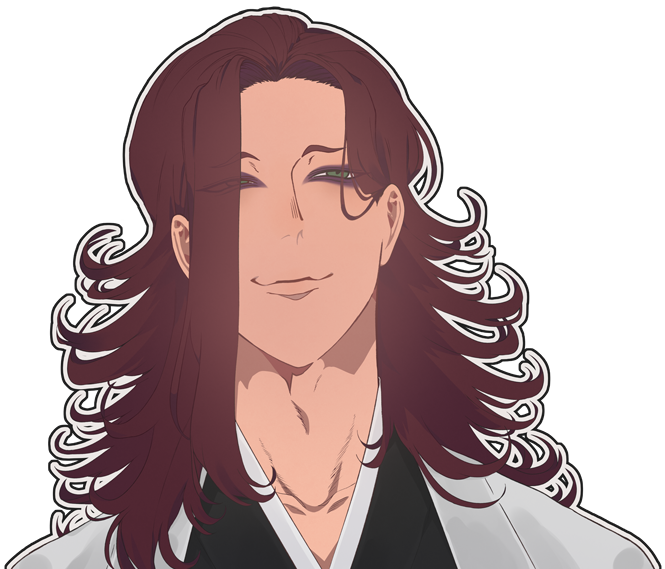
Ten Years Ago…
Taro had arrived at the location of the decimated Kido Corps, his eyes scanning what was left of it and its members. He cared little for what happened to the Academy because far as he was concerned they were raising more fodder. He finds a Shinigami, cowering beneath rubble and when said rubble is removed by Taro he shrieks in fear only to have that shriek halted as Taro grasps him by the throat to bring him eye level. The man has a hard time focusing, assuming it to be an Arrancar he goes for his blade, attempting to draw it and cut the one who has grabbed him. The sword arm is grabbed and the wrist swiftly broken. He inhales to scream in pain but the grip on his neck tightens, removing his ability to exhale.
”Useless, you are better off dead in your miserable state. Quickly regain your senses and tell me what has happened here or you will join your ilk in death.”
The man is dropped and he looks up, seeing the white haori followed by a mane of red hair, he is before Captain Date, one of the more ruthless Captains in the Gotei 13. He takes notice of the gaping hole in the Captain’s stomach, about the size of a hand. This redoubles his perspective of Captain Date being a monster, to walk around so casually with such a wound.
”An E-Espada attacked us suddenly, the Garganta opened and before we could retaliate everything was flames, dust and debris. I… I sensed another Arrancar, then Captain Kurayami and the Dean showed up… I think they defeated the Arrancar because things became very silent after a while and then another explosion rang out here…”
”So in other words you know nothing? Useless Cog.”
The man stands to his feet, holding his broken wrist, his voice raspy from being strangled by Taro moments ago.
”Useless?! How can we be of use when the enemy can so easily appear above our heads and decimate us?! You weren’t here so how would you know anything! I lost people I’ve considered siblings! Our home is in ruins! We-”
Silent Rage
The man stops speaking and yet Taro doesn’t say a word, he doesn’t use his Reiatsu, he doesn’t even reach for him. What stopped the Kido Corps member from speaking was the uncannily widened blood shot eyes of Taro peering through his soul. A horrifying gaze that will be etched upon that very soul of his for the rest of his life. He is frozen, unable to move and he knows this is no spell, it is fear that binds him to this spot.
”You raise this voice to me in anger with a broken wrist and barely able to breath and yet you cower from an Arrancar? The very being that killed your so called useless siblings gained only your cowardice and yet I gained your ire? You understand one thing well at least…”
Wh-what is that?”
”You know how to prioritize your safety.”
The next series of events still have this Shinigami confused to this day. Taro reached out to him, he saw the sky, the ground, a wall, and everything turned red. Again he saw the sky, the ground, and another wall, everything turned a darker shade of red before he saw the ground and then darkness. He suddenly wakes up in a hospital bed looking confused until he was told that he had been in a coma for 5 months, they found him at the remains of the Kido Corps and he is lucky to have survived the explosions there and nearly every bone in his body was broken. The confusion runs deeper as he realizes that they don’t know that Taro Date was the reason all his bones were shattered.
A few days after the rise of Commander Shihoin, The First Captain Meeting…
Taro was relatively surprised by the fact another Shihoin was chosen to become Captain Commander. The Four Great clans, or rather Three since the Shiba are now left with a sole member in Muken, seem to constantly have their hands tied into the power structure of the Gotei 13 no matter what. Out of respect only for the rank of Captain Commander, and none for Yuichiro himself, he behaves accordingly. Being with the other Captains and hearing how they are being reprimanded brings warmth to his cold heart and a broader picture of what transpired during the war. Lack of preparedness, negligence and even such things being demonstrated during the final battle as well. On those aspects of this meeting he is not surprised. He and his relative Kisho made their rounds, trying to ensure everyone was battle ready at a moments notice and yet their efforts were moot. They were unprepared and suffered many losses. When the Captain Commander reached him he looked in his direction but did not adjust his eyes, keeping them closed.
“Captain Date. You performed well, the only squad I can honestly say lived up to their duties. However, a division of berserkers, brutes and brigands are only just that—a bunch of berserkers, brutes and brigands. Predictability is what got us here. We must never be predictable, much like the grin you are perpetually known for.”
He nods to Taro and yet the Date does not reciprocate the nod.
”Understood, however incorrect your information on my Division and myself are, your sentiment is understood.”
Restrained Fury
He continued looking forward as he began addressing Shibuya next and this is what made Taro open his eyes and properly look upon the Captain Commander. Arguably the only soft spot and mental weakness Taro Date has is Shibuya Harai so to hear her being talked down to in such a way brought a sense of ire to him. Viens bulged from his head and on his hand as he continued listening until the final curtain call of her being removed from Captaincy hit. He opens his mouth to object but then closes it, he has already revealed to the Captains here too much of his weakness and he will show no more. By the time the Commander turns around Taro has physically returned to normal.
The Commander continued, reprimanding the Captains for their performance during the war and the state of the Gotei 13. As Shibuya left the meeting hall he gave her a final opened eye glance as the doors shut behind her, during this moment the Commander’s voice fell into static until Taro heard his name again.
“Captain Date, you are to recruit and train the top melee shinigami from across the divisions into your ranks. You are tasked with building the strongest Division of all amongst the Thirteen. I do not care what means you must pursue to complete that task, the Eleventh Division is the forefront of our strength within this military. If our vanguard do not perform, then how can I expect the rest of my soldiers to do the same? You are also to conduct regular training sessions with academy students regarding all Zankensoki disciplines monthly and to report to the Headmaster of the Academy upon its completion in the rebuild. Which would be me."
”Tsk, I have to sift through Cogs and mingle amongst those who aren’t even Parts yet… Disgraceful.”
Taro continues listening dutifully, still distracted by the empty space beside him. He isn’t against having a Captain Commander, having a proper Shinigami in that position is what he wanted and it is why he never respected the authority of Central Forty-Six when they were the stand-in Commander. Yuichiro, as a person, will have to earn Taro’s respect, but there might be a modicum of respect there as the Commander gets a laugh out of Taro when the words: “-and I will kill you all if that serves my ends.” crosses his ears. A method of removing useless waste he is familiar with, although Taro is interested in seeing the Commander try.
Present Day
Taro exits the Academy after dealing with those he considers to be useless scraps of metal, unformed Cogs. While walking he steps on a flyer, he glances down and back up ready to ignore it but the symbol of the Tsunayashiro clan catches his attention and so he picks it up and gives it a read, his eyes scanning over the falsities of kindness that are strewn throughout it. This one is from Twelfth Division and he must be up to something. He'll have to investigate it after the Captain's meeting.
Despite working at the academy for 10 years Taro is still just as much of a hateful man as the day he started. His classes are strict, to the point and often end with mass injuries across all students who attend. Bleeding, broken bones, gashes, puncture wounds, etc. Injuries the on site Fourth Division members only read about as battlefield level wounds. He ensure all students at least have the caliber to continue with the class, cutting those who he deems to be worthless in the art of combat. There have been some bold students who try to overcome the sadistic and brutal teaching methods of Taro Date trying to return on sheer power of will and misplaced motivation only to leave in an even worse state.
He does not teach through words, he doesn't want to waste the effort on speaking to scrap metal. He teaches through action, when the students arrive they see what is written on a board that he brought in himself, usually only bearing one word. Some days it says Hakuda, others, Kido, and on some days its Zanjutsu. On some dreaded days its just "Survive". Students quickly learned that Survival is Taro's equivalent to a test, on days like this his takes out his frustration of having to debase himself as a teacher and attacks the students. Those who are still conscious pass, those who are unconscious fail. It is brutal but effective, these students at least know what to expect from the world outside of the Soul Society.
Upon arriving at the Captain's meeting Taro did not spare the Commander a single glance, he merely took his place in the line up, took a brief glance at the empty spot beside him then looked ahead. If someone were standing in front of him they would feel like he is looking directly at them but in reality he is looking past them, his mind elsewhere but still attentive to what is being said.

Yuto
New member

From the Southwest
“Huh!?” he thought to himself, realization dawning as it became painfully clear that his taller companion had decided on the exact opposite. A flash of despair settled in his chest—though it was largely exaggerated, the kind born more from inconvenience than true dread. “Yeah…” The Shinigami immediately accepted his fate, any thought of resistance dying before it could fully form.
The walk from the southwest corner of the Soul Society was nothing to scoff at. It was long, even demanding, yet strangely pleasant—free of the sadness and pain that had once weighed heavily on these very paths years ago. His eyes drifted from left to right, quietly taking in the steady rhythm of the Seireitei, observing fellow shinigami and civilian workers alike as they went about their duties, as though such normalcy had always been a given. Though just ten years ago, these same streets had been steeped in despair and pain, painted with the blood of the deceased.
Each passing conversation, every hurried step, and even the idle gossip carried on the air spoke of stability. Whispers praised how remarkable the Captain-Commander had been—how decisively he ruled, how efficiently he handled the burdens of leadership. To hear such words spoken so casually, without fear or restraint, was itself proof of how much the Soul Society had changed.
“Say… you got any idea when Cap’n might send us back to Naruki City?” He paused, his hand resting firmly on the hilt of his zanpakutō. The rules governing Shinigami during this period had changed—zanpakutō were now permitted to be carried openly, yet drawing them or releasing Shikai remained strictly forbidden without explicit permission. It was one of several measures enacted under the Captain-Commander’s authority, a response to past disasters and hard-earned lessons. Order had returned to the Soul Society, but it came hand in hand with restraint.
“I really hope it isn’t right after this…” he muttered, his eyes dulled by a lingering sense of somber fatigue. That feeling shifted the moment his gaze caught the grand structure of a manor on the horizon. His ears twitched almost instinctively, a response more of curiosity than anything else; his demeanor mirrored that of a child discovering something wondrous for the first time, quietly awed.
They soon arrived at the gates of the Tsunayashiro Manor. As a member of the Gotei 13, he was allowed to enter without question, yet he couldn’t hide his awe at the sheer scale and elegance of the estate. It was far removed from anything he had ever known—his own background was modest, a minor noble clan lacking the privileges and lands of the high-tier aristocracy. The manor’s grandeur stood as a stark reminder of the worlds that existed above his own, and for a moment, he simply paused, letting himself take it all in.
And then he was guided by one of the servants into the waiting room, where at first everything seemed calm enough—the plush chairs, the filigree-covered table stacked with books—but his gaze was immediately drawn to the fact that they weren't alone in this waiting room causing him to be more nervous than ever.
“Geez… they’re all here for this Toru guy, huh?”
Yuto’s murmur barely carried past his lips as his eyes swept across the waiting room, taking in the number of gathered figures and the quiet tension hanging in the air. The sheer turnout alone told him this wasn’t some minor social affair—it was deliberate, curated. His gaze lingered as a stray thought slipped in. What kind of person draws this much attention?
“I wonder if he’s one of those pretty types,” he mused quietly.
Almost on cue, his imagination ran ahead of him, conjuring a ridiculous mental image—polished to the point of parody. In his mind, Toru Tsunayashiro took the shape of a perfectly composed noble: tall, impeccably built, the very embodiment of idealized aristocratic beauty. The kind of man whose presence alone would command attention, refined and untouchable.
“It’s pretty popular, huh, Sei?” Yuto whispered to his companion, eyes flicking briefly toward Seimei before returning to the room, an unrealistic expectation settling in his mind—one he had yet to realize was completely wrong.
What would his reaction look like upon the host’s arrival?
“I wonder if he’s one of those pretty types,” he mused quietly.
Almost on cue, his imagination ran ahead of him, conjuring a ridiculous mental image—polished to the point of parody. In his mind, Toru Tsunayashiro took the shape of a perfectly composed noble: tall, impeccably built, the very embodiment of idealized aristocratic beauty. The kind of man whose presence alone would command attention, refined and untouchable.
“It’s pretty popular, huh, Sei?” Yuto whispered to his companion, eyes flicking briefly toward Seimei before returning to the room, an unrealistic expectation settling in his mind—one he had yet to realize was completely wrong.
What would his reaction look like upon the host’s arrival?

Hyoroshi Iwamura
Member
2 Hours Since Destruction Averted
Silent, suffused, Iwamura sat in the front lobby of the Fourth Division Barracks. Anyone who recognized him and attempted to borrow his attention would instead be struck into silence by the peculiarity of his distant, almost absent presence. His eyes were closed, his hand on the pommel of his Zanpakutō that hung on his waist.
Iwamura had been transported from Sokyoku Hill, one of dozens of Shinigami retrieved and gathered by members of the Fourth Division for triaging and immediate care following Valiosa’s retreat. Her strike and resulting crash into the First Division barracks by Hyoroshi had broken bones and rattled his skull–he would have been reduced to a red smear of gore on the wall were it not for his monstrous constitution. Even so, he was one of the luckier ones; with some Kaidō restoration work, the medics were able to mend the damage without trouble. After a straightforward examination in the Fourth, Iwamura had been cleared for departure.
He nevertheless remained. Not to assist the Fourth; not to question the strange Reiatsu that preceded Valiosa’s retreat and his descent into unconsciousness. His physical wounds had just been healed.
For as he sat in the lobby, so too had he sat across from himself, within the dilapidated Temple, within his sulfuric, ashen, barren Inner World.
“You survived. Good,” Kibakigane had said. His armored hands were exposed, clasping each other upon the worn wood of the tabletop. His lips were curled into an eager, impish grin.
Hyoroshi had stared at his Zanpakutō with a knowing yet flat look, as if something was slowly beginning to dawn upon him in a painfully unremarkable manner. He sat perpendicular to the table’s length, his right arm laid upon its surface and his head slanted towards Kibakigane. His eyes had yet to leave his Spirit’s pronounced canines.
“So I did.” A brief pause. “You knew this is what I needed the entire time. A shower and the power of the Sun in my face.”
“Yes, and you don’t really loathe me for it, do you?
“Not the point.” Iwamura turned his gaze to the rotting floor. “I know I have a human soul. All this time, since Shizukana found me that day, that’s how I held myself. It was the part of me I’ve honored most, to show the world what my clan was still capable of doing. And you hated me for it. The greatest sign of weakness is looking with scorn at the person staring back in the mirror.”
Kibakigane pulled one arm to his lap beneath the table. Glints of pride and affirmation shone upon his golden expression. “Yet I never gave up on you. I never limited your strength. I never stopped trying to listen. Only you. You saw me as a tyrant looking to take your sensibilities, an unjust king that needed to be conquered and vanquished. You’ve only realized now that the one slouching on the throne was you the entire time. You were using yourself as both a crutch and a–"
Hyoroshi’s right fist slammed on the table. He lifted his head a fraction.
“There wasn’t a moment that went by that I wished things were different. That with enough effort and goodwill offered, repentance could finally be accepted, and, Reio willing, what I knew in my soul could manifest in this body of mine. Perhaps I could have become just human.”
“But you know now that that’s impossible. We’re already underway, so it’s best not to go and start setting it all on fire.”
Hyoroshi’s eyes finally met Kibakigane’s, bewildered and searching. Silence stretched; the wasteland beyond didn’t utter a sound.
“This is it, then.” He stated as he pulled himself up in his chair. “I will have to do what I must. Right? Just face the music?”
Authentic creases framed Kibakigane’s smile. “Mm. The only thing you can do. Embrace your station.”
5 Days Since Destruction Averted
“Hyoroshi, if you could stop by my office for a moment? I have something to discuss with you.”
The request from Shizukana crackled through the intercom in Hyoroshi’s office. His attention flicked to the device, yanked from a report on Hueco Mundo activities in his hands; a foot-tall stack of reports and files rested clean upon his dark-oak desk. Papers upon papers, all read through, all digesting and churning around in his head all day, desperate for order–some logical throughline to explain what the Seireitei was still recovering from.
Two more papers sat on the opposite corner of Hyoroshi’s desk. He had filled them out himself three days ago, yet they had not moved after being completed. Hyoroshi stared at the first page and re-read the title. Slowly, he set down the papers in his hands.
His thoughts had been a maelstrom since his meeting with Kibakigane. Members of the Fifth on multiple occasions had already mentioned the somber, almost melancholic air around his head–a stark contrast from his usual outgoing, brotherly demeanor. Each time, Hyoroshi had shut them down–to keep focused on their duties, he recalled saying.
All to protect what he knew had to come.
He picked up the two papers and pressed a button next to a speaker on his desk:
“On my way, Captain.”
Hyoroshi didn’t glance back as he exited his office.
The shocked stare Shizukana was giving Hyoroshi was expected, though he could discern it wasn’t what he’d just done–only the fact that it’d occurred now of all times. She was sitting at her desk, Hyoroshi standing before her with his hands clasped behind him. Between them, the two papers, now singularly stacked, rested on her desk. The top of the first page read in bold characters:
DIVISION TRANSFER REQUEST
“I’ve realized after what we battled through against the Arrancars, how close we came to annihilation, that the sky is infinite. Hence why, with my head held high and in light of the many changes taking place in the Seireitei, I am moving forward. I am requesting a transfer to the First Division underneath Captain-Commander Yuichiro Shihoin.”
For over a minute not even a breath was heard. A muffled discussion outside came and went, something about the rebuilding efforts in the Fifth’s sector of the Seireitei.
“I…I’m not sure what to say. How long were you thinking about this?” Despite the shock, Shizukana’s voice remained remarkably soft and warm.
“A few days. The truth is, I wasn’t sure how best to approach you about this, though I’d be remiss to say it was only a possibility.” Hyoroshi broke eye contact, looking away and rubbing the back of his head. “I think we both understood this was going to happen at some point.”
“Oh, my Hyoroshi,” Shizukana sniffled. She rose and closed the distance between them, wrapping her arms around him. He returned the gesture, his massive limbs enveloping her like a fluffy blanket of white.
“That doesn’t make it any less bittersweet. Gosh, my Roshi, you’ve no idea how proud I am of you.”
For several heartbeats they had stood like this; Shizukana holding back tears, Hyoroshi holding an odd expression to the floor behind her. Eventually, after releasing her, Shizukana took a couple steps back. She mustered a smile and looked up at the slight grin now adorning him.
“I suppose that leads into what I originally brought you in here for…” She folded her hands in front of her. Hyoroshi discerned something beyond the smile crackle nervously, but exactly what he couldn't identify.
“Among many other things, the new Captain-Commander at the recent Captain’s meeting discussed the introduction of a Bankai Aptitude Program. He’s tasked us with selecting a member from each of our Divisions to come under the direct instruction of the Commander himself!”
Hyoroshi raised his eyebrows. His thoughts briefly snapped back to the conversation with Kibakigane and the begrudging union that’d begun to form. “So then...”
Shizukana nodded as she returned to her seat; Hyoroshi refocused upon her. “I’ve given it some thought, and I’ve decided that you will be my recommendation for this program. This is nothing to take lightly; it is accelerated training to unlock Bankai. It will be dangerous, likely pushing you beyond your limits–I can’t deny I’m nervous for you. But I can’t think of anyone else from the Fifth Division that fits the requirements…or, well, soon to be the First, I suppose!”
Hyoroshi’s eyes were almost bulging when Shizukana grabbed a pen and scribbled her name at the bottom of the second page.
“Shizukana…Captain Kurayami…”
Lifting her eyes, she paused as she gazed at his back; he was bent over ninety degrees forward in a deep bow.
“Thank you. I won’t allow this offer to go to waste. I’ll make sure to visit often, and good luck with the upcoming expedition.”
He rose back up to reveal shuddering lips. Shizukana pursed hers and tilted her head with misty eyes.
“Of course, Hyoroshi. You are dismissed. Here, the transfer papers–and I will send for a squadmate to help you pack up your things.”
10 Years Later - Present Day
The blistering crack of wood smacking live muscle resounded off stone walls, followed by the howling rush of spirit energy whipping like a sudden gale. Hyoroshi Iwamura held firm against Ishiko Mori’s shuddering bokken pushing against his broad, muscle-bound shoulder. He stared down at her with his arms crossed, his fur gently swaying from the cool breeze filtering through open shoji screens along one side of the First Division’s training hall.
“Not enough. Again,” he commanded with gruff flatness. Not belittling or accosting–merely expecting his subordinate to find the solution. “Until you can knock me into the wall.”
He watched her reset as instructed, feet sliding into position, shoulders relaxing. His eyes narrowed slightly; he sensed the anxiety in her quads, the way her eyes studied him like he was a beast needing to be tamed. Frankly, this was how it needed to be–if she needed to break her arms to grasp the bisecting cleave, then she and him both would have to suffer.
Yet, watching the awkwardness lingering in her stance, the instinctive pull to throw her a bone drew him forward.
“Here,” he said as he suddenly moved and grasped her arms from behind. “No need for your form to crumble now. It’s only the Reiatsu concentration you’re missing.” His hands remained as she pulled both arms up, releasing only when she was locked into the proper stance. He returned to where he was standing and exhaled.
“Swing!”
For another hour the duo continued, focused, disciplined–Hyoroshi pushing Ishiko along the slow march of learning various techniques of the sword–until the papers falling like snowflakes just outside brought him to call a break. He strode outside, watching the leaflets flutter and roll about, until he pulled the closest one out of the air. A scan of the document tilted his head with curiosity and consideration.
“A dinner hosted by the Tsunayashiro clan…” Hyoroshi glanced at Ishiko over his shoulder. The prospect of dining with nobles was an unfamiliar concept; still…
“Would be useful to have a member of the First present,” he thought out loud as he folded the paper into his pocket, a nonchalance entering his voice that slightly crackled with disuse. He faced Ishiko fully, glancing her up and down.
“You still have duties to tend to.” He nodded once. “But if you’d like, walk with me to the Tsunayashiro estate. Consider it an extra break after training.”
Hyoroshi offered Ishiko a second’s soft grin. It didn’t reach his eyes. His feet pivoted and he made straight for the front entrance, weaving along the outside until he strode through the front gate and beyond. Should Ishiko follow him, should she have sought it, now was a perfect time for more conversation.
Eventually, the duo would reach the estate in all its traditional grandeur. Hyoroshi turned, formally dismissed his squadmate, and lumbered into the front lobby. His nerves were coated with an extra layer of steel as he entered–if only to protect against the sheer foreignness of what he was plunging himself into. The moment the door closed behind him, with his thunderous voice tempered with courtesy and respect, shifting out of the way towards a seat:
“I’m here for the dinner.”
Silent, suffused, Iwamura sat in the front lobby of the Fourth Division Barracks. Anyone who recognized him and attempted to borrow his attention would instead be struck into silence by the peculiarity of his distant, almost absent presence. His eyes were closed, his hand on the pommel of his Zanpakutō that hung on his waist.
Iwamura had been transported from Sokyoku Hill, one of dozens of Shinigami retrieved and gathered by members of the Fourth Division for triaging and immediate care following Valiosa’s retreat. Her strike and resulting crash into the First Division barracks by Hyoroshi had broken bones and rattled his skull–he would have been reduced to a red smear of gore on the wall were it not for his monstrous constitution. Even so, he was one of the luckier ones; with some Kaidō restoration work, the medics were able to mend the damage without trouble. After a straightforward examination in the Fourth, Iwamura had been cleared for departure.
He nevertheless remained. Not to assist the Fourth; not to question the strange Reiatsu that preceded Valiosa’s retreat and his descent into unconsciousness. His physical wounds had just been healed.
For as he sat in the lobby, so too had he sat across from himself, within the dilapidated Temple, within his sulfuric, ashen, barren Inner World.
“You survived. Good,” Kibakigane had said. His armored hands were exposed, clasping each other upon the worn wood of the tabletop. His lips were curled into an eager, impish grin.
Hyoroshi had stared at his Zanpakutō with a knowing yet flat look, as if something was slowly beginning to dawn upon him in a painfully unremarkable manner. He sat perpendicular to the table’s length, his right arm laid upon its surface and his head slanted towards Kibakigane. His eyes had yet to leave his Spirit’s pronounced canines.
“So I did.” A brief pause. “You knew this is what I needed the entire time. A shower and the power of the Sun in my face.”
“Yes, and you don’t really loathe me for it, do you?
“Not the point.” Iwamura turned his gaze to the rotting floor. “I know I have a human soul. All this time, since Shizukana found me that day, that’s how I held myself. It was the part of me I’ve honored most, to show the world what my clan was still capable of doing. And you hated me for it. The greatest sign of weakness is looking with scorn at the person staring back in the mirror.”
Kibakigane pulled one arm to his lap beneath the table. Glints of pride and affirmation shone upon his golden expression. “Yet I never gave up on you. I never limited your strength. I never stopped trying to listen. Only you. You saw me as a tyrant looking to take your sensibilities, an unjust king that needed to be conquered and vanquished. You’ve only realized now that the one slouching on the throne was you the entire time. You were using yourself as both a crutch and a–"
Hyoroshi’s right fist slammed on the table. He lifted his head a fraction.
“There wasn’t a moment that went by that I wished things were different. That with enough effort and goodwill offered, repentance could finally be accepted, and, Reio willing, what I knew in my soul could manifest in this body of mine. Perhaps I could have become just human.”
“But you know now that that’s impossible. We’re already underway, so it’s best not to go and start setting it all on fire.”
Hyoroshi’s eyes finally met Kibakigane’s, bewildered and searching. Silence stretched; the wasteland beyond didn’t utter a sound.
“This is it, then.” He stated as he pulled himself up in his chair. “I will have to do what I must. Right? Just face the music?”
Authentic creases framed Kibakigane’s smile. “Mm. The only thing you can do. Embrace your station.”
5 Days Since Destruction Averted
“Hyoroshi, if you could stop by my office for a moment? I have something to discuss with you.”
The request from Shizukana crackled through the intercom in Hyoroshi’s office. His attention flicked to the device, yanked from a report on Hueco Mundo activities in his hands; a foot-tall stack of reports and files rested clean upon his dark-oak desk. Papers upon papers, all read through, all digesting and churning around in his head all day, desperate for order–some logical throughline to explain what the Seireitei was still recovering from.
Two more papers sat on the opposite corner of Hyoroshi’s desk. He had filled them out himself three days ago, yet they had not moved after being completed. Hyoroshi stared at the first page and re-read the title. Slowly, he set down the papers in his hands.
His thoughts had been a maelstrom since his meeting with Kibakigane. Members of the Fifth on multiple occasions had already mentioned the somber, almost melancholic air around his head–a stark contrast from his usual outgoing, brotherly demeanor. Each time, Hyoroshi had shut them down–to keep focused on their duties, he recalled saying.
All to protect what he knew had to come.
He picked up the two papers and pressed a button next to a speaker on his desk:
“On my way, Captain.”
Hyoroshi didn’t glance back as he exited his office.
The shocked stare Shizukana was giving Hyoroshi was expected, though he could discern it wasn’t what he’d just done–only the fact that it’d occurred now of all times. She was sitting at her desk, Hyoroshi standing before her with his hands clasped behind him. Between them, the two papers, now singularly stacked, rested on her desk. The top of the first page read in bold characters:
DIVISION TRANSFER REQUEST
“I’ve realized after what we battled through against the Arrancars, how close we came to annihilation, that the sky is infinite. Hence why, with my head held high and in light of the many changes taking place in the Seireitei, I am moving forward. I am requesting a transfer to the First Division underneath Captain-Commander Yuichiro Shihoin.”
For over a minute not even a breath was heard. A muffled discussion outside came and went, something about the rebuilding efforts in the Fifth’s sector of the Seireitei.
“I…I’m not sure what to say. How long were you thinking about this?” Despite the shock, Shizukana’s voice remained remarkably soft and warm.
“A few days. The truth is, I wasn’t sure how best to approach you about this, though I’d be remiss to say it was only a possibility.” Hyoroshi broke eye contact, looking away and rubbing the back of his head. “I think we both understood this was going to happen at some point.”
“Oh, my Hyoroshi,” Shizukana sniffled. She rose and closed the distance between them, wrapping her arms around him. He returned the gesture, his massive limbs enveloping her like a fluffy blanket of white.
“That doesn’t make it any less bittersweet. Gosh, my Roshi, you’ve no idea how proud I am of you.”
For several heartbeats they had stood like this; Shizukana holding back tears, Hyoroshi holding an odd expression to the floor behind her. Eventually, after releasing her, Shizukana took a couple steps back. She mustered a smile and looked up at the slight grin now adorning him.
“I suppose that leads into what I originally brought you in here for…” She folded her hands in front of her. Hyoroshi discerned something beyond the smile crackle nervously, but exactly what he couldn't identify.
“Among many other things, the new Captain-Commander at the recent Captain’s meeting discussed the introduction of a Bankai Aptitude Program. He’s tasked us with selecting a member from each of our Divisions to come under the direct instruction of the Commander himself!”
Hyoroshi raised his eyebrows. His thoughts briefly snapped back to the conversation with Kibakigane and the begrudging union that’d begun to form. “So then...”
Shizukana nodded as she returned to her seat; Hyoroshi refocused upon her. “I’ve given it some thought, and I’ve decided that you will be my recommendation for this program. This is nothing to take lightly; it is accelerated training to unlock Bankai. It will be dangerous, likely pushing you beyond your limits–I can’t deny I’m nervous for you. But I can’t think of anyone else from the Fifth Division that fits the requirements…or, well, soon to be the First, I suppose!”
Hyoroshi’s eyes were almost bulging when Shizukana grabbed a pen and scribbled her name at the bottom of the second page.
“Shizukana…Captain Kurayami…”
Lifting her eyes, she paused as she gazed at his back; he was bent over ninety degrees forward in a deep bow.
“Thank you. I won’t allow this offer to go to waste. I’ll make sure to visit often, and good luck with the upcoming expedition.”
He rose back up to reveal shuddering lips. Shizukana pursed hers and tilted her head with misty eyes.
“Of course, Hyoroshi. You are dismissed. Here, the transfer papers–and I will send for a squadmate to help you pack up your things.”
10 Years Later - Present Day
The blistering crack of wood smacking live muscle resounded off stone walls, followed by the howling rush of spirit energy whipping like a sudden gale. Hyoroshi Iwamura held firm against Ishiko Mori’s shuddering bokken pushing against his broad, muscle-bound shoulder. He stared down at her with his arms crossed, his fur gently swaying from the cool breeze filtering through open shoji screens along one side of the First Division’s training hall.
“Not enough. Again,” he commanded with gruff flatness. Not belittling or accosting–merely expecting his subordinate to find the solution. “Until you can knock me into the wall.”
He watched her reset as instructed, feet sliding into position, shoulders relaxing. His eyes narrowed slightly; he sensed the anxiety in her quads, the way her eyes studied him like he was a beast needing to be tamed. Frankly, this was how it needed to be–if she needed to break her arms to grasp the bisecting cleave, then she and him both would have to suffer.
Yet, watching the awkwardness lingering in her stance, the instinctive pull to throw her a bone drew him forward.
“Here,” he said as he suddenly moved and grasped her arms from behind. “No need for your form to crumble now. It’s only the Reiatsu concentration you’re missing.” His hands remained as she pulled both arms up, releasing only when she was locked into the proper stance. He returned to where he was standing and exhaled.
“Swing!”
For another hour the duo continued, focused, disciplined–Hyoroshi pushing Ishiko along the slow march of learning various techniques of the sword–until the papers falling like snowflakes just outside brought him to call a break. He strode outside, watching the leaflets flutter and roll about, until he pulled the closest one out of the air. A scan of the document tilted his head with curiosity and consideration.
“A dinner hosted by the Tsunayashiro clan…” Hyoroshi glanced at Ishiko over his shoulder. The prospect of dining with nobles was an unfamiliar concept; still…
“Would be useful to have a member of the First present,” he thought out loud as he folded the paper into his pocket, a nonchalance entering his voice that slightly crackled with disuse. He faced Ishiko fully, glancing her up and down.
“You still have duties to tend to.” He nodded once. “But if you’d like, walk with me to the Tsunayashiro estate. Consider it an extra break after training.”
Hyoroshi offered Ishiko a second’s soft grin. It didn’t reach his eyes. His feet pivoted and he made straight for the front entrance, weaving along the outside until he strode through the front gate and beyond. Should Ishiko follow him, should she have sought it, now was a perfect time for more conversation.
Eventually, the duo would reach the estate in all its traditional grandeur. Hyoroshi turned, formally dismissed his squadmate, and lumbered into the front lobby. His nerves were coated with an extra layer of steel as he entered–if only to protect against the sheer foreignness of what he was plunging himself into. The moment the door closed behind him, with his thunderous voice tempered with courtesy and respect, shifting out of the way towards a seat:
“I’m here for the dinner.”

Nobody
Member
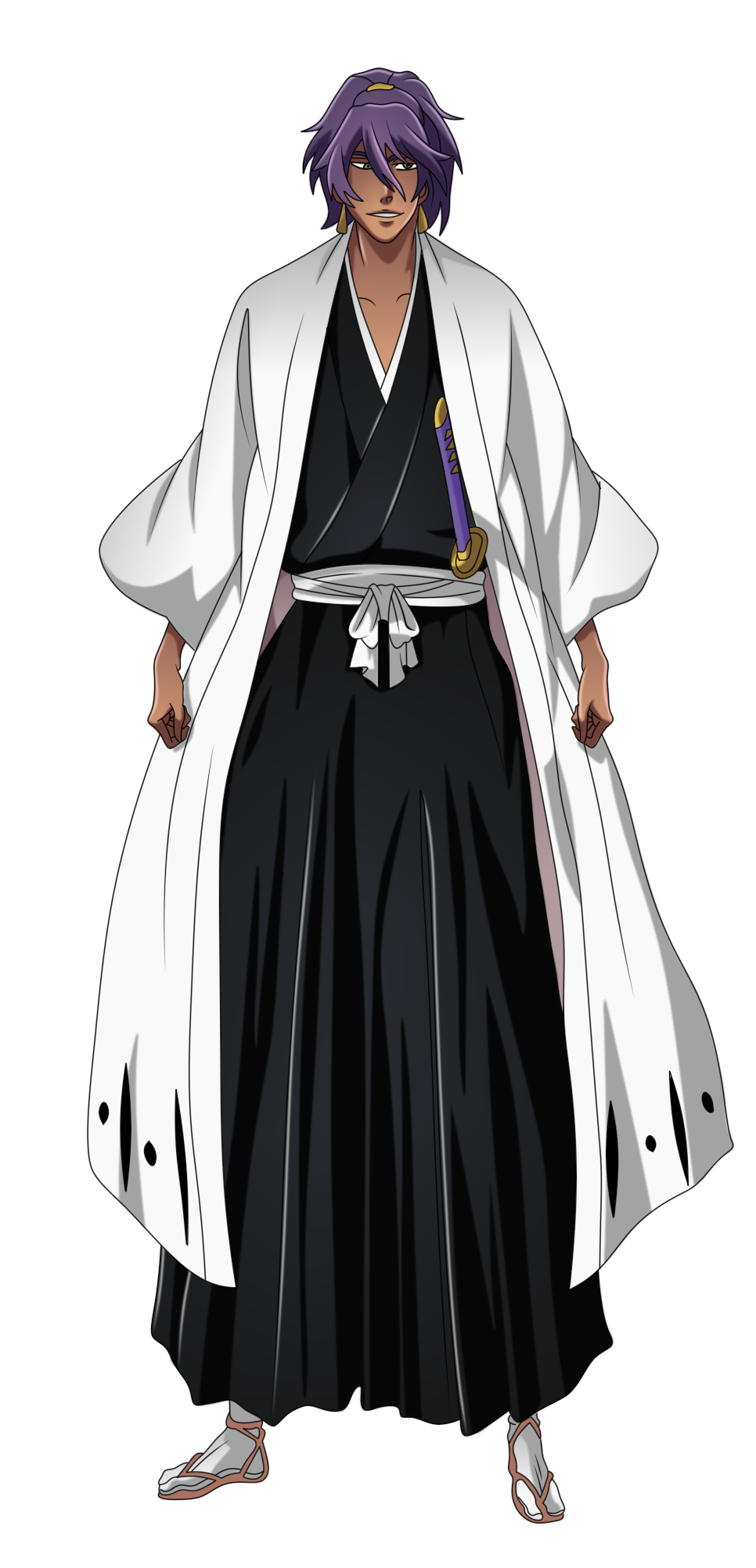

It seemed like it was just yesterday that the Captains had been gathered before the new Commander. Unlike the heaviness others may have felt from the weight of the loss brought about by this invasion, from all the damage done to the Seireitei and all their failures, Itaku was practically glowing. His smile was as wide as it was bright and genuine, the man had been practically glowing. This was not because he felt proud or relieved that his Division had done their job. No, truth be told Itaku could have cared less how they performed and how this new Commander had perceived them. Any shortcomings perceived could be glossed and painted over, the important thing was he was unharmed. Itaku felt a heavy sense of pride from having successfully avoided actually getting involved in the chaos that was taking place throughout the Seireitei, and he'd continue to do so for as long as he could.
His focus had been in and out as the Commander prattled on, and threw his weight around via his reiatsu showcasing his disappointment and anger at the performance during the invasion. 'Another Noble flexing their importance huh. Oh well, so long as I get paid.' He dismissed the theatrics, standing there amongst his "peers". His ears really only perking up and tuning in when his name was mentioned. "Hmmm" Was all that had escaped him quietly as if considering what was said. The meeting continued on, the man still showing little interest in anything that was being said. Even the threat laced promise of demotion and potentially death. Itaku couldn't help but grin to himself, stifling a giggle. 'How...amusing.'
The time for them to report had arrived. How long had it been since he had given them their respective tasks? No matter, like the others Itaku had come when summoned, a light pep in his step with that charming smile shining as if to light up the room around him. His purple hair bounced and swayed with an almost unnatural sheen, and his blemish less skin glowed as if blessed by the Soul King himself. This was a man unburdened by stress or responsibility, one who has clearly not lost a wink of sleep. He takes his designated place and glances around as the others enter one by one. Once all gathered the Commander begins, informing them he wanted an update on what he had tasked them with before. He begins with the resident would be assassin.
Like a good soldier tightly wound, the Captain of the Second Division drags on his report with every little detail.
“In summary, the assignment was completed t-" "Yes yes, nothing notable was discovered and they reported everything to who they needed to report to. Excellent."
Itaku had interjected, feeling that his fellow Captain was dragging this out unnecessarily, all to essentially report...nothing. Still, as rude as his interjection might have been, and it certainly was, he maintained a smile of innocence and spoke with a lighthearted tone all the while. He claps his hands together once as he was next in the order.
"Hey everyone! Seems I'm next!"
He bats his lashes briefly before eyes close and a toothy grin flashed to them all.
"We at Fourth got some new competent members! Yay for us right? Now, regarding those med stations you wanted built at each division, I....didn't do that, teehee."
He playfully bumps his head with his fist, winking while playfully sticking out his tongue.
"While I understand the reasoning in theory, in practice its too risky. Especially as the past invasion has proven how incapable we are on a large scaled threat. While having members there would be good, there presence there is meaningless if they die before they're able to treat anyone because those they're meant to treat are incapable of protecting them."
He lets out a solemn sigh as he speaks, shrugging his shoulders before allowing them to sink, shaking his head.
"Instead, I've had the ambitious Fuu and our newbies to coordinate with the respective divisions of the Gotei 13. During training sessions members of the Fourth are dispatched there so that the squad members of that Division can train as hard as they can and want! Those from the Fourth on scene will treat them allowing hem to continue training and once training is complete they return to the fourth to coordinate and pool what has been learned from our fellow Shinigami! It also allows us to swap those who are dispatched so everyone can get a turn and experience."
He rests his arms behind his back, lightly rocking back and forth on his feet.
"This has helped in keeping us active and dare I say busier at the Fourth, but has also allowed us to further train and hone our Kaido and Reiryoku Control! That's all from me!"
His rocking comes to a halt, one hand resting on his hip as his other hand throws out a proud thumbs up to both the Commander and his fellow Captains.
Like a good soldier tightly wound, the Captain of the Second Division drags on his report with every little detail.
“In summary, the assignment was completed t-" "Yes yes, nothing notable was discovered and they reported everything to who they needed to report to. Excellent."
Itaku had interjected, feeling that his fellow Captain was dragging this out unnecessarily, all to essentially report...nothing. Still, as rude as his interjection might have been, and it certainly was, he maintained a smile of innocence and spoke with a lighthearted tone all the while. He claps his hands together once as he was next in the order.
"Hey everyone! Seems I'm next!"
He bats his lashes briefly before eyes close and a toothy grin flashed to them all.
"We at Fourth got some new competent members! Yay for us right? Now, regarding those med stations you wanted built at each division, I....didn't do that, teehee."
He playfully bumps his head with his fist, winking while playfully sticking out his tongue.
"While I understand the reasoning in theory, in practice its too risky. Especially as the past invasion has proven how incapable we are on a large scaled threat. While having members there would be good, there presence there is meaningless if they die before they're able to treat anyone because those they're meant to treat are incapable of protecting them."
He lets out a solemn sigh as he speaks, shrugging his shoulders before allowing them to sink, shaking his head.
"Instead, I've had the ambitious Fuu and our newbies to coordinate with the respective divisions of the Gotei 13. During training sessions members of the Fourth are dispatched there so that the squad members of that Division can train as hard as they can and want! Those from the Fourth on scene will treat them allowing hem to continue training and once training is complete they return to the fourth to coordinate and pool what has been learned from our fellow Shinigami! It also allows us to swap those who are dispatched so everyone can get a turn and experience."
He rests his arms behind his back, lightly rocking back and forth on his feet.
"This has helped in keeping us active and dare I say busier at the Fourth, but has also allowed us to further train and hone our Kaido and Reiryoku Control! That's all from me!"
His rocking comes to a halt, one hand resting on his hip as his other hand throws out a proud thumbs up to both the Commander and his fellow Captains.