Southeast Seireitei

Aqua

New member

1773959652116.png

1773959652130.png

1773959652140.png
​
"We were vulnerable ten years ago and thus susceptible to attack from both without and within. Again we find ourselves under attack from within right now. We cannot afford to continue to be unprepared. We don't have the luxury of complacency, not with lives at risk. The very balance at risk. ​
In the usual scenario, there was often a good cop and a bad cop. In this specific situation, the two chose to both assert their dominance along with the weight and urgency of the situation, directly onto the young shinigami before them. It seemed they had no preference to mince words or breadcrumb the young male to his own conclusions. Their points were sound and resolute. What this individual may not have known is, if he chose not to help them, they were willing and prepared to do whatever was necessary regardless of the circumstances. This was how deeply they believed in the cause they had adopted; this was how red their blood had run for the Soul Society and the Gotei 13. Kouei, ever-vigilant, watches the multitude of changing expressions upon the male’s face. He studies them, preparing his next words entirely dependent on what is shown on the failing mask. ​
“You two are asking for so much right now, you’re asking for so much that I cannot give you. I don’t mean that due to my rank but I also mean due to me not trusting either of you. Day in and day out everyone here casts judgmental eyes on one another because of the distrust sewn into this place.” ​
Did he genuinely believe this was a factor exclusive to the Kido Corps? For decades, the entirety of the Gotei 13 has been marred by distrust, backstabbing, and a fragile hierarchy that had only begun to be remedied recently. Still, shinigami plot, there are enemies on all sides, and high-ranking vacancies create vulnerabilities that ruthless predators see as opportunities. While Kouei had a subtle appreciation for his new acquaintance’s apprehension, his worries were dwarfed by the calamity that approached. ​
”Damn it, why did I speak up… You two are trying to overwhelm me with information but I’m not going to help you with anything directly. If you two are planning something I don’t want my name attached to any of it…” ​
Did he think this was some sort of tactic?--Overwhelming him with information to force him to make a brash decision? What would he do when he discovered everything that said was absolutely true, with no reason to extrapolate or stretch the details? Would his anxiety increase? It was hard to imagine him in a state more frazzled than he was already. Also, it was an unfortunate turn of events that just by speaking with these two, his name was already attached to it all; let’s just hope he chose the right side of history. ​
“A bit further south from here is our storehouse, inside you’ll find spare Shihakusho along with the masks certain members of our Division wear to conceal their identities from the public. Those who are currently deployed are wearing them now. If you manage to get a hold of them you shouldn’t be questioned too harshly if you go snooping around. That’s all I can do for you two.” ​
Kouei didn't immediately reach for the key. Instead, he stood silently as the man unraveled before them, watching the frantic pacing, the trembling hands, the way his eyes constantly drifted toward nearby corridors and windows as though expecting someone to emerge and catch them in the act. There was something painfully familiar about it. Fear had become a common language within the Seireitei. It lingered in every division, in every hallway, in every conversation spoken just a little too quietly.

The Kido Corps member looked less like a soldier and more like a man trapped beneath the weight of responsibilities he had never asked to carry. For a moment, Kouei simply allowed the silence to settle. The explanation they had given had been overwhelming by design. There had been no easy way to present it. Too many disappearances. Too many coincidences. Too many years spent allowing uncomfortable truths to remain buried beneath official reports and convenient assumptions. The man had reacted exactly as most would have–Fearfully.
Fear was honest. As the plain key emerged from the folds of the man's shihakusho, Kouei's eyes lowered to it. Such a simple thing. No ornate craftsmanship. No spiritual pressure radiating from it. No indication that it protected anything of significance. Yet in that moment it felt heavier than many Zanpakuto. The key represented a choice. Not merely for the nervous Kido Corps member standing before them, but for Kouei himself. Ten years ago countless people had chosen convenience over truth. Ten years ago warnings had gone ignored. Ten years ago lives had been lost. And now they stood amidst the consequences. When Kouei finally moved, it was with deliberate calm. His hand extended forward, fingers closing around the key without ceremony. The cool metal settled into his palm as he examined it briefly before slipping it away into the folds of his clothing.

His expression never changed. The man's words echoed in his thoughts. I don't trust either of you. A reasonable conclusion. Trust was a luxury few possessed anymore. The Gotei fractured itself with suspicion. The noble houses played their games. Captains watched one another. Divisions withheld information. Every crisis only widened the cracks already present beneath the surface.

Kouei couldn't blame him.

The corner of his mouth twitched ever so slightly, not quite forming a smile.

"You shouldn't."
His voice was quieter this time. Not because he feared being overheard, but because the moment didn't require force. The man's gaze immediately snapped toward him.

"You shouldn't trust us. Trust is what people rely on when they don't have evidence."
His gaze narrowed slightly.

"We're asking questions because nobody trusted evidence when it first appeared."

For several seconds he said nothing more. The wind shifted through the corridor, stirring loose fabric and carrying distant sounds from elsewhere within the division grounds. The world continued moving around them, oblivious to the conversation taking place. Oblivious to the possibility that history was preparing to repeat itself. Kouei folded his arms.

"The truth is that I don't particularly care whether you believe us."
There was no hostility in the statement. Only certainty.

"If I wanted your cooperation, I'd be speaking very differently."
His eyes met the man's once more.

"What I care about is the pattern."
His gaze sharpened.

"A massive spiritual anomaly appears. People disappear. Questions are buried. Records vanish. Ten years later another anomaly appears. Another member disappears."
He paused.

"Maybe it's coincidence."
The word sounded almost absurd.

"Maybe every warning sign aligns perfectly through sheer chance."
A slow breath escaped him.

"Or maybe someone has been operating in the shadows for far longer than anyone wants to admit."

The Kido Corps member visibly stiffened. Kouei notices. Everyone did when forced to confront possibilities they had spent years avoiding. What frightened people wasn't the unknown. It was the moment the unknown began making sense. For a brief moment his attention shifted toward Gyoja. The “former” lieutenant stood as a silent reminder of everything that had already been lost. Lives. Positions. Certainties. Entire futures. Then Kouei looked back toward the nervous man. Despite the tension radiating from him, despite the fear and uncertainty, he had still handed over the key. This mattered. Fear often paralyzed people. Yet somehow this man had acted anyway. A small but meaningful thing.

"You say you don't want your name attached to this."
Kouei nodded slightly.


"Good."
His voice remained level.

"Because it won't be."
He took a step backward, creating distance between them.

"As far as we're concerned, this conversation never happened."
Another step.

"You didn't help us."
His eyes narrowed faintly.

"You never saw us."

Protection through ignorance. Plausible deniability. The sort of shield people in positions like his often depended upon. Kouei turned partially away before stopping. For the first time since the conversation began, a hint of genuine emotion surfaced within his expression; Fatigue. The kind carried by someone who had spent too many years watching disasters unfold because others chose comfort over action.

"If we're wrong," he said quietly, "then nothing changes."
His gaze drifted toward the path leading southward.

"The key returns to its place."
His eyes shifted toward the man once more.


"You continue your duties."
A brief pause followed.

"But if we're right..."
The words lingered.

"...then whatever took those people ten years ago is moving again."
The wind passed between them.

"And if that's true, worrying about disciplinary action will be the least of anyone's concerns."

Silence followed. Not an uncomfortable silence. The sort that accompanies understanding. The realization that events had already advanced beyond anyone's ability to neatly contain them. Kouei gave a final nod. No grand speech. No dramatic reassurance. The man had made his choice. Now they would make theirs. Without another word, Kouei turned away completely and began walking. The key rested hidden within his robes. Ahead lay answers. Or more likely, questions far more dangerous than the ones they already possessed. Either way, standing still was no longer an option. The shadows cast by the surrounding buildings stretched across the path before them as Kouei moved forward, leaving the frightened Kido Corps member behind with nothing but his fears and the hope that he had just helped the right people. As they pathed away from their previous location, Kouei subtly looks over to Gyoja, and unleashes a whisper.

“You don’t think we’re headed into a trap, do you?”

1773959652140.png
​


Nobody

Member
e061d05c0a53f1639fcb59a191f1b281.png

6553876668b943c737e425aadcf6feb9.png

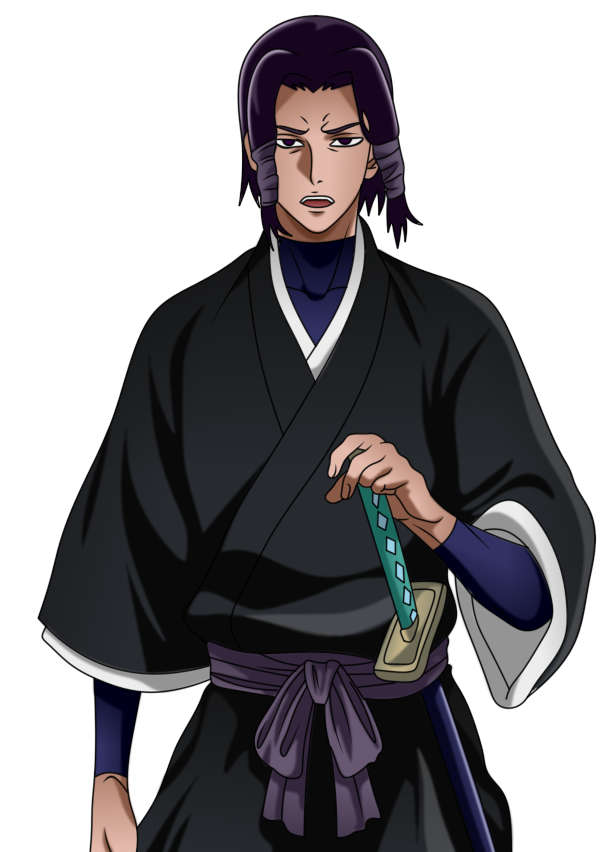
There was much the poor sap before them needed to digest. He was caught in the crosshairs of something far bigger than him, in truth it was bigger than any of them. Gyōja could see the weight of that truth pressing down on the male as he spoke, and press harder when Kouei spoke further.

When the man finally did speak, Gyōja felt that they were going to have to ultimately do things the hard way. He spoke of not trusting them, smart. In such times trust was a rare commodity these days within the Seireitei. This made trust that much more valuable, yet trust was also a dangerous blade, one that had cut many a friend down from being misplaced or entrusted to the wrong hands. Gyōja glances towards Kouei, prepared to make a move.

Kouei begins to speak, becoming a mouthpiece to the very thoughts that had been within his mind as if he himself resided there. Kouei assured the man that regardless how things played out, he'd be nothing more than an outsider. It was the two of them that would bear the burden of their success, or their failure.

"Thank you."

With Kouei possessing the key they had everything they needed. The thank you was a heartfelt one. If anyone understood the weight of a decision that went against the grain, it was Gyōja. Where those within the family had pushed for him to fight for the position of clan head, he instead chose retreat. When he and Tomi were forced to decide who would remain as Lieutenant and who would step down, rather trying to convince the Commander to change his mind alongside Tomi, he instead chose to again retreat. Each time placing himself further towards the back rather than towards the blinding limelight. Now however, fate was forcing a change of course.

As the two traveled down the path towards what they hoped would be a place for disguises rather conflict each step draws him further to the front of something unknown, despite trying so hard to ensure their movements go unnoticed. By the end of it all, perhaps he would no longer be able to disappear into the darkness of obscurity again.

​
“You don’t think we’re headed into a trap, do you?”​


"If it is a trap, then maybe we'll find the mastermind behind all of this far sooner and easier than we anticipated."

A slight joke, for this could very well be just that; a trap. If it was, then there was also the possibility that the trap maker would come to relish in the glory of their success. Either way, they'd get somewhere. He stops turning towards the direction of the commotion in Central Seireitei. The reiatsu of two Captains in bankai could be felt even from here. Without knowing it Gyōja had been holding his breath, his body forcefully reminding him to breathe.

"We should move. I feel like the little time we do have, is getting shaved away even faster."

6553876668b943c737e425aadcf6feb9.png
 

Frea

New member
closeup.png


As she arrived in the southwest of the Seireitei, she did not slow down as she headed towards the academy. She had jumped onto roofs, running on them - hopping to each one she had done this to be more effective and less chance of bumping into obstacles, like other shinigami. Beads of sweat threaten to fall down her face as she flies past. She saw the academy in the distance, which made her feel even more determined.

As she jumped down from the rooftops, she stood at the grand gate of the academy, where she knew she would return once more. She took a few deep breaths, recovering her breath from the intense speed she was going at, which was the longest time she had kept up that speed. She didn’t want to waste any more time at all, and she instantly began to walk into the academy with some students admiring Ishiko, teachers gathered around, greeting her with smiles. Naturally, Ishiko smiled and politely bowed to those who also once taught her at the academy.

“I’m here on official business for the Captain Commander. He wishes for me to review the records of the top students for soul science”

Ishiko said in a hushed tone so only the teachers at the academy could hear. The teachers looked at Ishiko with serious expressions and exchanged nods of approval. One began to walk towards the office that held the students’ files. Naturally, Ishiko began to follow the one that was leading, eventually stopping outside of an office, full of file cabinets that were as tall as the room. She stood at the empty desk, awaiting the files. She looked around the room, scanning every crevice.

Eventually, the files for all the students who excelled mostly in the soul science had been placed in front of Ishiko. She nodded a thanks to the teacher who had found the files. She had picked up one file, scanning every bit of detail and nodded as she read more in depth and placed the file to one side. She picked up the next file and scanned it more carefully, reading into it. She frowned a little and shook her head, making it known that this particular student was not ready to graduate yet. She had placed down on the other side of her the rejection pile and proceeded to do this for the next twenty, thirteen of the files were on the rejection pile. She felt like these particular students were not ready to face the reality of the social society, and even if the soul science was good, they did not particularly stand out to her.

With the remaining seven files, these students she felt were ready to move onto the twelfth division, she felt like their skills and their unique talents could be crucial towards the soul society as a whole. She took out her device, which looked like a phone. Her denreishinki. She snapped pictures of every single student’s files that she personally chose towards her Captain.

“Captain, I have sent these pictures of the seven students who will be joining the Twelfth division by tomorrow. Please look these over and give me feedback if I have chosen correctly.”

There she stood up from the desk, picking up the seven files and placing them in the hands of the teacher. She gazed at him with a serious expression as she told him the instructions.

“These seven students shall graduate tomorrow and be immediately placed into the Twelfth division. I do not want any arguments; spare those. These are Captain Commander Shihouin's requests. If you do not agree, then take it up to the captain himself.”

Her tone came across strong and authoritative, which the teacher did not argue with Ishiko, and he had agreed to take the request, he politely escorted Ishiko out, and she followed suit. Because her first task was done, she went into her denreishinki and reported once again to her captain.

“First task has been completed”

Ishiko had stepped out of the academy and began to run in the central direction, hoping she could find her senior officer, Kotetsuyama, in the first division offices.

South East -> Central
​
 

Osamu Shimazu

New member
Southeast Seireitei
Shin’ō Academy
​

The rope lasted three breaths before it came apart. It had held the practice post through the first two, bright and tightly drawn, and then a section near the knot thinned to a thread of yellow light. The rest followed with an embarrassed little hiss. At the far end of the training court, a sparrow returned to the gutter it had abandoned when the spell was cast, apparently satisfied that the danger had passed.

Osamu Shimazu marked something in his notebook. He was standing beneath the narrow shade of the south veranda, his sleeves drawn back from his wrists and a brush balanced between fingers more accustomed to a sword hilt. He did not raise his eyes at once. That pause was not intended to punish the student who had cast the spell, although he knew from experience that it usually accomplished something of the sort. The boy waited beside the post, shoulders squared as though he might hold the failed Bakudō together through posture alone.

“Tell me what happened, Hino.” Osamu set down the brush, closed the notebook against the breeze, and finally regarded him. His voice was low enough that the students along the veranda had to stop whispering to hear it, which was preferable to having them mistake volume for authority. “Not what you intended. We have established that you intended to bind a piece of wood.”

Hino glanced at the scorched groove around the post, then at his own hands. “I put too much into the first turn, sir. There wasn’t enough left to sustain the rest.” His answer came reluctantly, but it was an answer rather than the appeal to bad luck Osamu had heard from him the previous week. A few of the other students shifted at the admission; most had made the same error and had hoped no one would name it.

“Possibly.” Osamu left the veranda and crossed the gravel, stopping close enough to inspect the mark without needing to touch it. “You can exhaust a spell by overcommitting at its beginning. You can also ruin it by directing the remainder somewhere it cannot usefully go. Which did you do?” He tilted his head toward the post. The question was difficult for a reason: an explanation that would survive scrutiny was more valuable than a guess that happened to be correct.

The student knelt to examine his work, one palm hovering over the burnished wood. At last he admitted that he did not know. Osamu considered that an improvement over the confident answer Hino had nearly given, though his expression offered little encouragement. He asked the class to look at the failed line rather than at its caster, and several students stepped forward, their sandals scuffing through the gravel left unsettled by the morning’s earlier exercises.

Mihara, whose work had been neat enough to irritate her less methodical classmates, raised a hand. “The knot was sound,” she observed, tracing an invisible path beside the post without disturbing the lingering Reishi. “It weakened on the side away from him. Perhaps he kept feeding the point he could see and neglected the turn behind it.” She lowered her hand with the careful composure of someone accustomed to being correct and conscious that Osamu might find something wrong with the answer anyway.

“That is worth testing.” Osamu’s reply came without praise or dismissal, and he saw her mouth tighten at the absence of either. “Hino, make it again. This time, use less power. Mihara will watch the far side while you watch the near one. Neither of you is allowed to tell the other what to observe before the spell has ended.” He stepped away from the post to give them room, declining to explain a conclusion they could establish for themselves.

The courtyard had been rebuilt around old things. New timber framed the covered walkways, and pale replacement stones interrupted the darker foundations where the original Academy had stood before the Arrancar invasion. One wall still carried an uneven line of repair beneath its plaster, left visible where the builders had run out of matching material. Osamu had spent years in these rooms, first as a student and later as an instructor; the patched stones had ceased to look unusual to him until a new class noticed them and asked what had happened. Those who had entered the Academy after the reconstruction increasingly knew the catastrophe as a sequence of dates rather than as smoke they could remember smelling.

His family had helped preserve some of what the institution lost. There were examinations in the eastern archive copied from Shimazu holdings, and diagrams whose original instructors had died before Osamu was old enough to learn their names. House Shimazu’s contribution was substantial, but it had neither rebuilt the training courts by itself nor earned its heir a permanent right to occupy them. He was here because Third Division had assigned him to teach, and because somebody with the proper authority had judged that the students would be better for hearing him. The distinction mattered to Osamu more than it mattered to most of his pupils, who were chiefly concerned with surviving the lesson.

The second binding formed more slowly. Hino’s hands trembled a little as he set his concentration, but the strand of Hainawa crossed the post at a steadier thickness and wound around the far side without losing its shape. Mihara moved two paces to keep the knot in view. Osamu directed a fine current of Reiryoku toward his eyes, and the familiar black-violet sheen overtook his irises. Two narrow markings settled around each pupil. Through Kyōgan, the flow sustaining the rope became easier to distinguish from the motion of the students shaping it: Hino supplied the far side unevenly, then distracted himself watching Mihara rather than attending to his own work. This time the line held, though not without a visible shiver along its length.

Osamu allowed the technique to lapse after a few breaths. The change left a faint pressure behind his eyes, slight enough to ignore for now and distinct enough to remind him why he did not maintain that perception throughout an ordinary lesson. He had seen where the spell weakened; Hino still needed to discover how to feel the difference himself. Osamu had no intention of making a student’s progress depend upon borrowing an instructor’s sight.

“You improved it,” Osamu said, and permitted the statement to settle before adding its necessary condition. “I would still not trust it around an opponent capable of moving.” He rested two fingers against the practice post and felt the slight vibration where the imperfect binding pressed into the wood. “The lesson is not to spend less because restraint is fashionable. It is to put the power where the technique requires it, for as long as the technique requires it.”

Hino looked annoyed enough to forget his fear of speaking. “You say that as though everyone can feel the difference.” He gestured toward the bond still shining around the post, then caught himself and lowered the hand. “Some of us didn’t have private instruction before we arrived. I can make the rope. I’m still learning how to know what it’s doing when it’s behind the target.”

Several students went carefully still. Osamu was familiar with that particular silence, the one that came when his surname entered a room without being spoken. He could have corrected the boy’s tone or invoked the years he himself had spent failing under demanding instructors. Neither would have answered the objection, which was a sound one even if Hino had taken unnecessary pleasure in making it.

“You are right about the advantage,” Osamu replied, and the admission drew more surprise than he liked. He loosened the restraint with a touch of Reiryoku, allowing Hino’s rope to dissolve without tearing the surface of the post. “I arrived here with tutors, books, and time other students did not have. That is precisely why I have no intention of pretending this exercise should be easy because I find it familiar. You have identified information you cannot yet reliably perceive. Good. We can train that.”

He moved Hino to the other side of the post and placed Mihara where Hino had stood. The altered arrangement was simple, but it denied the boy the easy assumption that his sight and his spell would always share the same direction. Osamu asked them to exchange roles every attempt, recording which aspect of the binding each could describe without guessing. When a third student offered to judge by brightness alone, Osamu handed her the notebook and asked her to record the result after the binding was tested against the weight of the practice frame. Her enthusiasm diminished, then returned in a more useful form.

A question came from the back of the group, where a student had been watching Osamu’s hands since he left the veranda. He wanted to know whether the Fourth Seat would demonstrate the seals that rumor claimed could replace an incantation. That was more flattering than Hino’s challenge, and consequently required rather more caution. Osamu glanced toward the covered walkway, where several younger students passing between lessons had slowed to listen.

“Rumor has made an ordinary piece of difficult work sound entertaining,” Osamu observed, drawing his sleeves a little higher. “It is a disagreeable habit of rumor. Watch the sequence, but do not imitate it unless you can already cast the spell properly.” He stood with the practice post ahead of him and began shaping precise configurations with both hands, each movement held only long enough to establish the next part of the spiritual structure. At the end, he spoke clearly. “Bakudō Number Four: Hainawa.”

A golden rope struck the post and wound once around its middle. It did not crackle, swell, or pull at the timber with theatrical force; its pressure was even from the first turn to the last. Osamu held it while walking around the frame, demonstrating that the line remained steady when his view of the knot changed. Then he let the binding unravel in orderly strands, leaving the wood exactly as it had been. The demonstration had consumed very little Reiryoku, which was the point, though he suspected half the class would remember only the unfamiliar movements of his fingers.

Mihara studied his hands rather than the post. “So the seals do the work of the incantation, and the spoken name completes it.” Her expression had the affronted concentration of someone who had just discovered another subject in which she was not yet proficient. “Why not teach us that method instead? It seems faster.”

“Because you are not yet finished learning what you propose to replace.” Osamu flexed his right hand, restoring the fingers to their ordinary resting position. “A sequence is useful only if you understand the work each movement performs. If your hands are occupied, restrained, or injured, you must still be able to cast. You will learn your foundations before I help you acquire a new way of making mistakes.” His gaze traveled briefly to Hino, who had the sense not to look offended this time.

It was approaching midday when he called for a short interval. The students dispersed toward the water jars beneath the veranda, leaving the practice posts in various states of indignity. Osamu returned to his notebook and found a small, badly folded sheet tucked beneath it: a message about a damaged watercourse in one of the western Rukongai districts, passed along for Third Division review. The seal was routine, the handwriting hurried, and the matter itself apparently insufficient to trouble anyone beyond the handful of households deprived of clean water. He placed it atop the lesson evaluations where he would be obliged to see it rather than forget it under more interesting work.

The note reminded him of a conversation he had once had in a Rukongai street with a woman who had asked whether the Gotei recorded complaints for the satisfaction of recording them. He had found the question insulting until she showed him copies of three unanswered requests. She had been entirely unimpressed by his explanation of jurisdiction, and even less impressed when he promised to discover where the requests had stopped moving. Osamu had disliked her manner; he had disliked the three identical dates on the documents considerably more. Since then, he had developed a habit of keeping difficult little matters where they could inconvenience him.

Kyōmon rested against his left hip when he sat, the white lacquer of her saya immaculate except for a fine line of dust near the lower fitting. The deep-violet cord lay beneath a single silver-framed mirror charm, which had turned inward and caught an unflattering fragment of his own sleeve. Osamu adjusted it without thinking, then stopped when he realized he was straightening an ornament no one had asked him to wear. Naomori had preserved the sword long before Osamu was born; carrying it had never been the same thing as earning the cooperation of the woman within it. That lesson, at least, the heir of House Shimazu had learned without requiring his father to repeat it.

He had just opened the next evaluation when the hairs along his forearm lifted. The change was so slight that the movement of a student’s sleeve might have explained it, had the pressure not come from somewhere far beyond the courtyard. Osamu kept his brush poised above the page. The students were speaking quietly near the water jars, the sparrow had returned to its gutter, and sunlight still lay across the repaired wall with the indifference of an ordinary afternoon. Beneath those familiar things, a distant concentration of Reiatsu was rising against another.

At first it could have been a controlled exercise conducted by exceptionally powerful Shinigami. The two signatures were too remote and too heavily mingled for him to recognize their owners, but neither felt like the modest pressure of Academy practice. Osamu closed his notebook, allowing the brush to roll into the crease of the binding. He resisted the immediate urge to sharpen his sight with Kyōgan. The technique would give him more to interpret inside the courtyard; it would not make distance disappear or grant him knowledge of a battle he could not see.

Hino noticed the change in his attention. The boy followed Osamu’s gaze toward the open sky and then tried to conceal the fact that he had followed it. Before Osamu could decide whether the disturbance justified interrupting the remainder of the lesson, a heavier surge pressed through the Academy grounds. The water in the clay jars trembled against their rims, and the binding Mihara had left on a test frame shivered hard enough to loosen one of its turns.

The murmuring stopped. A younger student in the covered walkway reached for the nearest pillar, more from surprise than weakness, while several others instinctively pushed their own Reiatsu outward against the foreign pressure. That reflex made the court feel abruptly crowded. Osamu rose from his seat before the first of them could mistake the sensation for a challenge worth answering.

“End every active spell,” he ordered, his tone unchanged except for the fact that he no longer waited for the students to quiet themselves. “Do not reinforce against the pressure unless you are instructed to do so. You will only exhaust yourselves against something whose source you cannot identify.” He waited for the bindings to dissolve and watched two students struggle to bring their breathing back under control. “Hino, help the younger class clear the walkway. Mihara, take the attendance board. No one leaves this court unaccounted for.”

Hino started toward the passage and then stopped, looking back at the sky. “Is it an attack?” His earlier indignation had vanished, replaced by the more sensible fear of someone who had never stood beneath the pressure of a Captain-class release. He had not yet moved from his place, despite Osamu’s instruction, and seemed to know that his hesitation was being noticed.

“I don’t know,” Osamu told him. He could have guessed at the nature of the pressure, but a guess delivered in an officer’s voice would become a fact in the mouths of frightened students. “I know that remaining in an exposed practice yard will not improve our chances of understanding it. Take the walkway. I’ll be behind you.” He made no effort to soften the words, though he waited until Hino actually moved before turning to the others.

The second instructor assigned to the neighboring hall appeared at the doorway, having evidently reached a similar conclusion without consulting him. Osamu recognized the older Shinigami by sight and from the names on the morning’s teaching roster; they were not close acquaintances. There was dust on the instructor’s sleeve and a small stack of assessment papers tucked under one arm. Osamu appreciated, without saying so, that the papers had not been abandoned in the courtyard where the wind could carry them away.

“Secure the inner rooms and halt the practicals in this wing,” Osamu said, indicating the students now moving toward the covered passage. He kept his instructions within the rooms and personnel immediately under their care. “I’ll report the disturbance to the duty office and request a general assessment. We have enough shelter space here if the exposed yards need to be cleared.” He moved the attendance board into Mihara’s hands and checked that she had recorded the younger pupils who had entered from the walkway.

The other instructor gave a short acknowledgment and began directing the students through the interior doors. Osamu remained at the threshold while they passed, counting them against the names on the board rather than relying on the fact that the last pair appeared to have followed everyone else. There were thirteen in his class; two from the adjoining walkway had joined them. One pair of sandals had been abandoned beside a water jar, and their owner doubled back for them despite the urgency. Osamu resisted the temptation to snap, retrieved the sandals himself, and placed them in the student’s hands with a look that achieved much the same effect.

Inside, the rooms smelled of old wood, ink, and the mineral dust that always settled where plaster had been repaired. Heavy walls enclosed the corridor more securely than the training yard, though no wall in Seireitei had been built with the promise of withstanding any conceivable Bankai. Osamu watched Mihara count the group again without prompting. She caught her own error, erased a tally, and began once more. He was pleased enough to leave her to it, and aware that she would resent him if he announced the feeling aloud.

He used his issued communicator to send a concise report through Third Division’s duty channel, identifying his location, the direction of the disturbance as best he could determine, the approximate intensity, and the precautions underway in his teaching area. He requested confirmation that Academy leadership had been notified, and made clear that the source remained unidentified. The message felt inadequate as he sent it. A distant surge of Reiatsu would not become less dangerous because he described it in the proper order, but the people deciding how to respond could at least begin with information that had not been improved by rumor.

The pressure climbed again while he waited. This time it arrived in a layered swell, one presence answering or resisting another with such force that even the difference between them became hard to hold in his ordinary senses. Osamu felt a tightness behind his eyes and recognized the old impulse to pursue that information, to turn on Kyōgan and insist upon knowing more. It was the same impulse that had once made him learn an unfamiliar technique because being unable to explain it offended him. At present, the technique would tell him comparatively little about the distant combatants and might impair his attention to the Academy in front of him. He left it inactive.

He did, however, look beyond the corridor through the high window at its western end. The sky remained bright, but the air had an almost perceptible weight to it, as though every roof tile and gate beam had been made responsible for bearing someone else’s violence. Nothing in the courtyard yet suggested that the physical effects of the battle had reached this part of Seireitei. That distinction mattered. He would not frighten a hundred students with an account of destruction he had not witnessed merely because the spiritual pressure suggested there might be some.

Mihara approached carrying the corrected attendance board. “Everyone from our class is present, sir. The two from the lower walkway are with us as well.” She held the board between them with both hands, but her eyes drifted toward the high window. “If whoever is doing that can be felt this far away, shouldn’t we be preparing to defend the Academy?”

“We are preparing to protect the Academy,” Osamu replied, scanning the names before he returned the board. “It is not always the same thing as preparing to fight. There are students here who have never cast under hostile pressure, and instructors who would spend their strength holding a door rather than making a glorious entrance at the source of it. At the moment, that may be the wiser use of their abilities.” He paused, noticing that he had begun to answer the question she had asked rather than the fear behind it. “You did well with the count.”

Her expression changed at the praise, briefly enough that she might have denied it if challenged. Mihara returned to the others while Osamu checked the corridor’s adjoining doors and confirmed that the senior instructor had assumed responsibility for both classes. He left his notebook with the attendance records, but removed the Rukongai watercourse report and folded it into his inner sleeve. The practical exercises could be rescheduled; complaints about an old culvert were not going anywhere. Neither, unfortunately, was the possibility that ordinary households lay nearer the source of the disturbance than the Academy did.

Osamu returned to the duty channel and passed along his intention to observe the outer approach toward Rukongai, with civilian safety and the movement of spiritual pressure as his priorities. He identified himself by division and seat, and requested that any standing restriction on outbound movement be relayed immediately. No order had yet reached him directing him elsewhere, and his teaching responsibility had been handed to another instructor. He would not take an Academy escort of students, commandeer personnel beyond his assignment, or present his judgment as an order from a captain whose office remained vacant.

At the outer passage, he caught sight of Hino seated with the younger pupils, explaining in a strained imitation of Osamu’s voice that the most dangerous thing one could do during an unfamiliar spiritual disturbance was pretend to understand it. The imitation was not particularly flattering. It was also accurate enough that Osamu could not reasonably object, and the younger students were listening. Hino noticed him in the doorway and sat up with the unmistakable expression of a boy expecting a reprimand.

“Your explanation is acceptable,” Osamu said, though he let his eyes rest on the young man’s exaggeratedly formal posture a moment longer than courtesy required. “Your impression needs practice. You have made me sound considerably more patient than I am.” A few students laughed despite themselves. Hino’s startled relief was more useful than another lecture, and Osamu left him to finish what he had begun.

Outside, the stillness of the Academy had changed character. The sparrow was gone from its gutter, practice implements lay undisturbed where they had been set aside, and the sound of movement carried through closed corridors rather than across the open yard. The distant Reiatsu had not abated. It remained a vast, insistent presence beyond the walls, carrying no name or explanation that Osamu could properly claim to know.

He adjusted the placement of Kyōmon at his hip, ensuring the white scabbard would not catch against the gate as he moved. The small mirror charm swung once against the violet cord. He had spent years persuading himself that observing a problem closely enough would eventually yield the right answer; Kyōmon had spent nearly as many reminding him that even an accurate reflection did not decide what ought to be done. Now he knew only that powerful Shinigami were fighting somewhere toward Rukongai, and that people without their strength might have to live with whatever remained after the contest ended.

Osamu gave the secured teaching wing one final look, confirmed that he was leaving no student under his personal supervision, and turned toward the routes leading out of Southeast Seireitei. His first Shunpo carried him above the Academy wall to the next roof, where he paused just long enough to orient himself against the distant pressure. He did not draw Kyōmon or reach for a release; there was no opponent before him, and haste would not make an investigation more competent. Then he continued westward, leaving the Academy’s repaired roofs behind as he sought the outer approach to Rukongai and whatever had disturbed the city beyond them.

South East → Rukongai
(conditional exit; if someone wants to respond before I post in the Rukongai thread, I will oblige)​
 
Last edited:
Top